
The U.S. Department of Health and Human Services sent a letter to Gov. Wes Moore this week urging Maryland to stop diverting Social Security survivor benefits from children in foster care.
Maryland is now one of only nine states that have not ended or reformed the practice, often called the “orphan tax,” leaving it alongside Connecticut, Florida, Illinois, Minnesota, New York, Pennsylvania, Texas and Wisconsin. Since December 2025, 30 states have acted to preserve the benefits, joining 11 states and the District of Columbia that had already done so, according to HHS.
“These children have already lost their parents — diverting their survivor benefits just adds unnecessary hardship to unimaginable grief,” said Alex J. Adams, assistant secretary for the Administration for Children and Families. “We are calling on every remaining state to stop balancing budgets on the backs of orphans.”
Executive authority versus legislative gridlock
The federal agency argues governors do not need to wait for lawmakers; they can end the diversion through executive action. Nebraska, Louisiana, Indiana and Oklahoma have already done so via executive order, HHS noted.
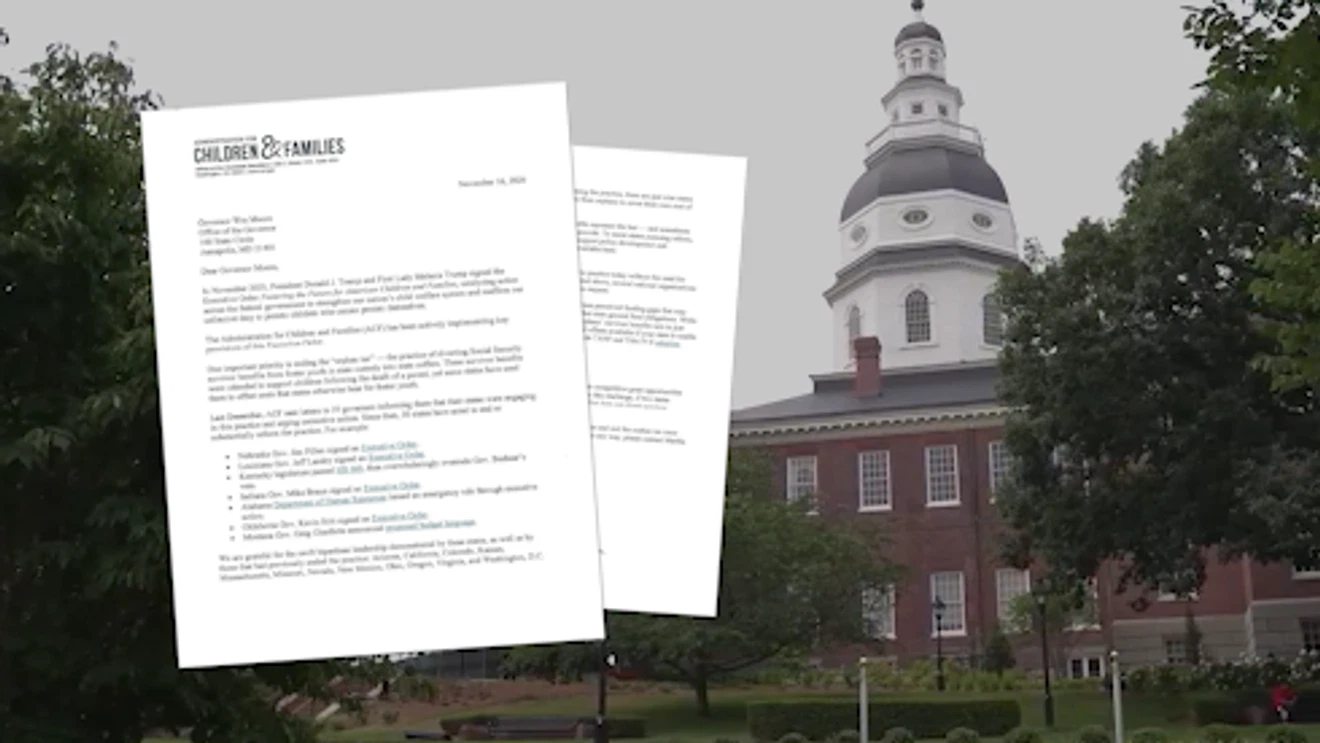
Maryland lawmakers tried this year. House Bill 768 and Senate Bill 658 would have changed how the state handles federal benefits belonging to foster children. The House version passed unanimously but died in the Senate before the General Assembly adjourned in April.
Ben Shnider, director of communications and senior adviser to the secretary at the Department of Human Services, told WBFF the agency provided technical assistance on the bills and submitted testimony.
“We are appreciative of any effort to improve well-being for the youth in our care, and we will continue working with the legislature to identify the best ways to serve our youth while being fiscally responsible, so those systems are sustainable,” Shnider said.
The DHS statement did not say whether Moore would consider executive action. It noted Maryland was “the first state in the country to set aside supplemental security income and other federal benefits on behalf of youth in our care, and conserve those resources for them until they leave our care.”
State applies foster child survivor benefits to care costs
Under current Maryland practice, the Department of Human Services can apply a foster child’s survivor benefits toward the cost of their care — effectively reimbursing the state for services provided while the child is in custody. Advocates say that leaves young people with little financial cushion when they age out of the system.
HHS estimates the practice yields roughly 0.22% of a state’s child welfare budget nationally. The agency has launched a new technical assistance center to help states cover any resulting gaps, pointing to potential offsets through Temporary Assistance for Needy Families funding and Title IV-E adoption savings.
“Every child deserves the financial security their parents worked hard to provide,” HHS Secretary Robert F. Kennedy Jr. said in a statement. “These benefits are often the last lifeline a parent can leave behind for their child.”
What remains unresolved
The governor’s office has not responded directly to the federal letter. Moore can act unilaterally, but the administration’s statement emphasized continued legislative collaboration and fiscal sustainability — language that stops short of committing to an executive order.
Keep reading

New Jersey Sues DHS Over Delaney Hall Subpoena Stonewalling
“There are far too many reports of inhumane treatment of the people held at Delaney Hall. But what...

Two Nevada Democratic Lawmakers Resign, Clark County to Appoint Replacements
Nevada Senate Majority Leader Nicole Cannizzaro will resign her District 6 seat on Friday, stepping down after a...

Manchester Kicks Off Holiday Season With Tree Lighting, New Festival of Trees
Manchester flips the switch on its holiday season Saturday, November 28, with a Community Tree Lighting at Factory...

No. 18 Gophers Take Set From No. 1 Nebraska in 4-Set Loss
No. 18 Minnesota won a set against No. 1 Nebraska in a 4-set loss Tuesday. Nebraska was supposed...