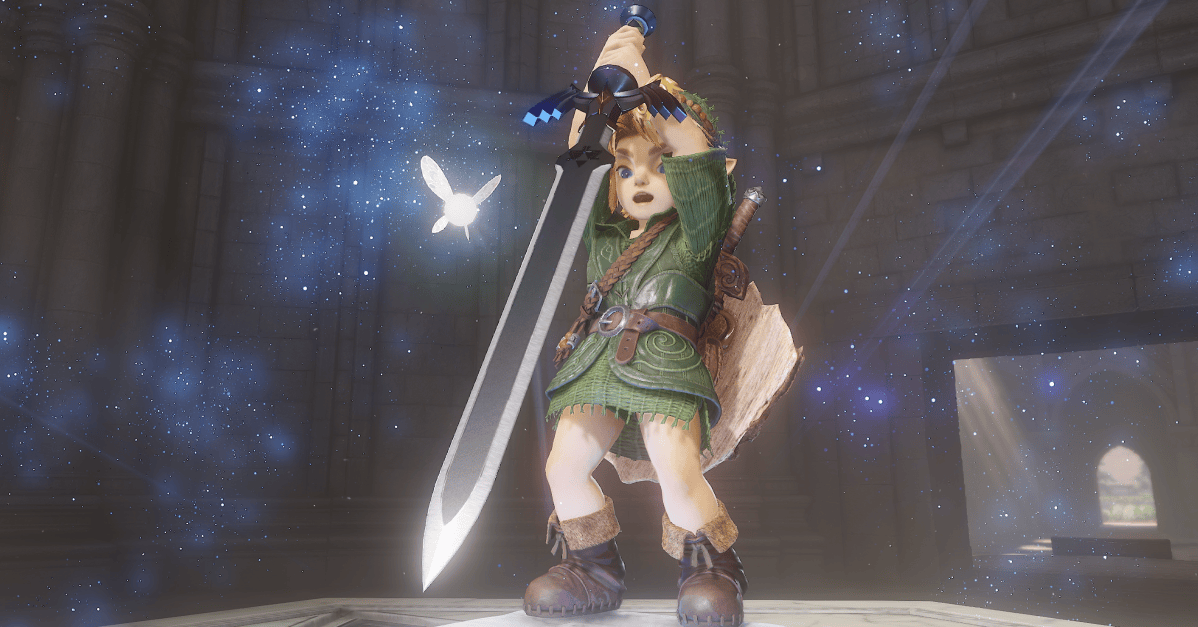
What really impressed me was the fact that they really embraced the theme of what not to change from the original,
Hidemaro Fujibayashi said of the development team behind the newly released The Legend of Zelda: Ocarina of Time for the Nintendo Switch 2. The title, which launched globally today, November 5, 2026, serves as a full remake of the classic 1998 Nintendo 64 adventure.
How Developers Built the Remake
Fujibayashi noted that this fresh perspective helped the team approach the remake carefully, pointing out that the foundational solutions from the past still stick with him as a framework for creating 3D games. While the project was led by veteran Nintendo producers Eiji Aonuma (who worked as a director on the original game and now acts as the franchise’s steward at Nintendo) and Hidemaro Fujibayashi (best known for directing Breath of the Wild and its sequel), the team integrated a younger generation of developers, including some who had never experienced the original game.
Remaking the adventure also provided an opportunity to address specific issues from the N64 version, such as the fairy Navi, who serves as a guide for Link during his travels. During the original development process, the primary question focused on how to lead the player to the conclusion of the journey and ensure they could follow along with the story, but those efforts sometimes resulted in Navi becoming an overbearing nuisance. In the remake, Navi remains ever-present, but her chatter has been toned down considerably. Aonuma, who served as a director on the original 1998 release, discussed how the scale of production changed over the decades.
Updating Gameplay and Controls
The remake introduces mechanical adjustments intended to align the experience with contemporary player expectations.

Aonuma noted that the overhauled graphics were designed to bring out details of the world that people weren’t able to see in the original Ocarina of Time, achieving a visual fidelity that the N64 hardware could not support. The team also addressed technical limitations that hindered the original release. The famously challenging Water Temple has been streamlined with a modernized camera and menu system to reduce the friction players previously encountered.
Pricing and Update Ver.1.1.1
Early critical reception has been strong, with the title achieving a 96-point Metascore in international reviews. The game is available now on the Nintendo Switch 2, with the digital version priced at 7,980 yen and the physical package at 8,980 yen.
Producers Eiji Aonuma & Hidemaro Fujibayashi are in New York for the launch of The Legend of Zelda: Ocarina of Time remake! pic.twitter.com/MrPCzWywqq
I feel confident that they weren’t necessarily pursuing something new for the sake of novelty when it might be unneeded and clutter the experience. They’re looking for elegance. Only what is needed, only what was important in the original, and how to carry that forward as their focus. And I think that’s a perspective they’ll be able to bring to future projects as well.
More on Hidemaro Fujibayashi
Eiji Aonuma and Hidemaro Fujibayashi were at Nintendo NY for the launch of The Legend of Zelda: Ocarina of Time! Nintendo of America President Devon Pritchard and SVP of Publishing Nate Bihldorff were also there. pic.twitter.com/6fDwHWy0XB
Our big interview with Ocarina of Time producers Eiji Aonuma and Hidemaro Fujibayashi. https://t.co/Dn1ZbIYlFR pic.twitter.com/g6oDDlCoBt
Keep reading

Childhood myopia prevalence rose to 35.8% by 2023, study shows
The Silent Rise of Pediatric Myopia When Cassia van der Hoof Holstein noticed her 8-year-old daughter, Viva, struggling...

Katie Suarez dies after fatal attack on Brooklyn bike path
The Search for Answers in the Killing of Katie Suarez “We must find the person who committed this...

Amazon Kindle Colorsoft Review: The Single-Task Gadget of Our Times
Amazon released the 2026 Amazon Kindle Colorsoft on October 29, 2026, for $289.99 for the standard plastic model.

UCC Study Speeds Up Cerebral Palsy Diagnosis in Irish Infants
New assessment protocol cuts cerebral palsy diagnosis time by 17 months Children in Ireland are receiving a cerebral...