
As the sun dipped below the horizon in Omaha and the final trickle of voters dashed into polling places before the 8 p.m. cutoff, Election Day across Nebraska settled into a familiar, high-stakes rhythm of sorting paper, counting ballots, and waiting.
The system held up under the weight of the turnout, according to Douglas County Election Commissioner Danielle Jensen, who noted that the process ran remarkably smoothly as the evening shift transitioned from casting ballots to securing them. “I think it just shows that we’ve got a good system here in place in Douglas County, and in fact all of Nebraska, by how well that it has gone today,” Jensen said, as reported by the Flatwater Free Press.
High Turnout Surpasses Recent Midterm Expectations
Lines stretching 50 people deep at neighborhood hubs like Gifford Park Elementary School weren’t an optical illusion.
To surpass the county’s modern water mark set in 2018—when more than 206,000 ballots were tallied—voter participation needed to clear 55.5% of registered voters. While final certified percentages take time to compile, precinct workers across the Omaha metro reported a steady, relentless stream of voters that dwarfed previous midterm cycles. At Elkhorn Ridge Middle School, Election Inspector Scott Muldoon watched his location clear 500 votes in one of the heaviest turnouts of his tenure. Across town at Superior Honda of Omaha, poll workers reported roughly 630 votes, doubling previous midterm totals at that site.
For others, the motivation was purely civic obligation.
“We’re liberal, and we know that we live in a red state, so it’s important for us to get out and vote for what we can,” Oliver said.
Observers, Drafted Poll Workers, and the Mechanics of the Count
Behind the scenes, the sheer logistics of running an election in Nebraska require a unique structural approach. Jensen pointed out that Nebraska remains the only state in the country that drafts poll workers. About 45% of workers volunteered for this election, while the rest were drafted—a system that keeps the average age of Nebraska poll workers at roughly 55, a full decade younger than the national average.
That workforce, bolstered by Boy Scouts helping carry ballot boxes from locations around Omaha into the Douglas County Election Commission office, managed a complex ecosystem of oversight on Tuesday. More than 100 poll observers representing Civic Nebraska, the Nebraska Democratic Party, and the Douglas County Republican Party monitored locations across the county.
While statewide Nebraska has reliably voted Republican in every presidential election since 1968—with Donald Trump winning the state by 19% in 2020, according to data compiled by 270toWin—the state’s unique electoral setup continues to draw national attention. Nebraska is one of two states that does not allocate its electoral votes on a winner-take-all basis. Instead, the statewide winner receives two electoral votes, while individual votes are allocated by congressional district. While District 1 and the deep-red District 3 remain solidly conservative, the Omaha-area District 2 has emerged as a fiercely contested battleground. Joe Biden carried the district in 2020 by roughly 6.5%, besting Trump after Trump won it in 2016.
When Results Will Actually Drop
As the ballots are fed through tabulators and secured in boxes, the immediate question facing voters is simple: When will we know who won?
The Douglas County Election Commission established a strict release schedule for Tuesday night, pushing updates at 8:45 p.m., 9:45 p.m., and 10:45 p.m., followed by periodic drops until all unprovisional ballots are tallied. However, historical precedent suggests competitive races will take considerably longer to resolve. In the closely watched 2nd Congressional District race during the 2024 cycle, it took three days of nervous counting before incumbent Republican Rep. Don Bacon was declared the winner over Democratic challenger Tony Vargas by a margin of less than 2 percentage points. Statewide, historical reporting patterns indicate that while a substantial majority of votes are tabulated by late evening, the tightest margins will leave observers waiting through the night and into the coming days.
Keep reading

Democrat Adam Hamilton Unseats Roger Marshall in Major Kansas Senate Upset
The balance of power in the U.S. Senate shifted Tuesday night when Rev. Adam Hamilton, a 62-year-old Methodist...

Massachusetts Voters Reject Sweeping Changes, Keep Recreational Pot and Gun Laws Legal
Massachusetts voters delivered a decisive verdict Tuesday night, rejecting an effort to repeal legal recreational marijuana sales by...
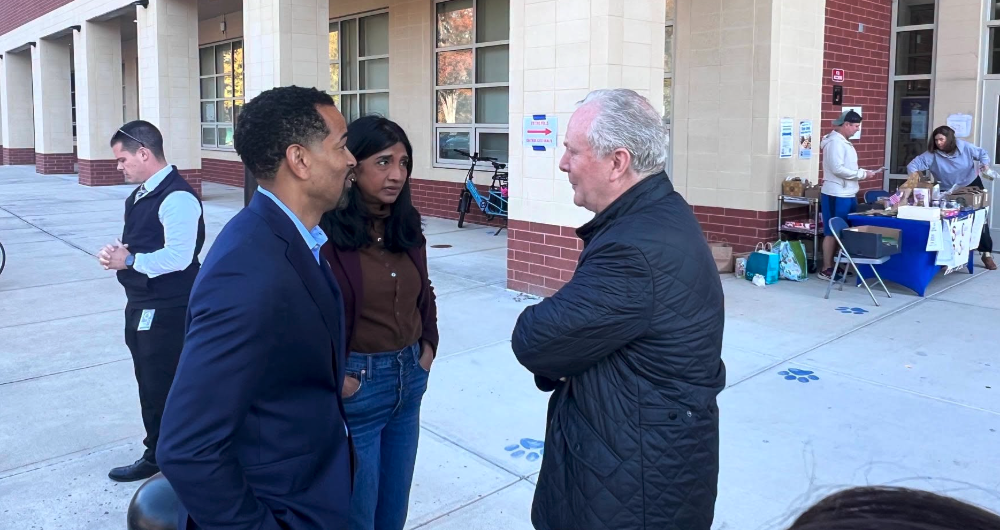
Maryland Leaders Cast Ballots as Election Day Arrives
Maryland Leaders Cast Ballots as State Heads to Tuesday's General Election Maryland's top elected officials marked Election Day...

SEI Breaks Ground on Ruby-Mac Place Affordable Housing in Portland
Thirty-one families will soon have keys to homes built specifically for them in Northeast Portland. Self Enhancement, Inc....