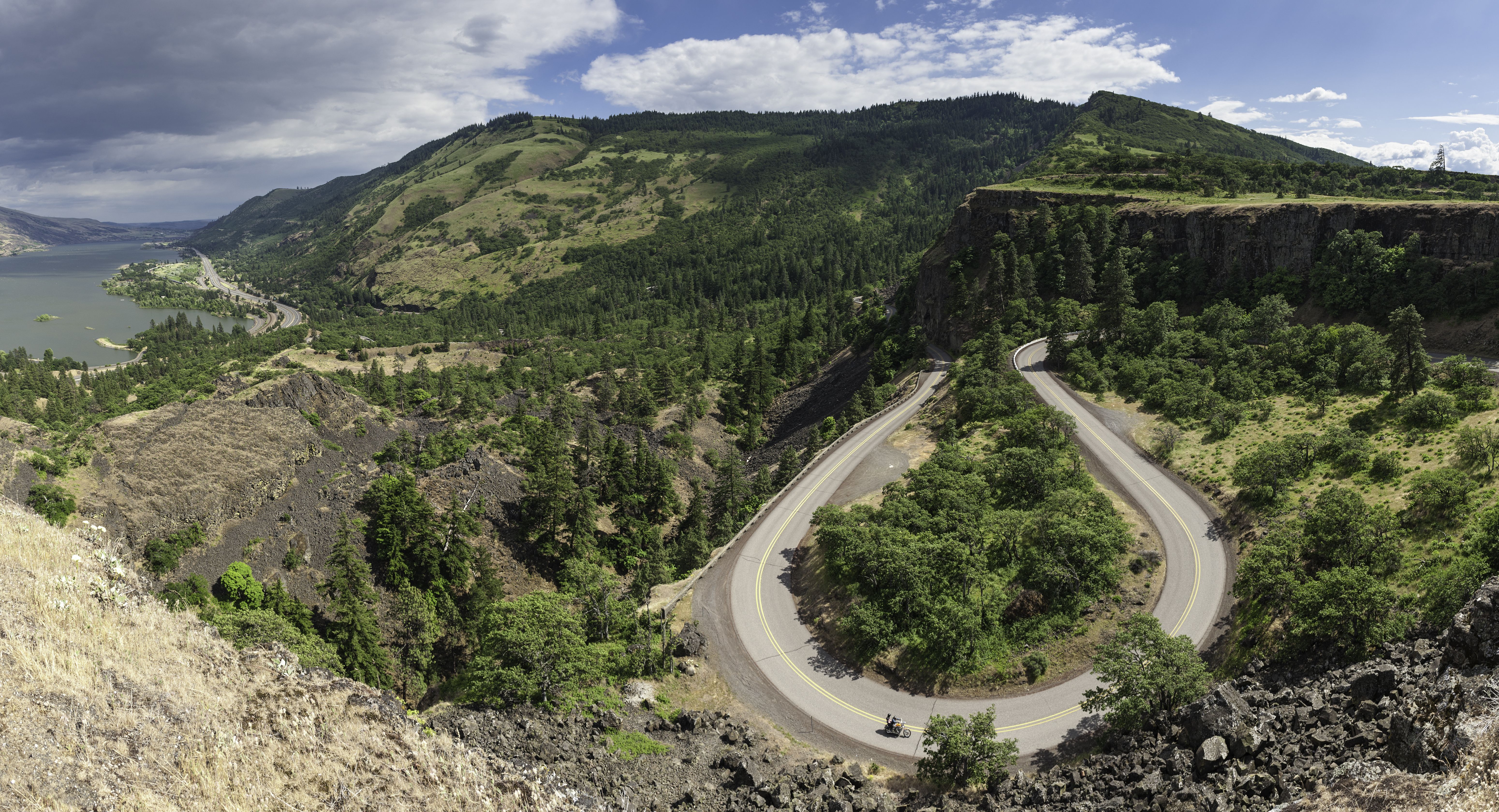
The Historic Columbia River Highway runs from The Dalles to Troutdale along the Columbia River Gorge, a route completed in 1922 as the first planned scenic roadway in the United States.
Riders traveling east to west begin in The Dalles, where the dry hills of eastern Oregon give way to the green, rain-fed gorge. The town offers fuel, historic buildings, local breweries and views across the river to the Washington bluffs.
About 20 miles west, Hood River sits at the center of the Fruit Loop, a scenic drive through orchards and vineyards on the slopes of Mount Hood. The area is known for windsurfing and kiteboarding on the steady winds that funnel through the gorge, and roadside stands sell apples and pears in season.
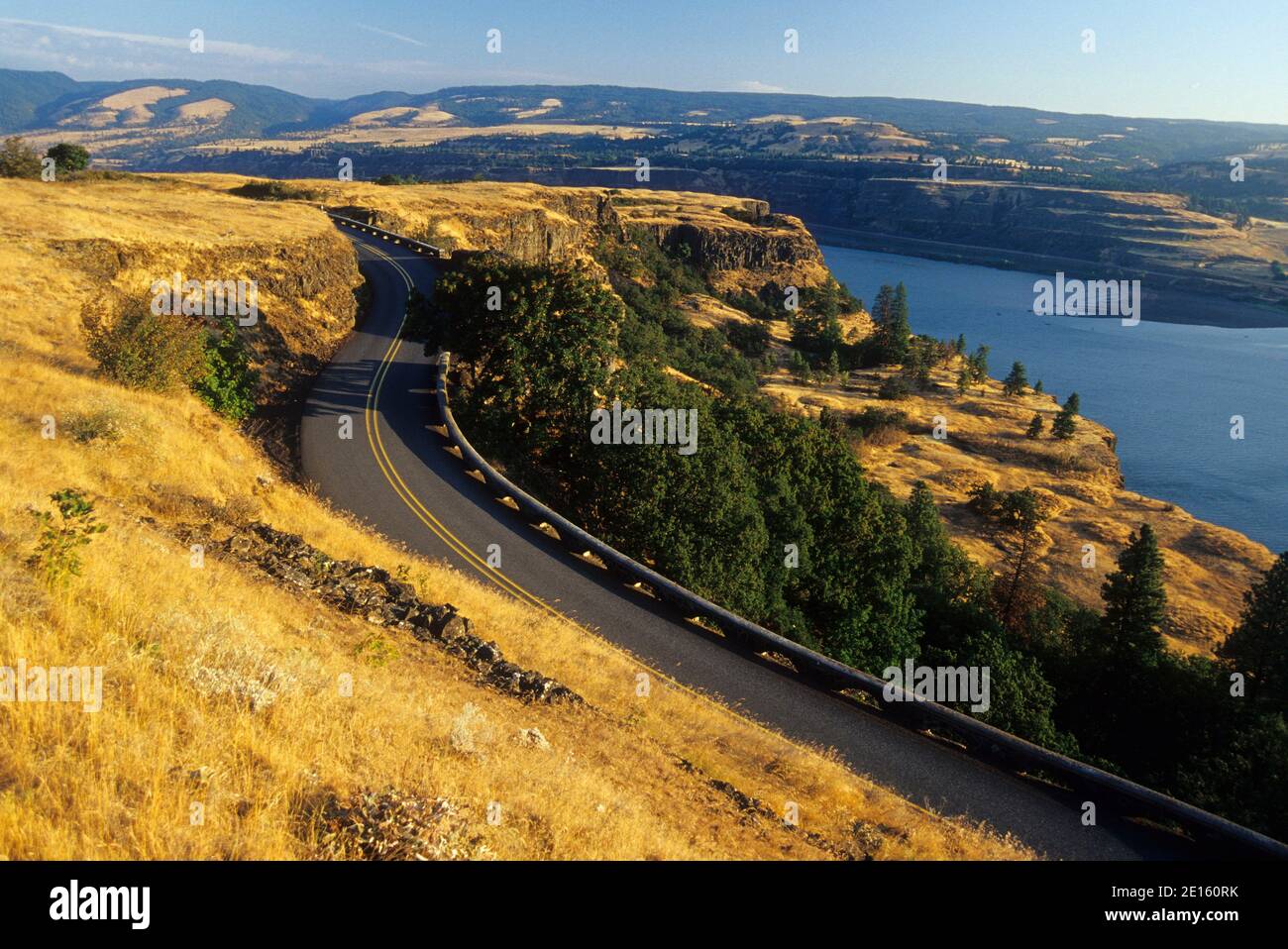
Cascade Locks marks the base of the Bridge of the Gods, a narrow steel truss bridge that carries the Pacific Crest Trail across the Columbia River to Washington. The town has a riverfront park, a marine park and the sternwheeler Columbia Gorge, which runs narrated cruises through the gorge.
Waterfall corridor tightens through old-growth forest
West of Cascade Locks, the historic highway climbs into its most dramatic section. The narrow road winds through dense forest lined with original 1920s stone walls and guardrails. Curves are tight enough to be engaging without being aggressive, and the old-growth canopy creates a tunnel effect motorcyclists find particularly rewarding.
Multnomah Falls drops 620 feet as the tallest waterfall in Oregon and one of the most photographed in the country. Smaller falls — Wahkeena, Bridal Veil, Latourell and Horsetail — appear in quick succession and draw far fewer crowds.
The highway ends at Troutdale on the eastern edge of the Portland metropolitan area. The historic downtown and outlet stores sit a short ride from Portland’s food scene, craft breweries and neighborhoods.
This status as the first planned scenic roadway in the United States stems from a vision to model the route after the great scenic roads of Europe. Built between 1913 and 1922, the Historic Columbia River Highway was designed with an elegance intended to take full advantage of the natural beauty along the route rather than serving as a simple means of travel.
The engineering of the road is historically significant, earning it a designation as a National Historic Civil Engineering Landmark by the American Society of Civil Engineers. This recognition highlights the work of engineer Samuel C. Lancaster, who designed the roadway to make the gorge’s waterfalls, canyons, and cliffs accessible to all.
“The best road trip moments are rarely on the itinerary. A hand-painted sign for a pie shop, a swimming hole visible from the bridge, a sunset that demands you pull over. Plan enough structure to keep the trip moving, but leave enough slack in your schedule to say yes when something unexpected catches your eye,” Best Western reported.
Related reading

Tennessee SEC Title Path: Beat Vanderbilt, Need Texas A&M Upset Over Texas
Tennessee sits in a three-way tie for second place in the SEC standings entering Week 13 and controls...
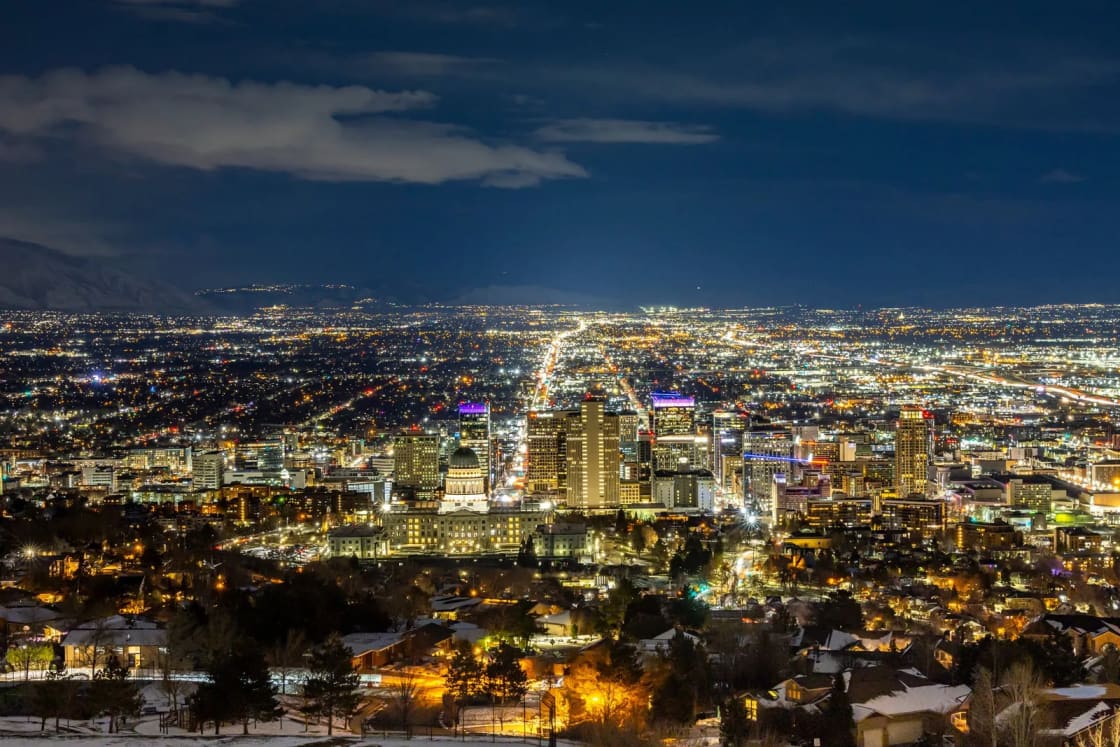
Provo.com Guide Highlights The Roof Among SLC Restaurants With Views
Salt Lake City offers skyline and alpine views that Utah Valley restaurants cannot easily match, a Provo.com guide...

Louisiana Bids to Host U.S. Space Force Academy at LSU New Orleans Campus
Louisiana is one of at least two dozen states competing to host the new U.S. Space Force Academy,...

Immigrant Workers Power U.S. Economy, Employers Push for Legal Protections
"It's not easy waking up at 3 a.m. every day and milking a 1,500-pound animal," said Rebecca Shi,...