
Singapore Foreign Minister Vivian Balakrishnan said on Friday that the country’s 2027 ASEAN chairmanship will be judged by whether the 11-member bloc maintains peace and advances economic integration, including a shared power grid and lower trade barriers.
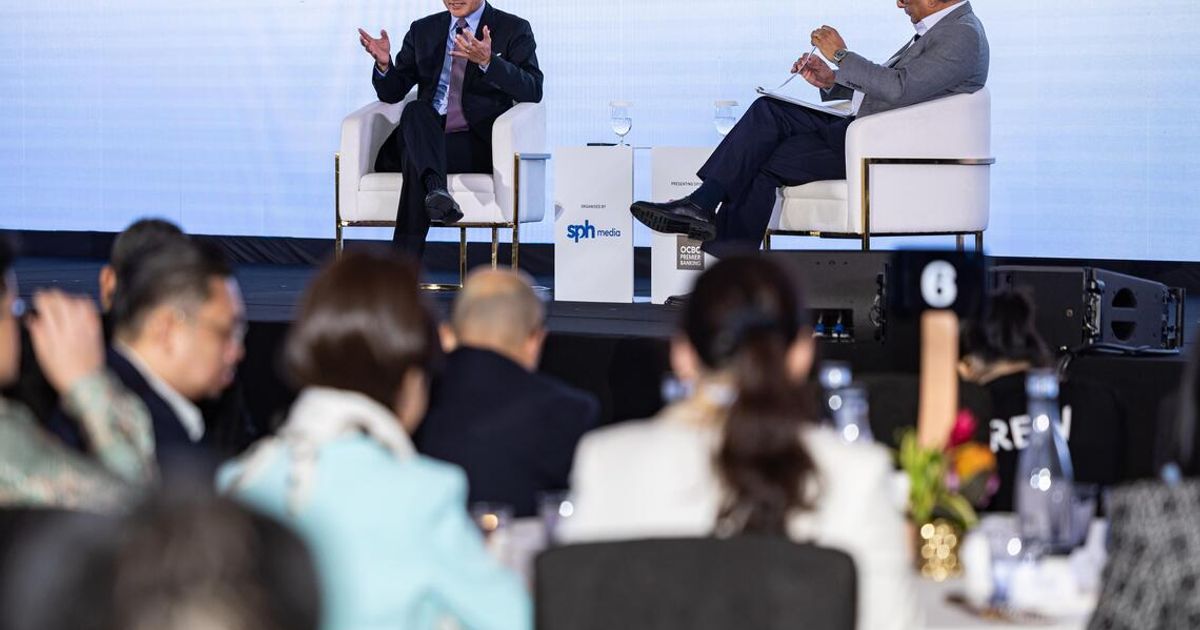
Singapore assumes the rotating chair on Jan. 1, 2027, taking over from the Philippines, The Straits Times reported. Balakrishnan spoke at the closing dialogue of SPH Media’s Asia Future Summit on Nov. 27, moderated by Straits Times senior columnist Ravi Velloor.
Economic integration unfinished
ASEAN has not yet fulfilled its vision of a single market and investment zone, Balakrishnan said. “But clearly, we need to do that,” he added, citing the need to lower trade barriers and commit to building a shared power grid. The bloc is still waiting for ratification of its renewed fuel-sharing pact and the crisis provisions of its upgraded goods-trade agreement, The Business Times reported.
Prime Minister Lawrence Wong has set the 2027 theme as “Deeper Integration, Wider Partnerships,” The Business Times said. Singapore wants to maintain ASEAN as an open, inclusive engagement zone and prevent the region from becoming an arena of proxy wars. “We don’t want to be forced to choose, but we want to engage all sides,” Balakrishnan said.
South China Sea code stalls on hardest issues
Negotiations between ASEAN and China on a Code of Conduct (COC) have reached about 80 percent agreement on the text, Philippine Foreign Secretary Theresa Lazaro said earlier this month. The 2026 deadline to conclude talks was missed.
The remaining 20 percent “is the most difficult,” Balakrishnan said. Points of contention remain over the geographical scope of the agreement, whether it should be legally binding, and the role of international law and the United Nations Convention on the Law of the Sea (UNCLOS), CNA reported.
Singapore last chaired ASEAN in 2018, when COC negotiations were already underway. “So it’s come down one full circle,” Balakrishnan said. “All I would say is we will do our best to try to move things along. Main thing is keep the peace, keep the trade flowing.”
Singapore urges China to show magnanimity toward ASEAN
Singapore is not a claimant state in the South China Sea. Balakrishnan said the Republic regards peace and stability, freedom of navigation and overflight, and peaceful dispute resolution as paramount. He urged Beijing to be more “magnanimous” in dealing with smaller ASEAN countries.
“But you know, it’s a superpower that is still learning how to exercise both hard and soft power, and I think this is work in progress,” he told CNA.
The Lowy Institute in 2025 ranked China ahead of the United States on military posture in Asia, The Business Times reported. An ISEAS survey in April showed 52 percent of Southeast Asian opinion leaders would side with China over the U.S. if forced to choose. “Hedging, however, rests on a US-led balance, which America maintains for its own reasons: to deny Beijing regional hegemony,” The Business Times wrote.
Balakrishnan has served as Minister for Foreign Affairs since 2015, giving him a decade of experience steering Singapore’s diplomacy ahead of the 2027 chairmanship. He previously chaired ASEAN in 2018 as Foreign Minister, when Code of Conduct negotiations with China were already underway, and noted the upcoming role brings the process “full circle.”
His cabinet tenure also includes stints as Minister for the Environment and Water Resources from 2011 to 2015 and Minister-in-charge of the Smart Nation Initiative from 2014 to 2017, along with earlier roles as Second Minister for Trade and Industry from 2005 to 2006 and Minister for Community, Youth and Sports from 2005 to 2011.
Balakrishnan cites Myanmar war and past conflicts as challenges
Balakrishnan acknowledged ongoing challenges, including the civil war in Myanmar. He noted ASEAN has progressed since 1967, when member states had open conflicts including the Konfrontasi, where Indonesian commandos bombed MacDonald House in Singapore. “We’ve made tremendous progress,” he said.
Keep reading

Joint Pain and Weather Link Is Real but Modest and Highly Individual, Analysis Finds
The sensation of pain shifting before a storm is a common complaint among those with joint conditions, but...

Golden Elephant Revives 2004 Song for Hong Kong Twin Brothers Campaign
Golden Elephant revived its 2004 and 2007 campaign song 親情 for a new Hong Kong film The film...

Police Identify Irish-Born Man as Killer of Canadian Teen in 1968 Cold Case
"Through specialised forensic testing ... investigators were able to identify distant genetic relatives associated with the unknown suspect’s...
Perpaduan Ummah The Evolving Unity of PAS and UMNO in Malaysian Politics
PAS more than doubled its parliamentary seats to 43 at the 2022 general election while UMNO fell to...