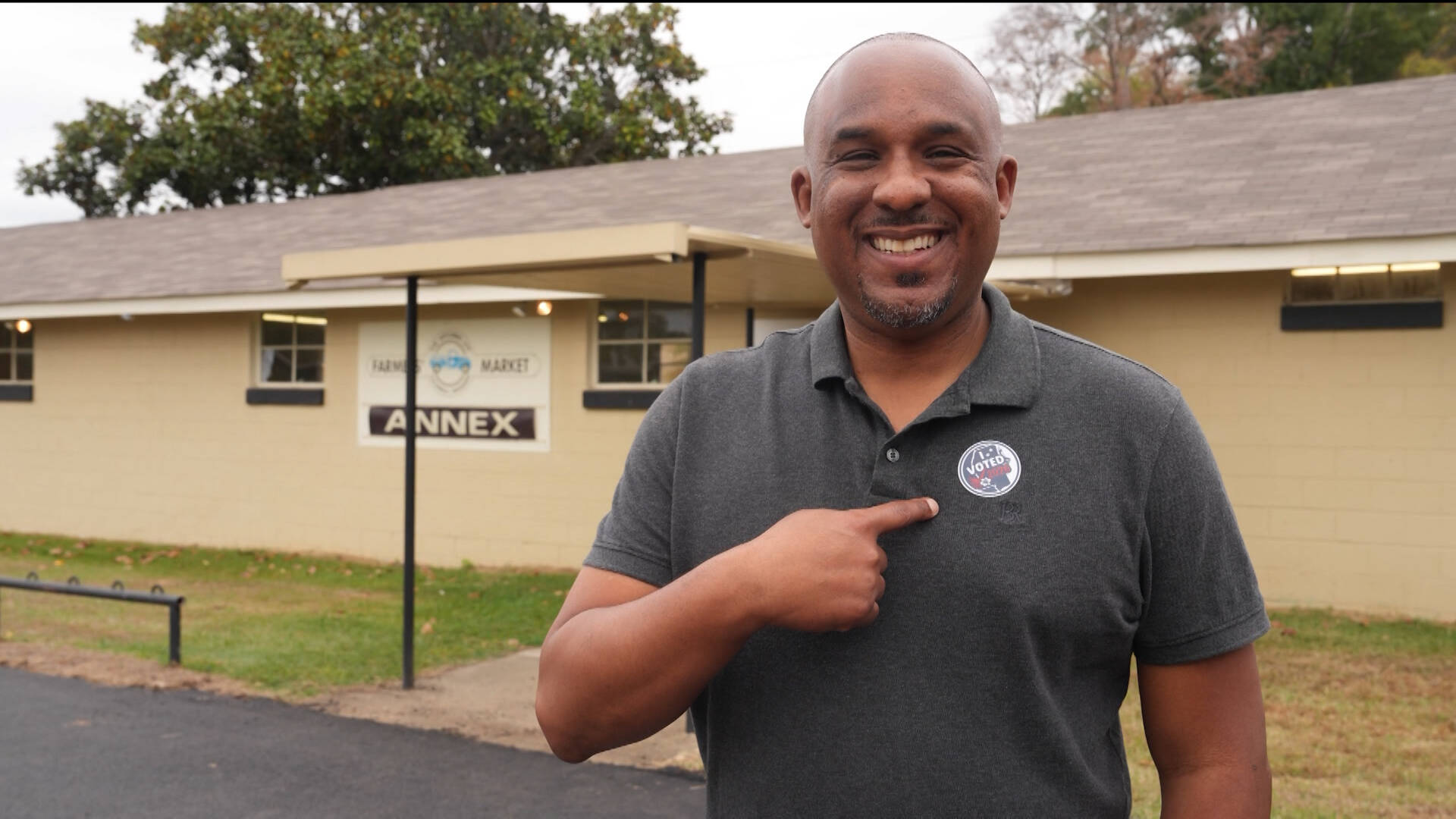
In the Deep South, a political earthquake is currently measured not in tremors, but in a razor-thin margin of 1,800 votes. As of November 6, 2026, the Mississippi Senate race between Democratic challenger Scott Colom and Republican incumbent Senator Cindy Hyde-Smith remains too close to call. According to reporting from Democracy Now!, election officials are still processing a mountain of provisional and late-arriving mail-in ballots that could decide the seat.
A Challenge to the Established Order
The stakes here transcend the typical partisan tug-of-war. If Scott Colom, a former district attorney for northeast Mississippi, emerges victorious, he would become the first Democrat to win a Senate seat in the state in 40 years. More historically, he would be the first African American to do so since the Reconstruction era of 1875. The race has been defined by a sharp contrast in messaging, with Colom centering his campaign on the economic reality of affordability for working-class families.
I’ve spent my whole life in Mississippi and now I’m raising my family here. I’m running for U. S. Senate because I want my daughters — and every Mississippi kid — to have the chance to build a great life right here at home. pic.twitter.com/7hrEfWD06v
Colom’s campaign gained national attention—and a viral moment—after he directly challenged Senator Hyde-Smith’s response to rising food costs. When the incumbent suggested that Mississippians struggling with inflation should simply “pick another protein,” the backlash was swift. Voters featured in Colom’s campaign ads didn’t mince words, with one resident declaring, “She done lost her damn mind. I’d rather pick another senator.”
You can’t lead with doubt. You have to believe. You have to lead with belief, and that’s where the power is. When you believe things, you can actually achieve it.
This sentiment, voiced by Colom himself, reflects a broader frustration with national Democratic strategy. Colom has been vocal about his party’s tendency to write off the South as a lost cause, arguing instead that it was a “betrayed cause” due to a lack of consistent investment. The personal history between the candidates adds another layer of friction: in 2022, President Biden nominated Colom to the federal bench, a move that was blocked by Senator Hyde-Smith.
The Southern Shift and the Organizing Tide
The situation in Mississippi is not an isolated incident but part of a wider, observable shift across the Southern United States. Cliff Albright, co-founder of Black Voters Matter, notes that despite the national party’s historical hesitation to pour resources into states like Mississippi, Louisiana, and Alabama, the region has seen massive shifts in voting margins—some between 20 and 24 points—compared to previous cycles. This momentum, Albright suggests, is the result of years of grassroots organizing that has effectively turned the South into a competitive landscape.

The legal machinery of the election is now in full swing. Lawyers for both the Republican and Democratic campaigns have descended on Mississippi to contest the treatment of affidavit and provisional ballots. While Republican legal teams are pushing to segregate these ballots, civil rights advocates argue that such actions are inconsistent with state requirements. The outcome of these challenges will ultimately determine whether the “sleeping giant” of Southern voter engagement translates into a seat in the U.S. Senate.
The Structural Reality Beyond the Ballot
While the potential for an upset is historic, activists are cautious about framing these results as a sign that systemic hurdles have vanished. The history of voter suppression in the region remains a constant factor. Even as Democrats celebrate successes in states like Georgia—where Keisha Lance Bottoms has ascended to the governorship and Black women now hold a majority of state-level offices—the underlying struggle to ensure every vote is counted persists.
The debate over political strategy is also intensifying. For years, the prevailing wisdom in some Democratic circles has been to hunt for elusive “swing” voters in the suburbs. However, the performance of candidates like Colom in Mississippi and Angie Nixon in Florida—who operated with minimal national support—suggests that mobilizing the existing base of Black and Brown voters may be a more potent path forward. As the count continues in Mississippi, the results threaten to upend the long-held assumption that the South is permanently out of reach for Democratic candidates, forcing a national reckoning on where to invest time, money, and political capital.
Worth a look

Ajay Mitchell Scores Career-High 35 as Oklahoma City Thunder Rout Memphis Grizzlies
Ajay Mitchell’s Career Night Highlights Thunder’s Dominant Run The Oklahoma City Thunder’s 128-97 victory over the Memphis Grizzlies...
Obituary: Owen Leroy Smith, 60, of Garretson, South Dakota
Owen Leroy Smith: A Life Measured by Connections and Community Owen Leroy Smith, a man whose life spanned...

Dougherty County Mother Indicted in Death of 3-Year-Old Son
India Swiney indicted in death of 3-year-old Braxton Swiney A Dougherty County mother is facing a seven-count indictment...

Minkah Fitzpatrick focuses on Chiefs after comments about Jets identity
Minkah Fitzpatrick is looking to turn the page. As the New York Jets prepare for a high-stakes showdown...