
Wealth management firms chasing high-net-worth (HNW) clients are hitting a structural wall: they cannot hire the specialists required to service the affluent fast enough. As the concentration of U.S. household wealth shifts toward the top, firms are forced to choose between the high overhead of in-house expertise or the necessity of outsourcing.
The Wealth Migration Bottom Line:
- The Alpha Metric: By the close of 2025, U.S. household financial wealth was 57% concentrated in households with $5 million+ in assets, compared to 43% in 2019.
- The Outsourcing Gap: 55% of HNW practices outsource tax planning—the service most often outsourced.
- The Staffing Crisis: 75% of independent RIAs hired in 2025, with the industry projected to need more than 70,000 new staff over five years.
The $5 Million Threshold Drives Service Inflation
The migration of wealth is not a gradual slope; it is a cliff. According to research from Cerulli Associates, the share of financial wealth held by households with more than $5 million in assets surged from 43% in 2019 to 57% by the end of 2025. This level of concentration forces firms attempting to attract ultra-wealthy and high-net-worth clients to expand their range of services.
These clients recognize the value of services beyond typical planning and investment management; they demand sophisticated tax mitigation, trust administration, and estate planning. The problem is that these specialized services are the costliest to build in-house and the most burdensome to manage operationally. When the cost of a full-time specialist is too high, firms pivot to “renting” the expertise.
The data shows a clear hierarchy of outsourcing. Tax planning leads the pack at 55%, followed by trust administration (40%), risk management and insurance (39%), and estate planning (37%). On average, HNW practices outsource three to four services to keep their doors open to wealthy families.
Solo Practices Face Margin Compression
Scale is a factor against these staffing costs. Cerulli’s data reveals a divide between solo practitioners and ensemble (team-based) practices. Ensemble practices manage about $330 million on average, compared to $95 million for solo shops. More importantly, ensemble firms are more than four times as likely to employ specialized staff (37% versus 8%).
For the solo advisor, the math is difficult. With an average client relationship of roughly $980,000—less than half of the $2.3 million average seen in ensemble practices—the solo advisor lacks the scale to hire a dedicated tax or estate expert. They are more likely to partner or find value in the marketplace.
“The services most likely to make the biggest difference also are operationally the most burdensome to deliver and, as a result, are the costliest to take to market,” said Chayce Horton, an associate director at Cerulli.
HNW Wealth Shifts Change RIA Service Fee Structures
While this looks like a boardroom struggle for RIAs, it affects the market. As firms move upmarket to capture the 57% of wealth held by households with $5 million+ in assets, service offerings are changing.
The industry's reliance on third-party specialists introduces different fee structures. While many independent RIAs fold these services into a general asset management fee, a significant portion of HNW practices are now billing separately for trust services (54%) and tax work (44%).
Firm Scale Determines RIA Hiring and Resource Strategies
Scale dictates the approach. Chayce Horton observes that while large enterprises have the capacity for a more extensive internal resource pool, mid-enterprise firms ($5 billion to $30 billion in assets) typically acquire capabilities or formalize integrations, and those in the lowest tier are best served by partnering while maintaining a core specialty.
The hiring pressure is immense. A Charles Schwab RIA Benchmarking Study found that 75% of polled firms hired in 2025 and plan to do so again in 2026. The projected need for more than 70,000 new staff over five years suggests a talent shortage, though this estimate doesn’t take attrition, retirements, new firms and AI productivity gains into consideration.
However, there is a wild card: AI. While Schwab identifies AI as a factor in the recruiting process, the human talent war continues to drive operational costs.
RIAs Debate Separate Fees for Specialized Planning Services
The industry is currently split on how to monetize these high-end services. The Schwab study indicates that nearly nine-tenths of RIAs with $250 million or more in assets offer tax planning and strategy (88%) and charitable planning (87%). Most of these firms wrap these services into their asset management fee to remain competitive.
The tension remains: do you charge a separate fee for specialized work or do you offer it as part of the fee to lure the $5 million+ client away from a competitor? For firms without the scale to absorb the cost, the answer is increasingly a strategic partnership with a third-party provider.
The open question is whether the current trend of outsourcing will lead to a fragmented client experience. If a client’s advisor, tax expert, and trust administrator are all from different firms, the coordination of wealth management becomes a factor for the client.
Disclaimer: The information provided in this article is for educational and market analysis purposes only and does not constitute financial, investment, or legal advice. Always consult with a certified financial professional before making investment decisions.
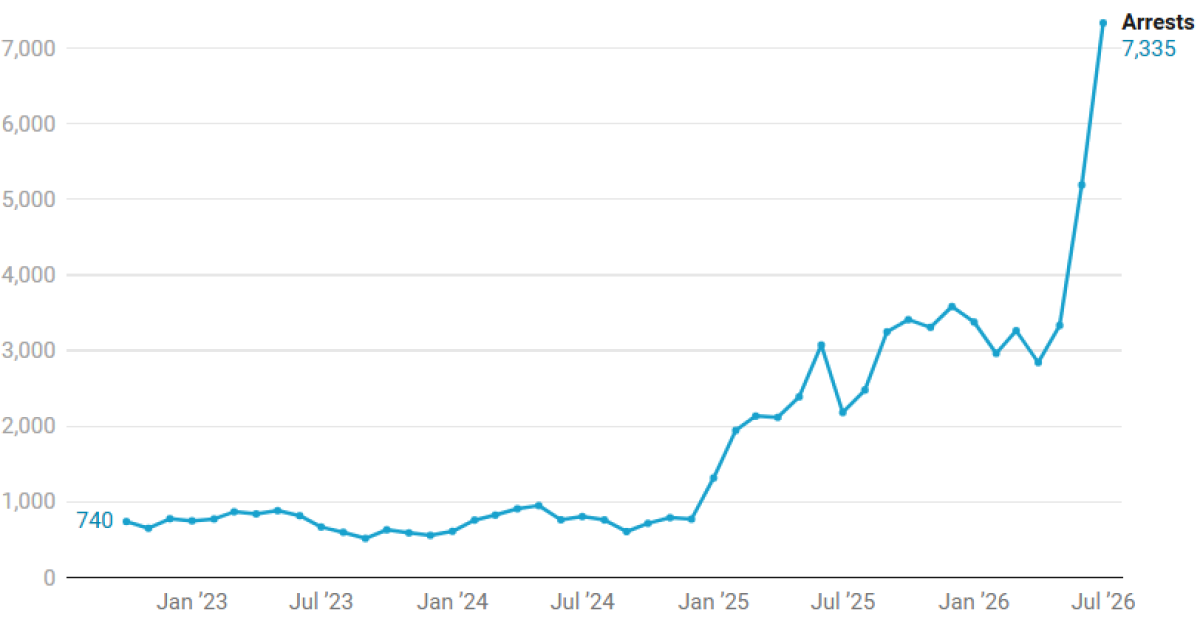
ICE arrests in Florida surge as federal strategy favors local police
ICE arrests in Florida surged to new highs this summer, with around 29,000 people detained this year, according...

Trump signals potential end to Iran war as Pentagon prepares strikes
President Donald Trump is signaling a potential end to the conflict with Iran, but behind the campaign rhetoric,...

Hartford Stage hosts U.S. debut of new Dracula adaptation
Hartford Stage is hosting the U.S. debut of a new adaptation of Bram Stoker’s "Dracula," a production that...

Denver Broncos host Kansas City Chiefs in Week 8 AFC West clash
The Denver Broncos (5-2) host the Kansas City Chiefs (5-1) this Sunday at Empower Field at Mile High...