
The federal government aims to shield American sugar manufacturers from unfair competition originating in Brazil and other nations by imposing an extra duty on sugar imports.
U.S. Sen. John Hoeven, R-N.D., convened a press conference Wednesday at the American Crystal Sugar headquarters in Moorhead, Minnesota, to draw attention to the proposal.
U.S. Trade Representative Ambassador Jamieson Greer announced the tariff modification, which is aimed at Brazil but will apply to other countries. The move is part of an existing investigation into unfair trade practices that have led to record imports of out-of-quota sugar into the U.S. market.
Hoeven, flanked by leaders from the sugar industry, said the domestic industry needs protection from foreign dumping. “If these unfair trade practices wipe out our industry, the consumer is disadvantaged because then we’re at the mercy of whatever price they want to charge,” Hoeven said of sugar-exporting countries.
The senator noted a study by the North Dakota State University Agricultural Risk Policy Center found that sugar imports going over quotas resulted in an estimated loss of up to $1.8 billion for the U.S. sugar industry last year.
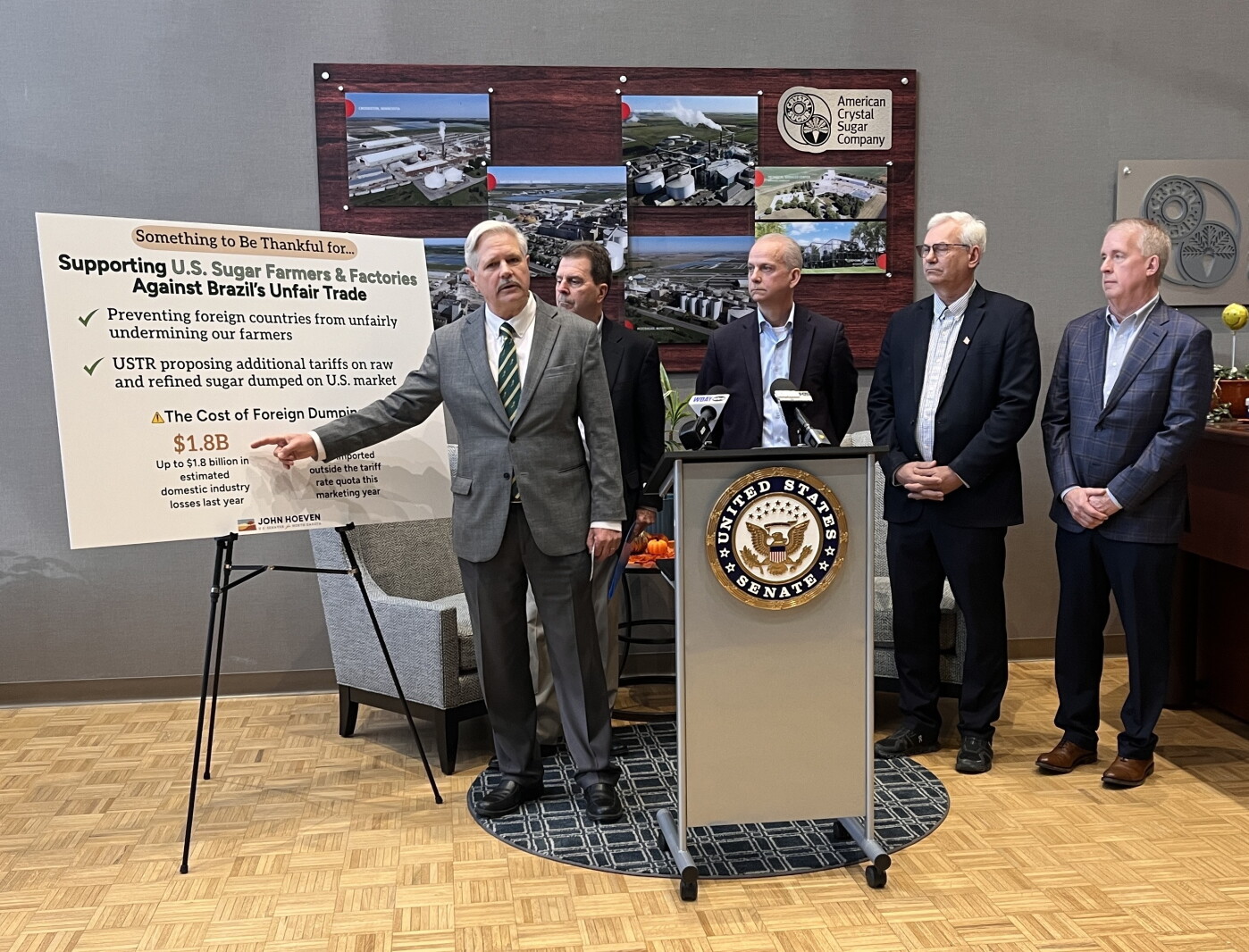
Rick Kasper, president and CEO of Minn-Dak Farmers Cooperative, said that the predatory trade practices by other countries have persisted for years. “We will urge USTR to take this opportunity to update the sugar tariffs, thereby ensuring that foreign producers are not enriched at the expense of American farmers and workers,” Kasper said.
Tom Astrup, president and CEO of American Crystal Sugar, added that the unfair practices threaten the viability of cooperatives, processing facilities and rural communities.
American Crystal Sugar, the largest beet sugar producer in the United States, sells approximately 15% of America’s sugar, as noted in its own profile. Owned by nearly 2,800 shareholders, the cooperative raises about one-third of the nation’s sugarbeet acreage in the Red River valley of Minnesota and North Dakota.
The proposal is a draft that could take 45 to 60 days to be implemented. Written comments on the policy are due Dec. 30, and the trade agency will hold a hearing about the proposed tariff modification Jan. 14.
Worth a look

North Charleston Police Issue Black Friday Shopping Safety Tips
The North Charleston Police Department (NCPD) has issued a set of safety tips for shoppers ahead of Black...
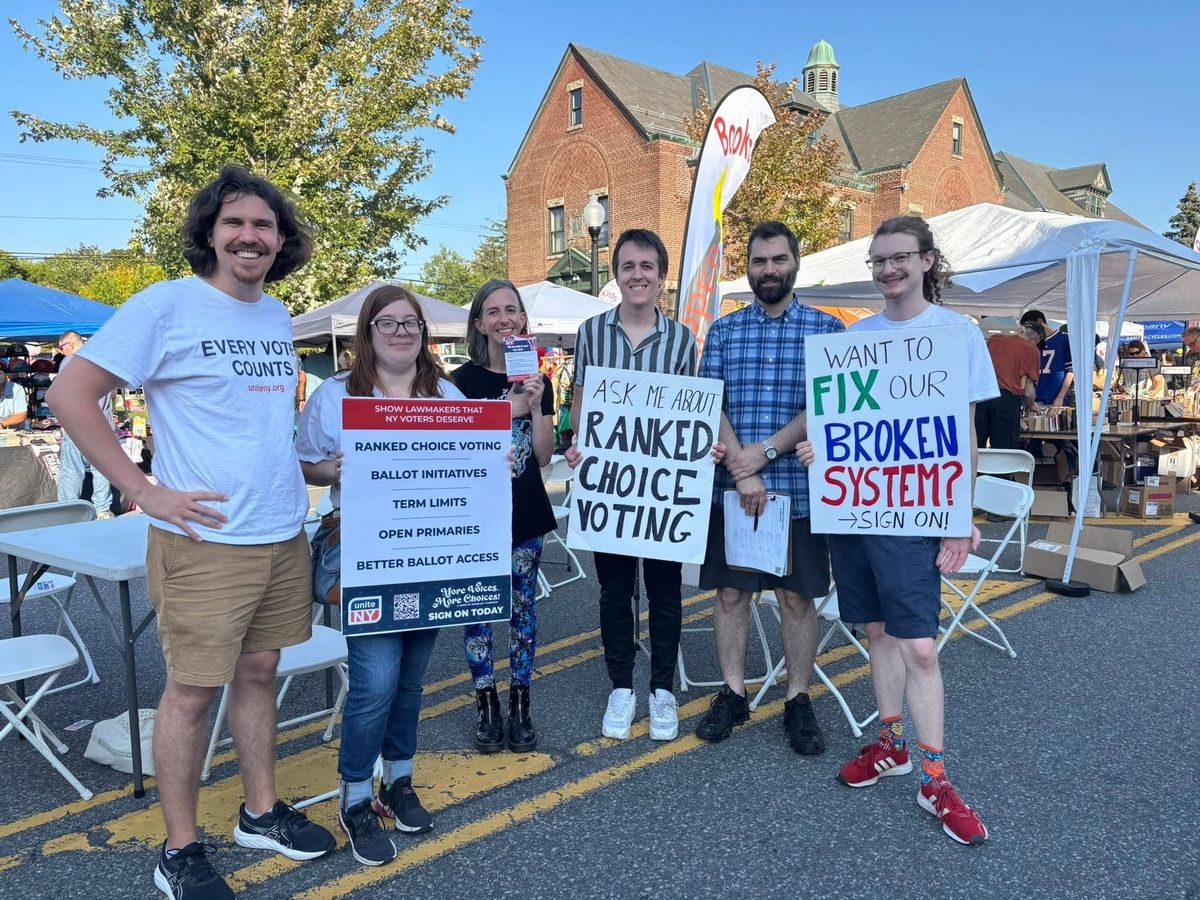
RCV Albany Sues City Over Rejected Petition in State Supreme Court
Ranked Choice Voting Albany sued the city on Monday in state Supreme Court, seeking to overturn the rejection...
New York Legislators Demand Repeal of New Jersey First Act
New York state legislators are demanding New Jersey Governor Mikie Sherrill repeal a 15-year-old law they say harms...

Judge Upholds NYC Rent Freeze for Rent-Stabilized Apartments Mamdani Supports
A Manhattan judge on Wednesday upheld a two-year rent freeze on roughly 1 million rent-stabilized apartments in New...