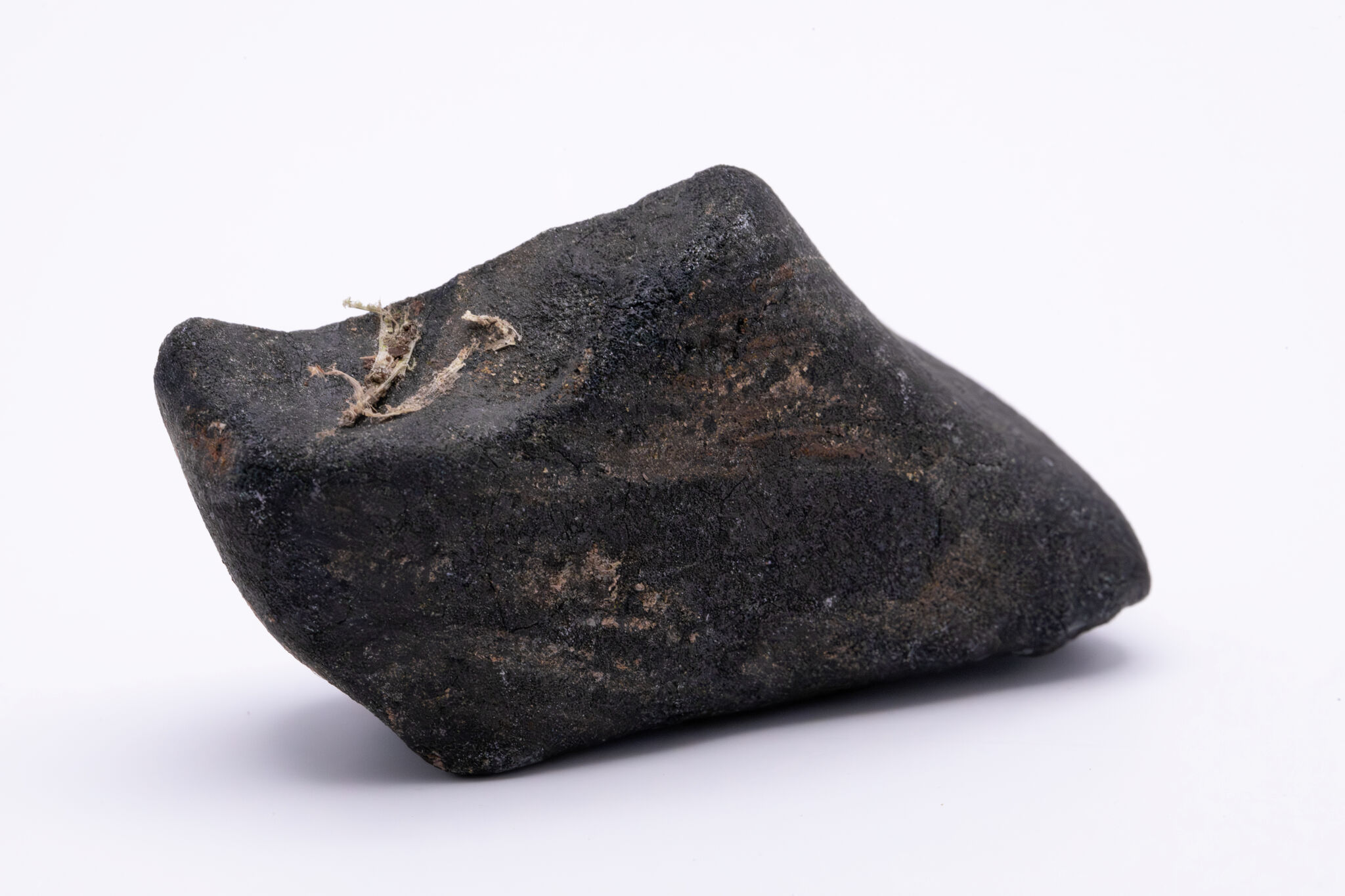
On March 21, 2026, a routine Saturday afternoon in the Houston area was interrupted by a sonic boom that rattled homes across Southeast Texas. While many residents looked to the skies for an explanation, Spring resident Sherrie James experienced the event in a far more intimate manner: a piece of a 4.5-billion-year-old meteorite punched through her roof and landed in an upstairs bedroom, near her daughter’s bed. Starting November 6, 2026, the Houston Museum of Natural Science (HMNS) will offer the public a chance to examine this celestial visitor in a new, free exhibit titled Fall to Earth.
From Space to a Suburban Bedroom
The object that triggered the commotion was a one-ton space rock that entered the Earth’s atmosphere at approximately 35,000 mph. As it disintegrated roughly 29 miles above the Houston area, the resulting explosion was estimated to be equivalent to 26 tons of TNT. The sheer energy release explains why the sonic boom was felt across such a wide radius, leading to a scramble for answers that involved the Ponderosa Fire Department.
For Sherrie James, the experience remains a surreal encounter with cosmic history. “It’s just exciting to think of where it’s been and how far it’s traveled,” James said. “That little thing has traveled by planets and stars, there’s no telling how far it’s come. So, it’s very exciting. I just feel blessed it came to see me.”
The Science of a Violent Past
The recovery effort was a collaborative feat. NASA planetary scientist Marc Fries utilized a combination of weather radar, seismometer data, and eyewitness accounts to track the debris field. His search eventually led to the discovery of a 46-gram fragment along a grassy strip near the Barbara Bush Branch Library, one of 19 pieces recovered throughout the region.
Researchers at Rice University have since taken a closer look at these fragments, uncovering evidence of a turbulent history that predates the rock’s arrival in Texas. While classified as an ordinary chondrite—a category that accounts for about 85 percent of meteorite falls—this specimen is unique. The rock lacks the tiny, rounded mineral grains typically found in such meteorites. Researchers determined that the rock was heated to nearly 2,000 degrees Fahrenheit while still part of its parent asteroid, melting those grains.
“We think this meteorite was impacted in space,” said Rice University planetary scientist Bidong Zhang in a June report. “It truly is a unique specimen.”
This suggests the asteroid experienced a violent collision in space. The scientific community is currently awaiting formal approval from the Meteoritical Society to officially designate the specimen as “Houston.”
The Public Stakes of Discovery
The upcoming exhibit at the Houston Museum of Natural Science bridges the gap between planetary science and the reality of living in a dynamic solar system. Carolyn Sumners, the museum’s vice president of astronomy, emphasized the rarity of the event: “A 4.5-billion-year-old fragment of our solar system’s original formation crashed through the roof of a Houston-area home. That’s not something you expect to happen in your own neighborhood.”

For the average resident, the event highlights the unpredictable nature of our physical environment. The 2026 event serves as a reminder that Earth is a constant recipient of extraterrestrial material. The ability to track, recover, and study these objects provides researchers with a rare window into the materials that formed the planets.
As the museum prepares to open the doors to Fall to Earth in the Grand Entry Hall, the focus turns to the scientific value of the fragments. The 19 recovered pieces represent the material collected throughout the Houston area since the meteorite fell.
Related reading

Explore Orlando’s backyard: 15 outdoor destinations to hike, camp and paddle this fall
Fall in Central Florida brings a specific kind of relief. While northern states trade their green canopy for...

Broncos’ Injury Concerns Grow as Two More Key Players Surface – Sports Illustrated
The Denver Broncos are facing a critical health test as they prepare for their Week 8 rematch against...

Angel Cruzado’s Post – LinkedIn
Angel Cruzado, a founder currently undergoing treatment for stage IV pancreatic cancer, detailed a rigorous travel itinerary on...

41-Year-Old Inmate Escapes Brinkley Detention Center in Arkansas
The Arkansas State Police are currently coordinating a wide-scale search for 41-year-old Rodney Smith, who escaped from the...