
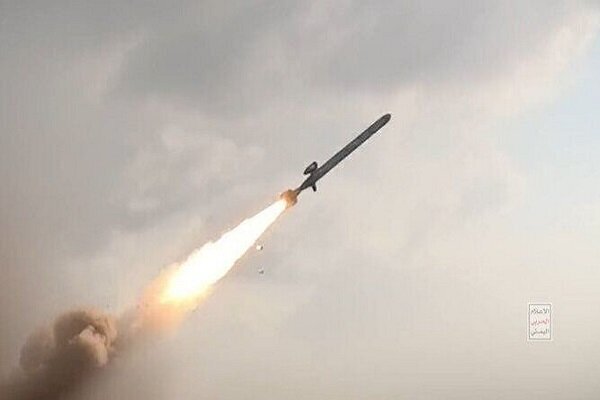
Yemen’s Iran-aligned Houthis said Sunday they struck the Rabigh oil refinery on Saudi Arabia’s Red Sea coast, the latest in a series of attacks on the kingdom’s energy infrastructure as regional hostilities widen.
The group’s military spokesman, Brigadier General Yahya Saree, said the operation achieved a direct hit on the facility, which houses the Petro Rabigh complex jointly run by Saudi Aramco and Japan’s Sumitomo Chemical, CNBC reported. The refinery sits about 165 kilometers north of Jeddah and has deep-water export terminals. Saudi authorities have not confirmed any attacks on refineries.
Saudi defenses and casualties reported
The Saudi-led coalition said earlier Sunday it had “intercepted and destroyed” a drone launched by the Houthis toward the kingdom’s western region, which includes critical energy refining and export infrastructure. Saudi Arabia’s Ministry of Interior did not immediately respond to a request for comment. Bahrain authorities said an Iranian attack on a civilian industrial facility injured two people on Saturday. Both are being treated in hospital.
On Sunday, Saudi Arabia lambasted Tehran for its continued “brutal aggression” against Gulf countries. In a statement published on X, the Saudi foreign ministry expressed “the strongest condemnation and denunciation by the Kingdom of Saudi Arabia of the criminal Iranian attacks against a civilian industrial facility in the brotherly Kingdom of Bahrain.”
Saudi airstrikes on Sunday killed six people and wounded 16 in Saada, Taiz and Lahj governorates, the Palestine Chronicle reported, citing Sanaa’s Health Ministry and Saba news agency.
Maritime incidents and oil market reaction
The agency gave no further details, urging vessels to stay vigilant.
In early Asia trading hours, international benchmark Brent futures inched 0.22% lower to $92.35 per barrel, while WTI crude was down 0.19% at $83.25 a barrel, according to CNBC.

Trump threatens military strikes against Iran
Both sides have been in indirect communication via Qatar. In a Fox News interview Saturday, Trump warned he was inclined to order military strikes against Tehran next year if the two countries failed to finalize an agreement, CNBC reported.
“They’re more aggressive now than before the election,” Trump said, describing Iranian officials as “professional tap dancers.” “They talk all the time, all they do is talk,” he added.
Iran’s Deputy Foreign Minister Kazem Gharibabadi said Saturday after a two-hour meeting with Qatari mediators that “we are in contact with mediators, including the Qataris, both in person and virtually, and are holding the necessary discussions to see whether another opportunity can be given to diplomacy,” according to Reuters.
“Iran in 2026 is not the Iran of the 1943 Tehran Conference and the 1945 Yalta Conference, just as America in 2026 is not the America of that era, but has become a country defeated in the war, not a victor,” said Mohsen Rezaei in a post on X. “The world has changed,” he added, calling for “concrete decisions rather than political rhetoric.”
“If we want to prevent this situation from continuing, we have no other choice but to remove the shadow of war and threat from the country,” the IRNA news agency quoted him as saying.
The Houthis said Sunday they struck the Rabigh oil refinery, which houses the Petro Rabigh complex jointly run by Saudi Aramco and Japan’s Sumitomo Chemical. Founded in 2005 as a joint venture, Petro Rabigh produces refined hydrocarbon and petrochemicals and is considered the first producer of many petrochemical products and the only producer of propylene oxide in the Middle East.
Its output feeds plastics, detergents, lubricants, resins, coolants, anti-freeze, paint, carpets, rope, clothing, shampoo, auto interiors, epoxy glue, insulation, film, fibers, household appliances, packaging, candles and pipes.
The facility sits about 165 kilometers north of Jeddah with deep-water export terminals. The Petro Rabigh II expansion, valued at US$9 billion, reached full production by the 4th Quarter 2017, adding high value‑added products exclusive to the Kingdom and the Middle East.
Yemeni source claims continuous Aramco attacks
A Yemeni military source later told Sanaa’s Saba news agency that “the artery of the Saudi economy, Aramco, remains under continuous attack by the Yemeni Armed Forces.”
Kiribati Evacuates Kanton Island Residents Citing El Niño and Housing Concerns
Between 40 and 50 residents of Kanton Island were given 24 hours to leave their homes this week,...

Negotiators Have Reached Provisional Agreement on About 80 Percent of the Draft Text
Negotiators have reached provisional agreement on about 80 percent of the draft text, Philippine Foreign Secretary Maria Theresa...

UN Climate Talks in Antalya Collapse After EU Rejects Draft Omitting Fossil Fuels
UN climate talks in Antalya collapsed on Sunday after the European Union, the United Kingdom and small island...

Democrats Secure Historic 258-Seat House Majority, Largest Since 1992
House Democrats have secured their largest majority since 1992, winning at least 258 seats and creating divided government...