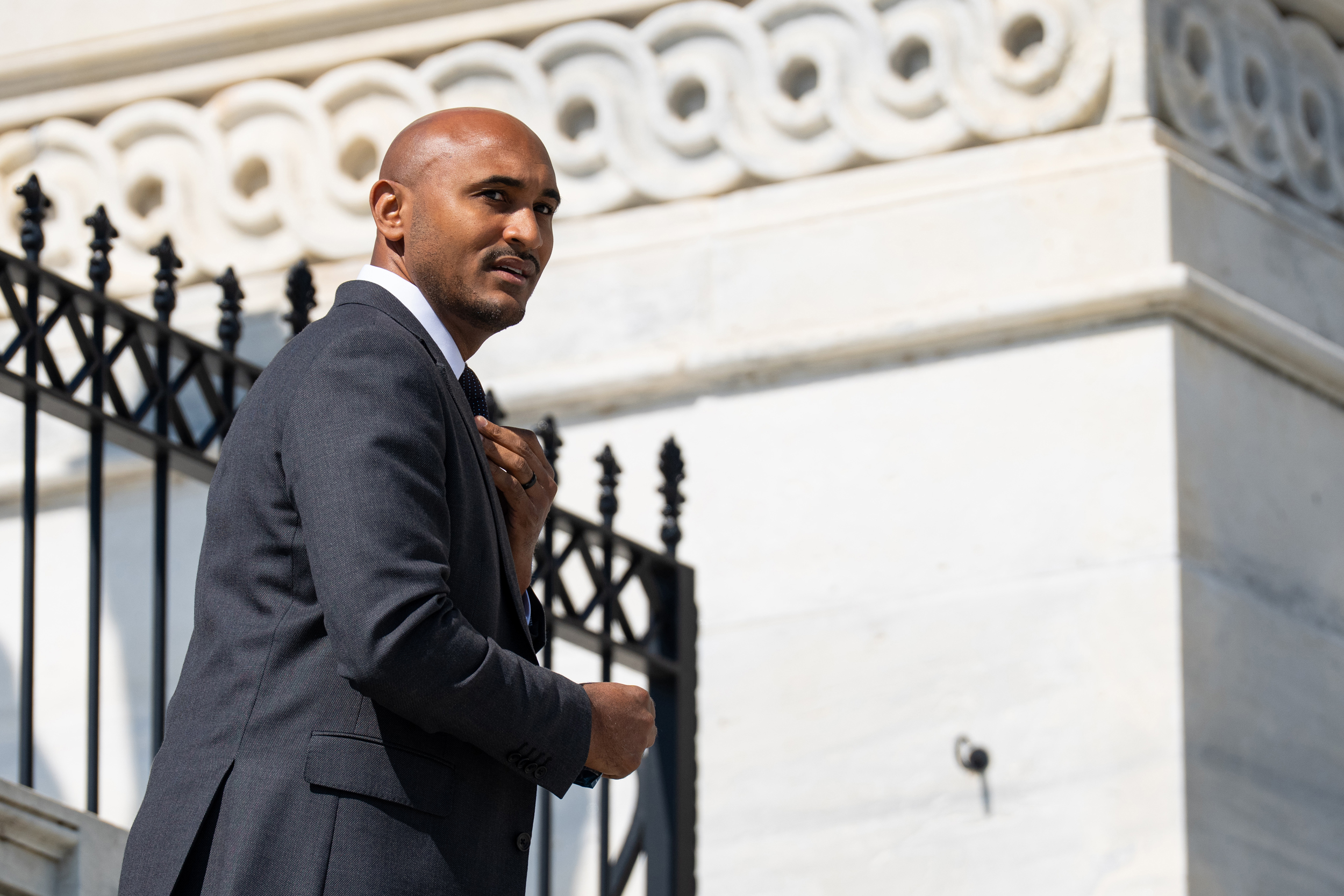
Shomari Figures successfully retained his congressional seat in Alabama’s 2nd District, defying a redistricting plan designed to displace him. Despite running in a newly configured, heavily Republican territory, the Democratic incumbent outperformed expectations by over seven points, signaling a shift in voter engagement across rural Alabama.
The Limits of Political Boundaries
For Warren Tidwell, a community organizer in rural Alabama, the recent election results were less about party ideology and more about a desperate need for support. While political analysts have spent weeks characterizing the outcome as a “blue wave,” Tidwell sees a different reality. He has spent the last month navigating the wreckage left by Hurricane Isaias, which made landfall on October 9 and cut a path of destruction through the state, killing nine people across three states, Inside Climate News reported.
The storm’s impact remains visible across the 2nd Congressional District, where residents are still struggling to rebuild. For these voters, the election was a referendum on federal responsiveness.
When the Alabama congressional delegation—uniting both Republicans and Democrats—sent a signed letter to President Trump on October 24 requesting a major disaster declaration, they were met with silence. By October 27, the White House had issued a major disaster declaration for 15 Florida counties, leaving neighboring Escambia County, Alabama, without similar federal assistance.
The Price of Political Friction
The delay in federal aid has fueled speculation about the nature of the relationship between President Trump and Alabama Governor Kay Ivey. According to individuals with insight into the administration’s internal deliberations, this reluctance stems from a chilly rapport between the president and the state’s governor, which trace back to the 2021 refusal of Trump’s request to host a political rally aboard the U.S.S. Alabama.
White House spokesperson Lauren Bis rejected the notion that disaster relief decisions are influenced by political grievances.
“The President responds to each request for Federal assistance under the Stafford Act with great care and consideration, ensuring American tax dollars are used appropriately and efficiently,” Bis said.
Despite this, the human cost is mounting.
Pastor Timothy Williams, who lives in the historically Black Shiloh community, described a landscape of broken power lines and damaged roofs, where neighbors have been forced to rely solely on each other. “We haven’t seen much of any federal response,” Williams told Inside Climate News. “The hurricane split light poles. It took trees.”

A Strategic Backfire
The political map that set the stage for this election was designed to isolate Figures. Following the Supreme Court’s decision that the Voting Rights Act did not mandate the formation of majority-minority districts to assist minority voters in electing their preferred candidates, Alabama Republicans redrew the map to pull Figures away from his Mobile stronghold and place him in the more conservative Wiregrass area.
Had these boundaries been in place during the 2024 presidential election, Donald Trump would have carried the district by 15 points.
Instead of weakening the incumbent, the maneuver appears to have energized voter turnout in historically underserved areas. Andrea Eckelman, a political science professor at the University of Montevallo, said that disaster relief often serves as a catalyst for political participation.
“You may be able to explain away high prices for a while, but you can’t explain away why the family whose home has been destroyed isn’t getting help.”
Figures, who moved to Montgomery to sustain his campaign, focused his platform on rural affordability, agriculture and improving rural access to health care. He acknowledged that the political gamesmanship surrounding the district lines was no surprise. “They were hoping to get rid of me and then probably take steps in the next session to try and get rid of Terri Sewell, too,” Figures said.
The Unanswered Question
As the recovery process continues, the question “Where is FEMA?” remains a common refrain among those Tidwell assists. Figures, who made his first House floor speech in 2025 advocating for wildfire relief in California, continues to press for federal intervention in his own state. He maintains that the needs of his constituents should transcend partisan boundaries, regardless of how the district lines were drawn.
“Some of these are very rural communities with high levels of poverty and not a lot of infrastructure,” Figures said.
“We need federal aid. We need it in those communities, regardless of whether they’re in my district or not.”
For now, the residents of south Alabama remain in a state of uncertainty, waiting to see if their request for a major disaster declaration will eventually be granted. The political map has been settled for another term, but the physical landscape of the region remains in disrepair.
Keep reading

Dr. Chris Owens Discusses Strengthening Idaho Rural Healthcare
Idaho State University leaders discussed strategies for strengthening healthcare access across rural communities on a recent episode of...

Chicago Cubs Projected to Sign Freddy Peralta to $130 Million Deal
The Chicago Cubs are projected to sign starting pitcher Freddy Peralta to a six-year, $130 million contract this...

City Crews Harvest Honolulu City Lights Tree From Kahala Resident | News
"This is going to be the center point of our Honolulu City Lights for this year," KITV Island...
Universal Orlando Travel Agents Face New Hurdles After Epic Universe Opening
Universal Orlando travel agents face new logistical hurdles as families manage complex ticketing structures following the opening of...