
Jewish prisoners built a resilient community behind the cold steel walls of the Ohio Penitentiary in Columbus, according to historical accounts examined by The Forward.
Jack Nast wanted to be buried in a Jewish cemetery before he died in April 1918 while incarcerated at the facility. Fellow inmate Morris Hess documented his final days, though the precise events leading to his imprisonment remain largely unclear.
As he lay ill, Nast cried out that he was a Jew, Hess wrote. He voiced pride in Jewish achievements and history, trust in the tenets of Judaism, and sorrow that his personal conduct had fallen short of its values. He wished to receive a burial befitting someone born in the House of Israel, and with the aid of others, his request was granted.
Isaac B. Jashenosky and Jacob Myers, two men who regularly visited the Jewish prisoners, were with Nast before he died. Jashenosky, whom the inmates called rabbi, conducted the funeral service at an unidentified Jewish cemetery likely located in Columbus.
When Nast’s well-to-do family members, as described by Hess, declined to help pay for the costs, Warden Preston E. Thomas permitted the prison’s Jewish inmates to contribute to a collection for the funeral.
Four prisoners were also allowed to attend the burial in civilian clothing. They listened as Jashenosky delivered his remarks and Nast’s remains were returned to the earth.
Hess detailed these events under the headline Prisoners in Ohio Penitentiary are Grateful in the Cincinnati Jewish periodical The American Israelite, noting that Kaddish had been recited and would continue to be said weekly on his behalf. Hess signed the letter with his name and prison number, 45511.
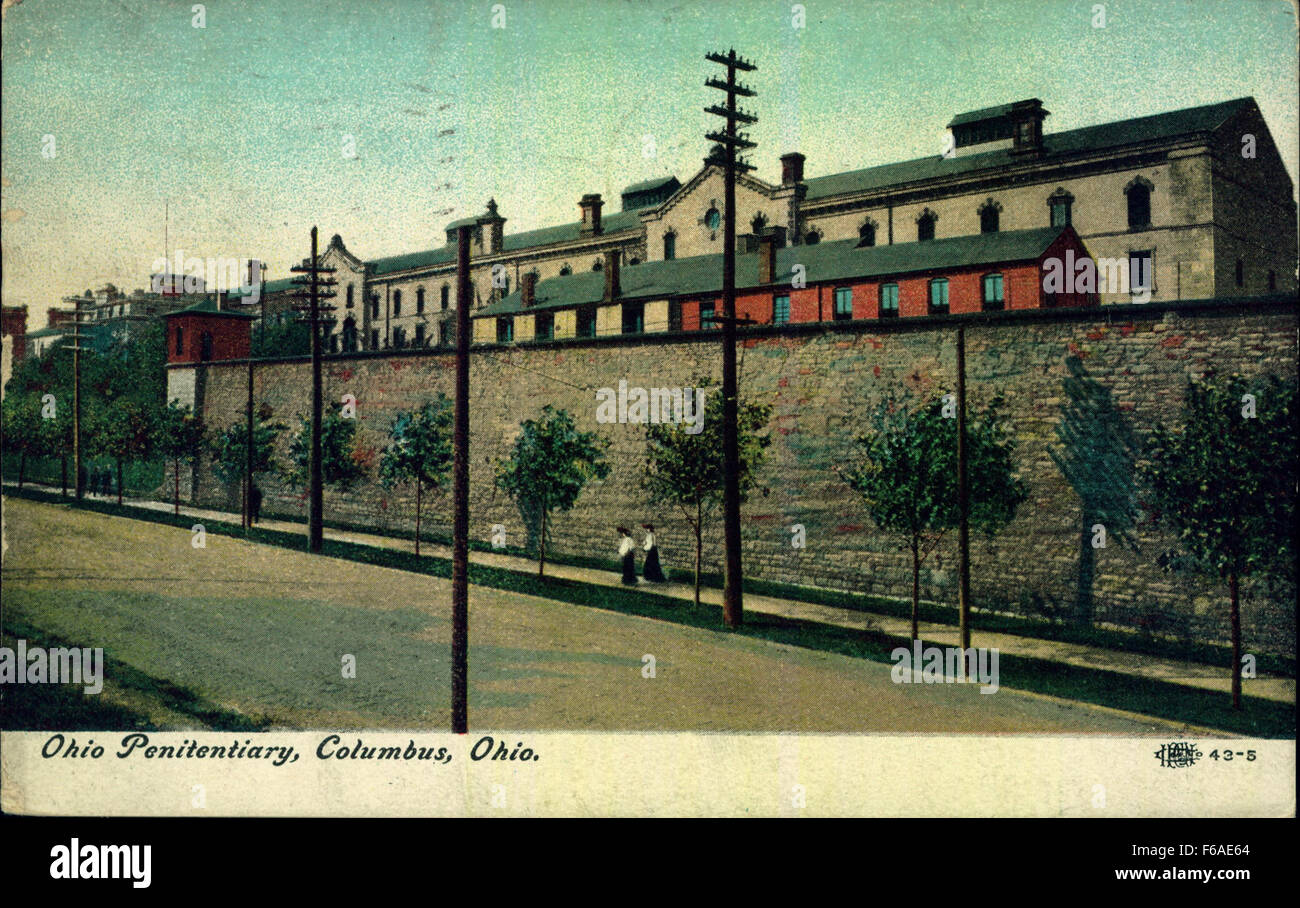
Nast’s burial participants contributed to a broader initiative aimed at maintaining Jewish religious traditions within the correctional institutions of Ohio. By 1899, prisoners were being excused from work for Jewish holidays and provided with special food. In 1902, about ten Jewish inmates received matzo for Passover, and by 1913, religious services were also being arranged at correctional institutions in Mansfield and Lancaster.
Charles Albert Rosenbaum wrote to The American Israelite in 1915 about B’nai B’rith’s efforts to reach Jewish prisoners in Ohio. For years, Rosenbaum noted, Jewish inmates had watched representatives of other faiths visit their facilities with sorrow rather than envy in their hearts.
They wondered why their own people had been so neglectful, reading of the beauties and the godlike charities of the Jewish peoples in prison libraries before turning away to look at the cold steel walls of their cells.
“How all of this has been changed!” Rosenbaum declared. He credited Jashenosky, Myers and other Columbus volunteers with organizing visits and religious services. With Warden Thomas’ permission, more than 100 services had been held over the preceding two years without guards present. Hess was among those who recorded these gatherings, noting in 1917 that a visitor, Mrs. I. J. Shatz, had distributed cigars to the prisoners.

Warden Thomas and his wife, Mary Thomas, assisted in facilitating Passover services that Hess outlined in 1920. Women from Columbus’ Ezrath Nosheim Society provided a holiday meal, and Jashenosky preached that although everyone desired liberty, true freedom came through the awakening of the soul. “Freedom is not alone a privilege, but a lifelong obligation,” Jashenosky told the prisoners.
Writing on behalf of the Jewish inmates in December 1921, fellow prisoner Harry Joseph highlighted the contributions of B’nai B’rith, the Council of Jewish Women and the Ezrath Nosheim Society. He remembered the festive meals prepared and served by women from Columbus, which included a dinner held right after Yom Kippur services. Their presence, he wrote, reminded the prisoners of the Jewish fireside with its family love.
“The knowledge that someone cares is an incentive to reach the end of this rocky road of adversity and become useful citizens.”
Jashenosky died in April 1930 at the age of 79, having served as a prison chaplain for more than half a century according to contemporary newspaper reports. Before he died, Jashenosky made one final request. He wanted two Jewish prisoners, Abe Shapiro and Adam Sikorski, to attend his funeral, and Warden Thomas granted permission.
Worth a look
USS Wyoming Ships Feature of Veterans Day Program – Sheridan Media
Fifty people filled the Clearmont Community Center to overflowing on November 11 for the annual Clearmont Historical Group...
Emanuel Nine Memorial Opens in Charleston 11 Years After Mother Emanuel Shooting
The public can now visit a site dedicated to the lives of nine people who were killed by...

Seattle Seahawks Urged to Bench Sam Darnold for Drew Lock – Yahoo Sports
Sam Darnold led the Seattle Seahawks to a victory in Super Bowl LX last year, but a sluggish...

Thomas A. Dingledine Scholarship Endowment for Achievement in Academics & Service
Incoming first-year students eyeing James Madison University face a strict November 15 deadline to complete applications for the...