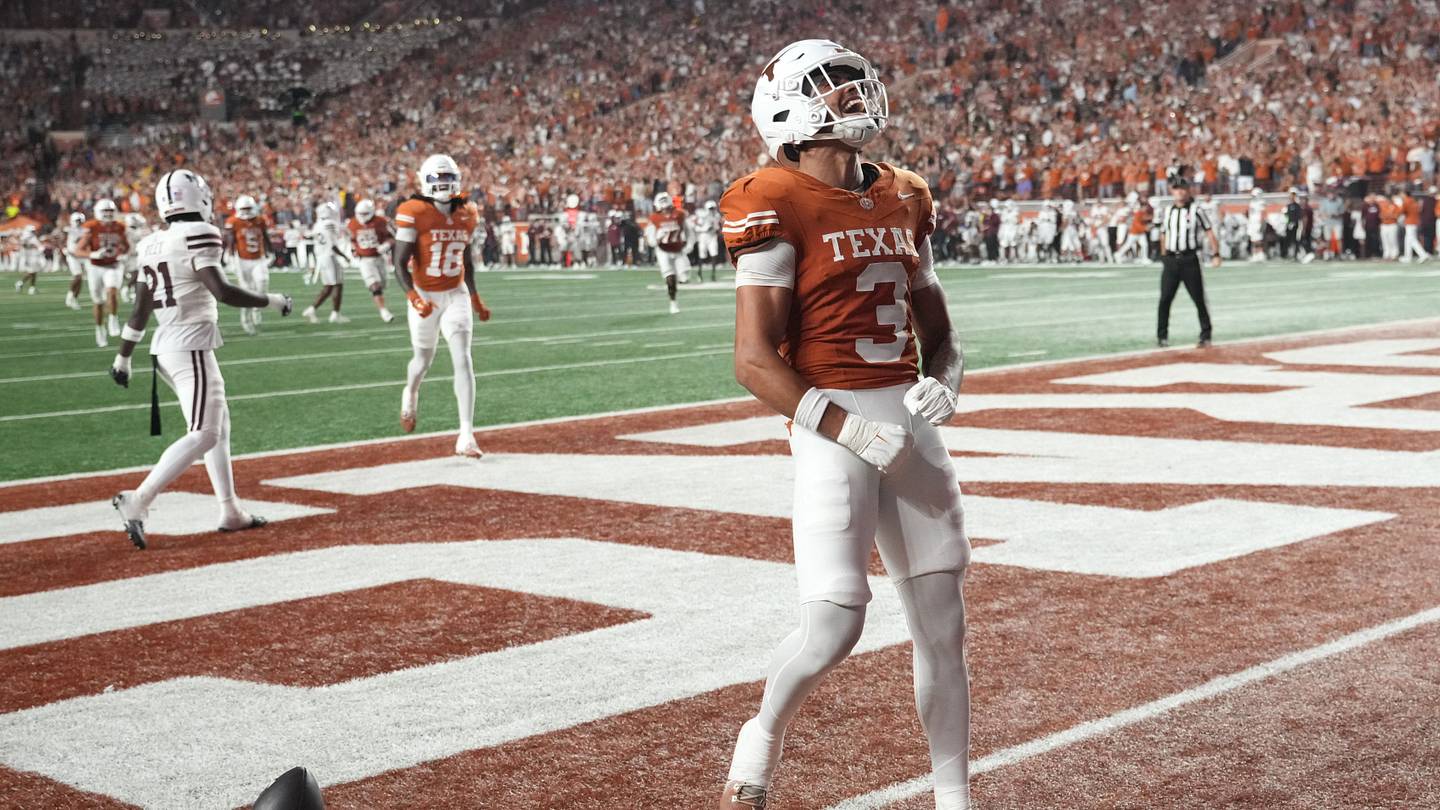
Texas enters Saturday’s matchup against Missouri as the favorite, but the contest hinges on whether the Longhorns can contain Jamal Roberts, the nation’s leader in yards after contact, and whether they can stabilize an offense struggling with injuries and turnovers. Both teams hold 6-2 records and 3-2 SEC standings heading into this critical clash.
The stakes for this SEC showdown extend far beyond a single win in the standings. For Texas, it is a test of discipline and ability to avoid the “trap game” that has haunted their recent outings. For Missouri, it is a chance to prove their balanced attack can dismantle one of the most formidable defenses in the conference. According to a report from Sports Illustrated, the outcome will likely be decided by five specific tactical battles.
Can the Texas defense stop Jamal Roberts?
While much of the national conversation surrounds Ahmad Hardy, the engine of the Missouri offense remains Jamal Roberts. He currently leads the SEC in rushing with 1,005 yards through eight games. More impressively, Roberts leads the entire country in yards after contact, having accumulated 844 yards after being hit. This ability to turn modest gains into significant yardage makes him a nightmare for defensive schemes that rely on arm tackles.
Texas has been stout against the run, allowing only 102.4 rushing yards per game, but they face a specific blueprint to follow. During a 31-3 victory over Ole Miss, the Rebels managed to hold Roberts to just 39 yards on 20 carries. To win, the Longhorns cannot simply win the battle at the line of scrimmage; they must execute disciplined, sure-handed tackling to prevent Roberts from extending drives.
Will Missouri’s offensive line hold up against the rush?
Stopping Roberts is only half the battle; Texas must also prevent Missouri from staying “on schedule.” If the Longhorns can force the Tigers into long-yardage situations, the rushing attack becomes a secondary option. Texas has shown they can be disruptive, recording seven sacks and nine tackles for loss in their game against Mississippi State. Rasheem Biles stood out in that performance, accounting for three sacks and four tackles for loss personally.
However, the Tigers have been remarkably resilient in pass protection, surrendering only eight sacks all season—the second-lowest total in the SEC. Furthermore, the Texas defensive front faces uncertainty regarding the availability of Colin Simmons. Without his presence, the Longhorns may need a more collective, unselfish effort to penetrate the Missouri backfield.
Can Raleek Brown carry the Texas rushing load?
The offensive struggles in Austin have been stark. Texas is coming off a game against Mississippi State where they managed a meager 60 yards on the ground. Missouri’s defense is equally punishing, allowing just 98.3 yards per game.

The Longhorns’ situation is complicated by significant personnel gaps. With Hollywood Smothers ruled out for the remainder of the season and the offensive line facing instability following Trevor Goosby’s injury, the responsibility falls heavily on Raleek Brown. If Texas cannot establish a consistent run game, they risk falling into a predictable pattern that Missouri is well-equipped to exploit.
| Statistic | Missouri Tigers | Texas Longhorns |
|---|---|---|
| SEC Record | 3-2 | 3-2 |
| Rush Defense (YPG) | 98.3 | 102.4 |
Will Texas exploit the Missouri secondary?
If the Longhorns find themselves unable to run, they must turn to the air. Missouri’s secondary has shown vulnerability, ranking in the bottom six of the SEC in passing yards allowed per game, conceding 226.9 yards. This presents a clear statistical opening for Texas, but the availability of key targets remains a major question mark.
Cam Coleman is currently listed as questionable, and while Ryan Wingo has been upgraded to probable, there is no guarantee either player will be at full strength for all four quarters. Coleman has already missed portions of games this season due to health concerns. If these primary weapons are sidelined, the passing burden shifts to players like Emmett Mosley V and Jermaine Bishop, potentially neutralizing the advantage of Missouri’s weak secondary.
Who wins the turnover battle?
The most glaring disparity between these two programs is how they handle the football. Missouri has been surgical, entering the weekend with a plus-eight turnover margin. Their quarterback, Austin Simmons, has thrown only two interceptions all season.
In contrast, Texas sits at a minus-three margin. Arch Manning has thrown seven interceptions, a figure that could prove fatal in a game where sustained drives are difficult to maintain. In a high-stakes SEC environment, a single mistake by Manning could gift Missouri a short field, turning a defensive stand into a touchdown. Texas has the defensive talent to win in Columbia, but only if their offense avoids giving the defense a short afternoon.
Keep reading

South County Housing Costs Outpace Local Income Growth
The widening gap between Southern Rhode Island wages and home prices Buying a home in South County has...

Messiah College and York College of Pennsylvania play to a scoreless draw
Messiah College maintained defensive pressure to hold York College of Pennsylvania to a scoreless stalemate during a high-intensity...

Oklahoma faces growing injury list ahead of Florida matchup
Oklahoma faces depth test as injury list grows ahead of Florida matchup The Oklahoma Sooners are navigating a...

Red Wings Assistant GM spotted at Sabres game amid Larkin trade rumors
The Detroit Red Wings may be preparing for a significant roster overhaul, even if their captain remains hesitant...