
The widening gap between Southern Rhode Island wages and home prices
Buying a home in South County has become a luxury reserved for the very high earners. According to the 2026 Housing Fact Book compiled by Roger Williams University, the cost of entry into the Southern Rhode Island real estate market has surged to a level that effectively excludes the majority of local workers. The report, as reported by IndependentRI.com, reveals a stark disconnect between what residents earn and what it actually costs to secure a roof over their heads.
The data paints a picture of a region where the dream of homeownership is being outpaced by rapid price appreciation. In Narragansett, the situation is most acute. To afford a median-priced single-family home in that town, a household now needs an annual income of $280,756. This is a massive leap from previous years, especially when compared to the town’s median household income of $95,721. In Narragansett, a typical family earns only about a third of what is required to participate in the local housing market.
A regional crisis of affordability
This isn’t just a Narragansett problem; it is a systemic squeeze affecting the entire southern tier of the state. The HousingWorks RI analysis noted that affordably buying a home now requires an income exceeding $100,000 in every single community across Rhode Island. In the Southern Rhode Island region specifically, only 20 percent of households—roughly 10,332 out of 52,548—can afford the median home price of $635,000.
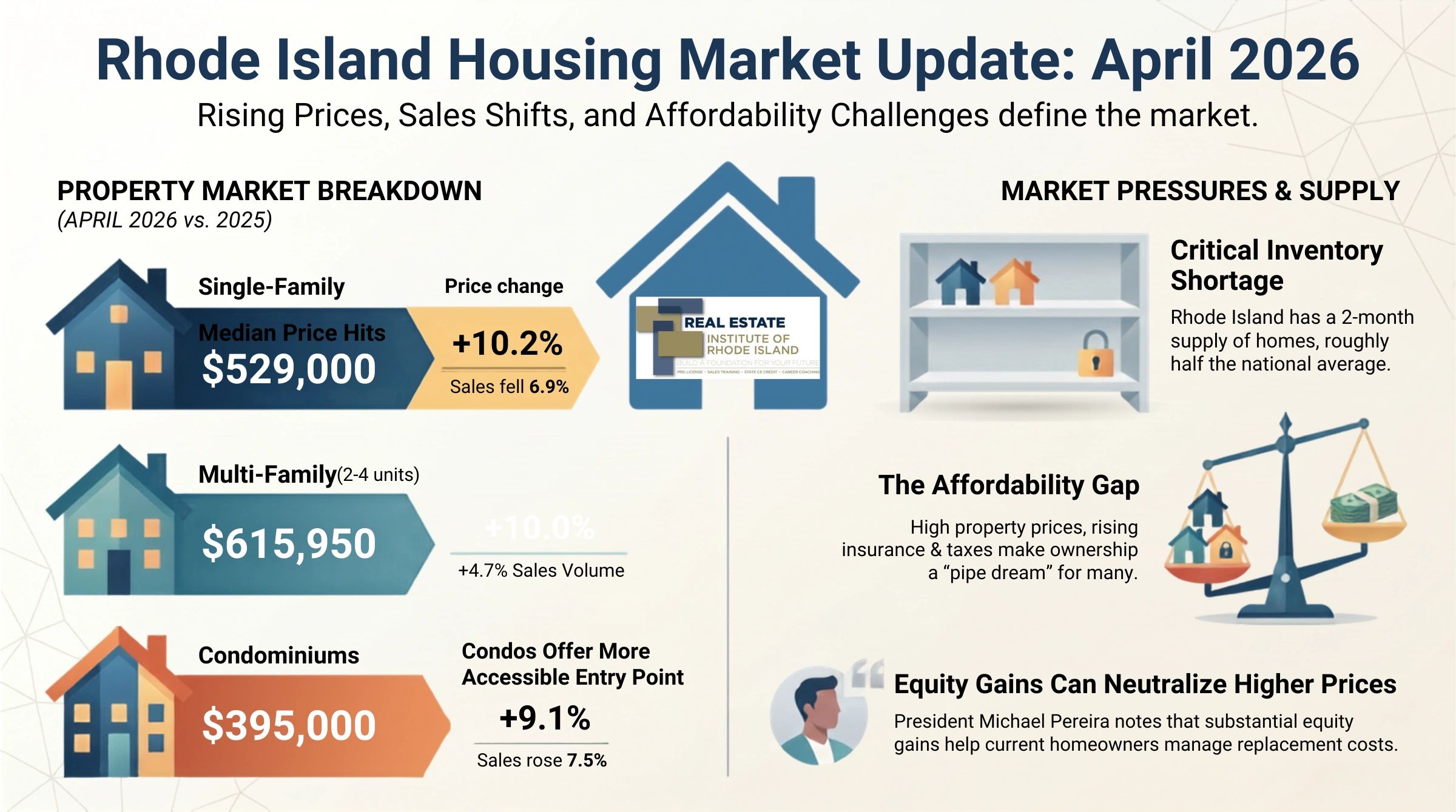
The numbers for neighboring towns show a similar, albeit slightly less extreme, trajectory:
| Town | Median Single-Family Price (2025) | Required Annual Income for Median Home | Median Household Income |
|---|---|---|---|
| Narragansett | $932,500 | $280,756 | $95,721 |
| South Kingstown | $694,500 | $216,241 | $108,960 |
| North Kingstown | $650,000 | $206,997 | $126,293 |
The speed of these price increases is particularly striking. Between 2020 and 2025, Narragansett and South Kingstown both saw median single-family prices climb by 33 percent. North Kingstown followed closely with a 29 percent increase. As the cost of property scales, the report observes that “Rhode Islanders’ hourly wages are still not rising quickly enough to keep up with housing costs.”
Rents offer no refuge for residents
For those unable to bridge the gap to homeownership, the rental market provides little relief. Rent prices have experienced their own aggressive upward climb, particularly in coastal areas. In Narragansett, the average rent for a two-bedroom apartment hit $3,265 in 2025, representing a 37 percent jump from the $2,059 average seen in 2020. To afford such an apartment in Narragansett, a renter needs an annual income of $130,583.

Even in North Kingstown, where rent increases were more modest at 7 percent, the cost remains high. Renters there require $94,383 a year to afford a two-bedroom unit, with the average rent sitting at $2,360. The report notes that while the majority of the region’s population is concentrated in eastern municipalities—which house economic drivers like the University of Rhode Island and Quonset Point—the housing availability in those areas is failing to meet the needs of the local workforce.
The economic implications of this gap are significant. When a massive portion of the population is priced out of the communities where they work, the result is often long commutes, increased traffic congestion, and a local workforce that is increasingly transient. The disparity between the $95,721 median income in Narragansett and the $280,756 required for a home suggests that the very people who keep the local economy running may soon find themselves unable to live within its borders.

TFW2005 Password Reset Required After Maintenance Error
TFW2005 users face mandatory password resets following maintenance error A routine technical update has left the community at...

Grace Blythe-Cornett Sets UWG Division I Record in Loss to Austin Peay
Grace Blythe-Cornett sets UWG Division I record despite West Georgia loss Grace Blythe-Cornett delivered a historic offensive performance,...

Levi Bachmeier says North Dakota students Face teacher vacancies
“Behind every one of these numbers is a classroom of North Dakota students waiting for a teacher,” State...

Messiah College and York College of Pennsylvania play to a scoreless draw
Messiah College maintained defensive pressure to hold York College of Pennsylvania to a scoreless stalemate during a high-intensity...