The Milwaukee Brewers have built a World Series contender using the 19th-ranked payroll in Major League Baseball, winning 103 regular-season games and pushing toward their first franchise championship through a strategy of aggressive trading and scouting. While a correlation exists between spending and winning, the Brewers’ 2026 campaign proves it isn’t an exact science, as they have outperformed teams with significantly higher budgets, including the Angels, Giants, and Royals, according to a payroll breakdown from The Sporting News.
This isn’t just a fluke of timing; it is the result of a systemic approach to roster construction that spanned the tenures of David Stearns and Matt Arnold. By avoiding the traditional “big-ticket” free agent market and instead focusing on international signings and calculated trades, Milwaukee has created a high-efficiency machine that produces wins without the corresponding financial bloat.
A Roster Built on Trades and Scouting
The composition of the Brewers’ World Series roster reveals a stark departure from how most contenders are built. Rather than buying established stars, Milwaukee has traded for them. More than half of the 26-man roster was acquired via trade, a strategy that allows the team to acquire talent while maintaining budget flexibility.

Key acquisitions include catcher William Contreras, who The Sporting News describes as a “steal” after arriving in a three-team trade involving the Braves and Athletics. The team also leaned heavily into the trade market for pitching and depth, bringing in Dustin May, Antonio Senzatela, and JoJo Romero from the Cardinals, as well as Kyle Harrison, David Hamilton, and Shane Drohan from the Red Sox.
The commitment to scouting extends to the draft and international markets. While many teams prioritize first-round picks, the Brewers have found success in the fringes. Cooper Pratt, for instance, became a top-100 prospect despite being a sixth-round pick in 2023. Jacob Misiorowski and Aaron Ashby were similarly identified as quality assets from small schools.
The financial discipline is most evident in the team’s approach to free agency. Of the four players signed as free agents on the roster, only Gary Sanchez was a major-league free agent, signing for a modest $1.75 million. The other three—Jackson Chourio, Abner Uribe, and Luis Lara—were teenage international signings.
Efficiency Over Star Power
What makes the Brewers’ success particularly anomalous is that their highest-paid players were not necessarily their most impactful contributors this season. Christian Yelich saw a regression in performance, and Brandon Woodruff spent a significant portion of the year sidelined with shoulder trouble. Despite these setbacks, the team’s depth—built through the “small-ball” budget approach—kept them afloat.
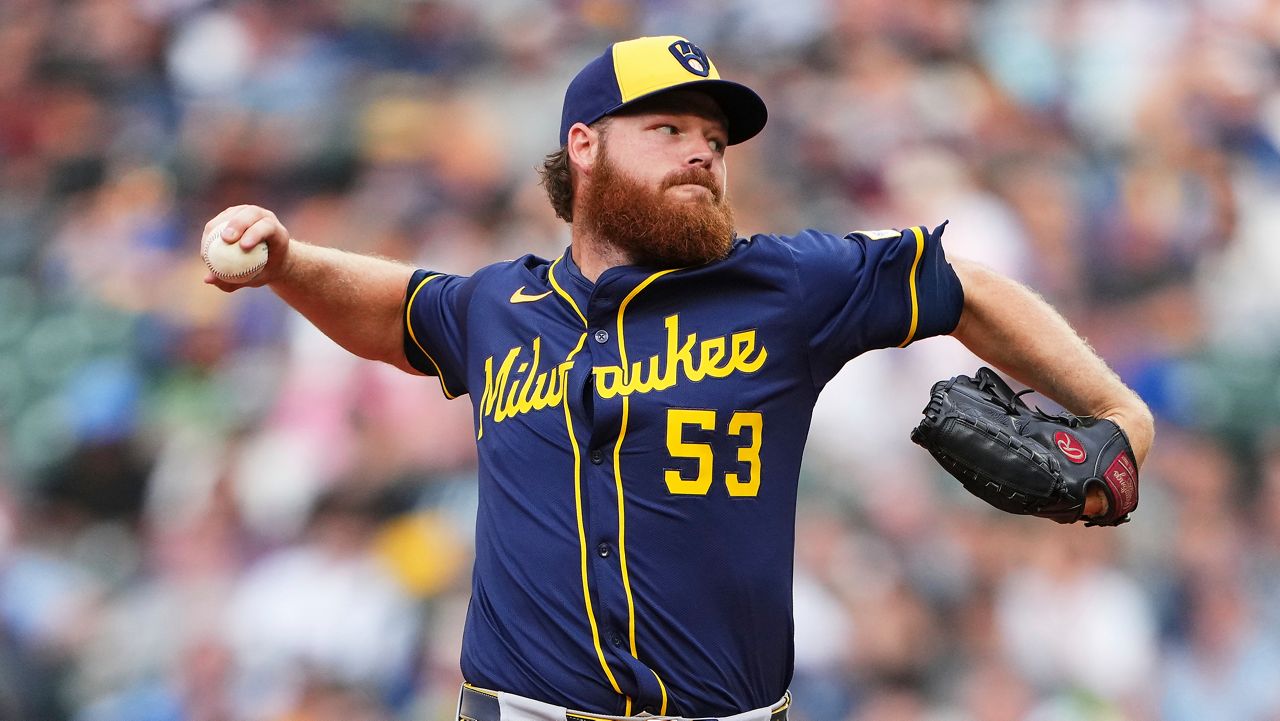
The result of this efficiency was a regular season where Milwaukee won more games than any other team in baseball. The team has been nearly flawless in the postseason, going 10-1 with eight consecutive wins to tie an MLB record. This dominance culminated in a rout of the Tampa Bay Rays, featuring a historic fifth inning where the Brewers scored a World Series record eight two-out runs.
“We are able to put so much pressure on teams the way we control the zone as a hitting group. Our guys create that, and if you keep hitting it, hitting it, hitting it, eventually it just busts,” said pitcher Brandon Woodruff.
The human stakes of this strategy are evident in the raucous atmosphere at Tropicana Field, which was described as becoming a “Milwaukee suburb” as thousands of fans traveled to witness a potential sweep. For a franchise that has never won a World Series, this run represents the culmination of a philosophy of value-hunting.
The Financial Contrast
The Brewers’ $146.2 million payroll puts them in the bottom half of the league, yet they are competing for the ultimate prize. This creates a sharp contrast with teams that spend more but achieve less.
| Team | Payroll Rank | 2026 Performance/Status |
|---|---|---|
| Milwaukee Brewers | 19th | 103 Wins / World Series Contender |
| Los Angeles Angels | Higher than 19th | 62-100 Record |
| San Francisco Giants | Higher than 19th | 65-97 Record |
| Kansas City Royals | Higher than 19th | 69-93 Record |
As the Brewers stand on the precipice of their first title, they are entering a conversation about the most dominant champions of the division era, which began in 1969. If they secure the trophy, they will have done so by proving that in the modern era of baseball, a disciplined eye for talent is more valuable than a blank check.
Keep reading

Arkansas vs. Missouri: Why the Razorbacks Must Stop Losing the Battle Line Rivalry
Arkansas has lost 10 of its last 12 annual SEC matchups against Missouri, a stretch of dominance that...

Arizona Auto Theft Trends: The Rise of High-Value Vehicle Fraud
Arizona is seeing a paradoxical shift in auto theft: while official reports show the lowest number of stolen...

Why Alaska Is a Cheap Bargain for National Political Power
A U.S. Senate seat in Alaska carries the exact same weight as one from California or Texas when...

UAH Basketball Earns No. 25 Spot in NABC Preseason Poll
The University of Alabama in Huntsville (UAH) men's basketball program has entered the 2026-27 season with national momentum,...