
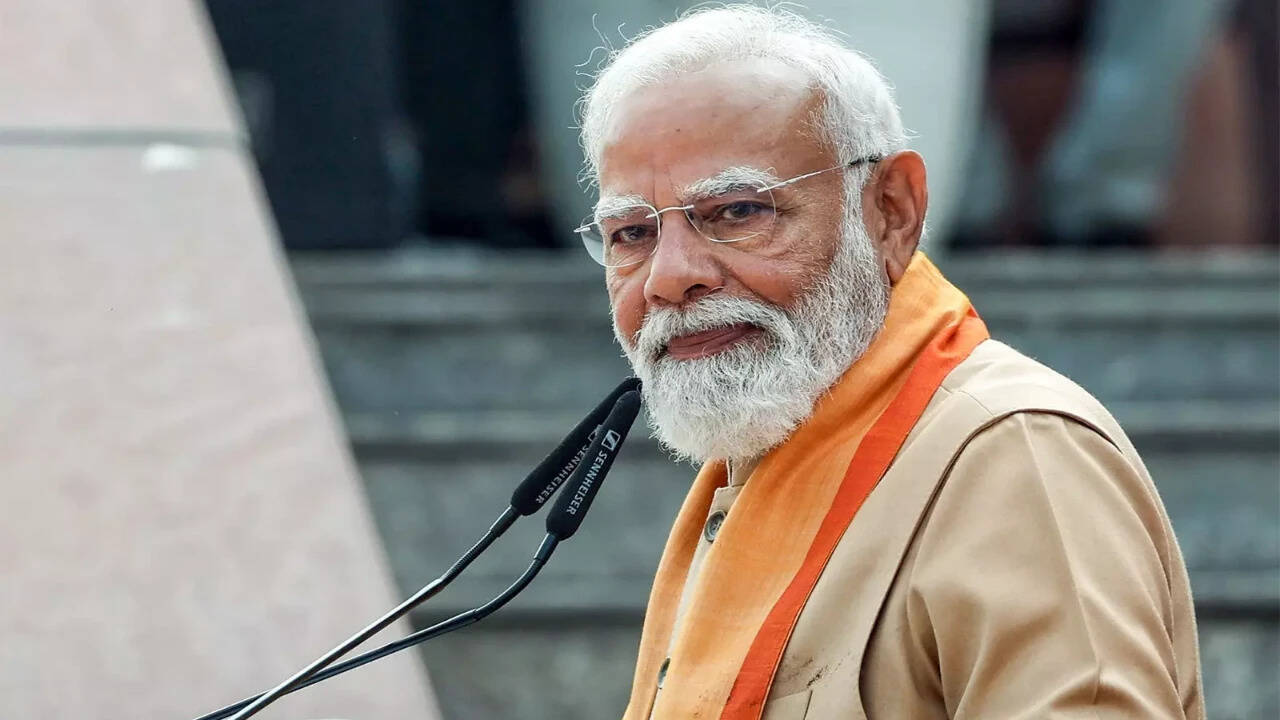
Prime Minister Narendra Modi has used the results of the recent Member of the Legislative Council (MLC) elections to mock the Congress party’s long-standing complaints about Electronic Voting Machines (EVMs). After the Congress failed to win a single seat in a series of polls conducted using traditional paper ballots, Modi took to X to ask a pointed question: “Guess how many seats Congress won?”
The results, announced on October 28, 2026, serve as a sharp ideological blow to the Opposition. For years, the Congress and its allies have argued that EVMs are susceptible to manipulation and have demanded a return to paper voting to ensure transparency. However, the party drew a complete blank in the 28 seats contested across Uttar Pradesh, Maharashtra, Bihar, and Karnataka—elections where the very paper ballots they requested were used.
The Karnataka Collapse
Nowhere was the defeat more stinging than in Karnataka, a state where the Congress currently holds power. The BJP-JD(S) alliance swept all four legislative council seats, leaving the ruling party with nothing. This outcome is being viewed as a significant signal of opposition consolidation ahead of the 2028 assembly elections.
MLC elections in 28 seats across 4 big states – Uttar Pradesh, Maharashtra, Bihar and Karnataka. Elections held using ballot papers. Guess how many seats Congress won? 🧐
— https://x.com/narendramodi/status/2115411232023011746 PM Modi
The losses included a high-profile defeat in the Bengaluru Teachers’ constituency. The JD(S) candidate, A P Ranganath, managed to wrest the seat from the sitting Congress MLC, Puttanna. Ranganath secured 10,810 votes, defeating Puttanna, who garnered 9,902 votes. This loss occurred despite intensive campaigning by Chief Minister D K Shivakumar and other senior party leaders.
The BJP has wasted no time in framing this as a crisis of leadership for the Congress. BJP national president Nitin Nabin suggested the party would continue to struggle for survival under the leadership of Rahul Gandhi, while Union Minister Pralhad Joshi noted that whether the vote is cast via “button or ballot,” the result remains the same. The verdict essentially punctures the Congress’s claims that EVM manipulation is the primary driver behind the BJP’s electoral successes.
A Breakdown of the Regional Results
The biennial elections held on October 23 spanned a diverse set of constituencies, including those specifically reserved for teachers and graduates. While the Congress struggled, other parties found varying levels of success.
| State | Key Outcome | Winning Parties/Details |
|---|---|---|
| Uttar Pradesh | BJP Dominance | BJP won five seats; Samajwadi Party won three. |
| Karnataka | Congress Blank | BJP retained three seats; JD(S) won one. |
| Bihar | New Entrants | Jan Suraaj Party won one seat (Suresh Prasad Rai defeated Congress’s Madan Mohan Jha). |
| Maharashtra | Split Lead | Mahayuti (BJP-led) leading in three; NCP (SP) leading in two. |
In Bihar, the emergence of Prashant Kishor's Jan Suraaj Party changed the political dynamics. The party opened its account by defeating sitting Congress MLC Madan Mohan Jha by a margin of 324 votes in the Darbhanga Teachers’ constituency.
Congress Challenges Integrity of Voter Lists
The Congress has not accepted the “ballot paper” taunt as a definitive debunking of their EVM concerns. Instead, they have shifted the conversation toward the integrity of the voter lists themselves. Pawan Khera, a Congress Rajya Sabha member, responded to PM Modi by challenging the government to commit to using ballot papers for all future Lok Sabha and assembly elections if they are truly confident in their prowess.
Khera’s argument is that the method of casting the vote is secondary to who is allowed to vote. He demanded the suspension of the Special Intensive Revision (SIR) of electoral rolls and alleged that 13.3 crore voters had been “deleted illegally.” Khera further claimed the existence of a “ghost voter list” where some names are registered multiple times while others have vanished.
“If Narendra Modi is so confident that EVMs have no bearing on election results, let him prove his confidence in the BJP’s electoral prowess through action, not rhetoric,” Khera wrote on X.
BJP and JD(S) Victory Signals Rejection of Misgovernance
While these MLC elections do not threaten the immediate stability of the Karnataka state government—the Congress still holds a significant plurality of the 75-member council—the psychological impact is evident. For the BJP and JD(S), the sweep is a proof of concept. Union Minister and JD-S leader H D Kumaraswamy described the victory as “Satyameva Jayate,” claiming it marked a rejection of “misgovernance” and “money power.”
The central tension here isn’t just about who won a few seats in the Upper House. It is a battle over the perceived legitimacy of Indian democratic institutions. By highlighting a loss on paper ballots, the BJP is attempting to move the narrative away from “stolen” elections and toward “unpopular” candidates. The Congress, conversely, is attempting to broaden the scope of electoral fraud to include the administrative process of voter registration.
The debate now leaves the parties in a deadlock of rhetoric: one side pointing to the ballot box as proof of popularity, the other pointing to the electoral roll as proof of systemic manipulation.
Keep reading

Radical Numerics Claims AI-Designed Phage Used for E Coli Patient
A startup has used an AI-designed virus to treat a human patient with a drug-resistant bacterial infection, moving...

Davao City Boosts Social Welfare via Project Pagpaambit
Davao City has launched Project Pagpaambit, a new coordinated mechanism designed to channel private donations, time, and professional...

Colleague helps Kieran O’Carroll After stroke symptoms on work call
A routine work call became a life-saving intervention for Kieran O’Carroll, a 45-year-old senior employee at Fleetwood Paints,...

Exercise Reduces Genetic Risk of Depression Severity
Daily physical activity may help buffer the genetic risk of developing depression, according to an analysis of 23,517...