
Gardners Wisconsin Cheese and Sausage stacks cheddar slabs two or three high and flips them every 10 to 15 minutes for an hour or two.
Four generations of Wisconsin dairying sit behind the cheddar aging in the rooms at Gardners Wisconsin Cheese and Sausage, and the family will tell you the recipe has not changed in a century.
Warm the milk, add culture and rennet, cut and cook the curd, drain the whey, stack and turn the slabs until they turn springy, mill, salt, press and wait. The wait is the variable: two months for mild, twenty years for the blocks they call legen-dairy.
The operation, rooted in more than 40 years of running their own store and over a hundred years of family dairying before that, lays out the ten steps the same way they would for a neighbor asking over the fence. The milk hits 86 to 88 degrees, then mesophilic culture ripens it for 45 to 60 minutes.
Rennet follows, setting the milk to a gel that breaks clean in 30 to 45 minutes. Curds are cut to quarter- or half-inch cubes, cooked slowly to 100 to 102 degrees over half an hour while stirring, then drained to knit into a mat.
That mat is where cheddar becomes cheddar. The slabs are stacked two or three high and flipped every 10 to 15 minutes for an hour or two. Weight squeezes out more whey, and acidity keeps climbing until a slab tears into long fibers like cooked chicken breast instead of crumbling.
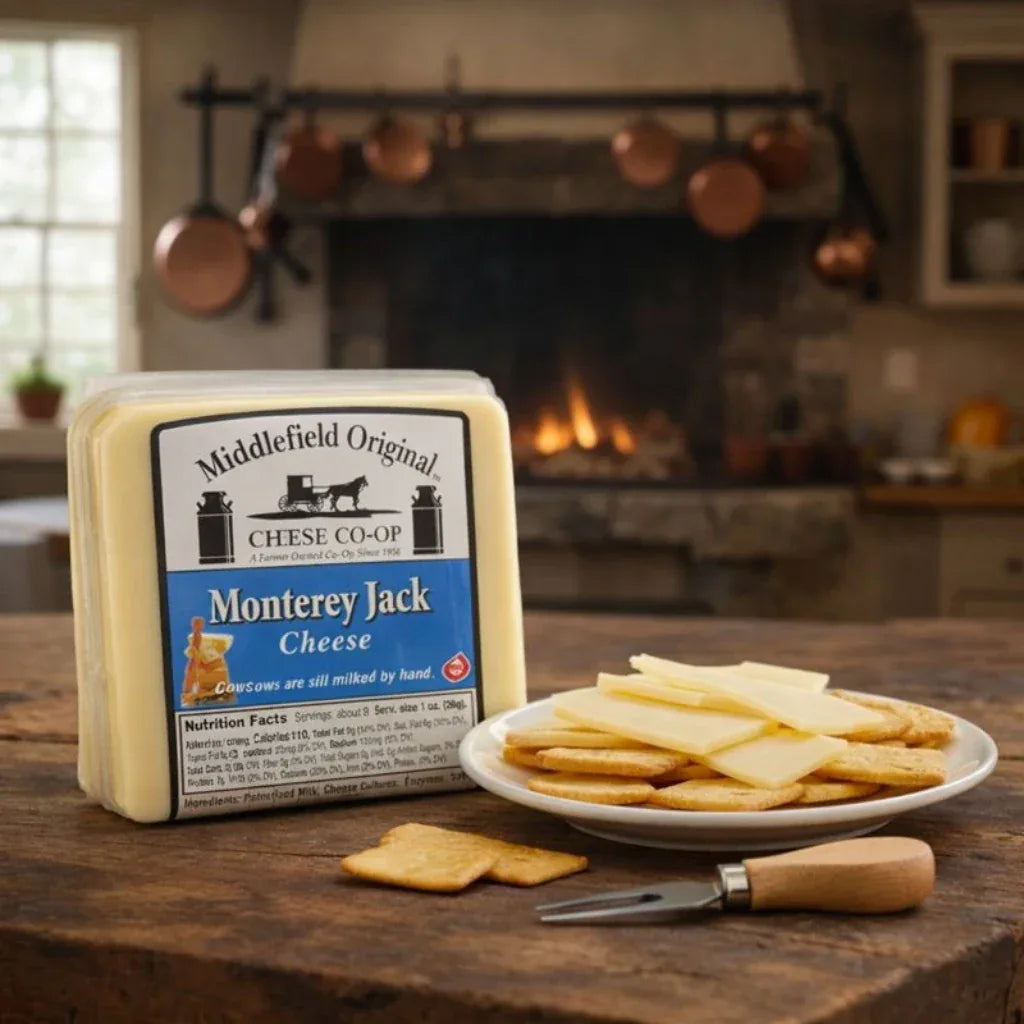
Skip the cheddaring and you get Colby or Monterey Jack. Rush it and the cheese stays soft; overdo it and it turns sour from day one.
“The cheesemaker is watching for a specific texture, often described as cooked chicken breast: when a slab tears into long fibers instead of crumbling, the acid has done its work and it’s time to move on,” the family says in their walkthrough.
Milling the slabs into finger-sized pieces opens surface area so salt — roughly two percent by weight — reaches everything evenly. The pieces fuse under increasing pressure for 12 to 24 hours. Out of the press, the block dries a day or two, then gets sealed for the aging room at 50 to 55 degrees.
A block out of the press tastes like salty, rubbery milk. Enzymes and bacteria break proteins into savory amino acids, fat into fruity and nutty compounds, and the last lactose into acid. Moisture leaves. Texture moves from pliable to firm to crumbly.
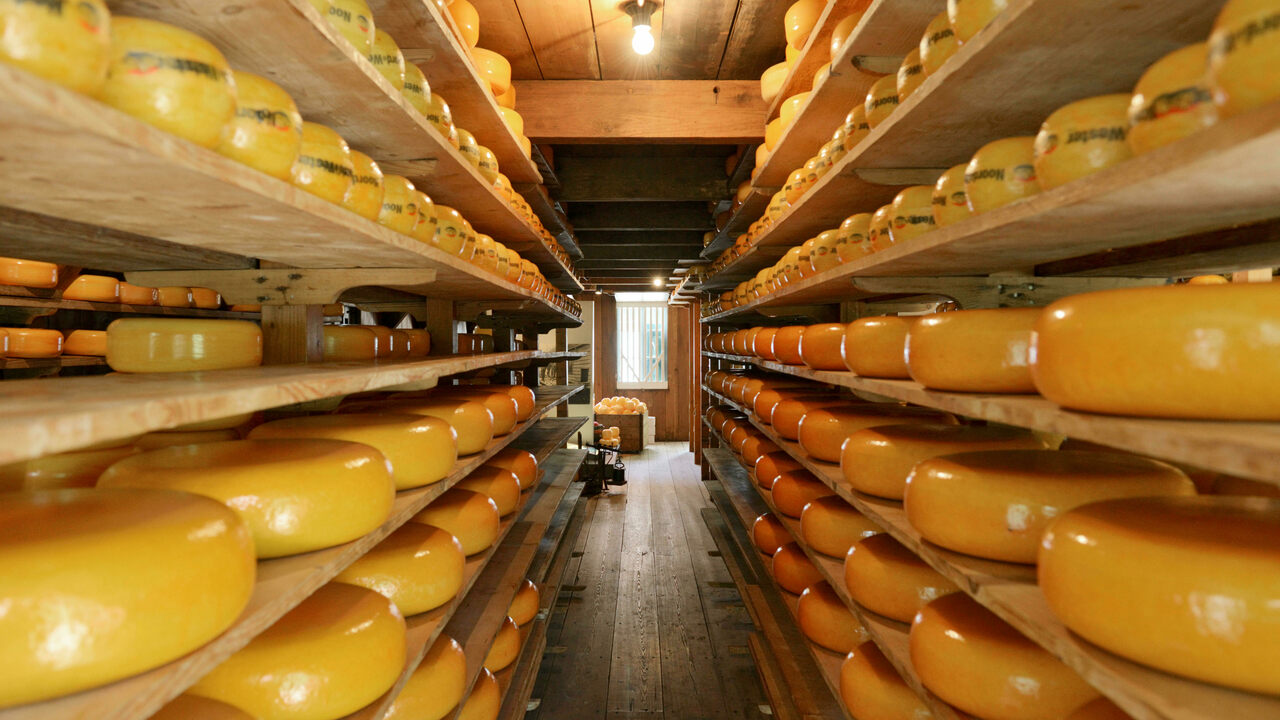
Mild lands at two to three months, medium around six, sharp near a year, extra sharp at 18 months to two years. Past that, white crystals of calcium lactate appear and the block stops slicing clean, breaking into shards instead.

Gardners runs the line from three- to four-year aged cheddar up through 8-year, 13-year, 17-year and a limited 20-year super-sharp. Same four ingredients, same ten steps. The only variable is the calendar.
Home cheesemakers can follow the same path. Two gallons of whole milk — not ultra-pasteurized, which wrecks the proteins — yield roughly two pounds of cheese after six to eight active hours.
The hard part is the months after: a wine fridge or cool basement holding 50 to 55 degrees, turning the wheel weekly, waiting at least two months before the first cut. Six months is where it starts tasting like something. Most home batches never see a year because the maker eats them first.
“The number one home mistake is ultra-pasteurized milk. The high heat wrecks the proteins and the curd never sets. Look for plain ‘pasteurized’ on the carton, or buy from a local dairy,” the cheesemakers advise.
Factory versus farmhouse is a difference of scale, not steps. Plants work in vats of thousands of gallons, cheddar on long tables or automated towers, press 40-pound blocks by the hundreds, and vacuum-seal them for rindless aging that loses almost no weight. Farmhouses make a few wheels a day from their own herd, wrap them in cloth, brush with lard, and age with a natural rind.
Pasteurized milk is standard at plants; raw milk appears more often on farms and in traditional English cheddar. Consistency is the plant’s advantage — critical when you plan to age a block for 20 years and need to know it will be worth it. Character is the farmhouse’s. Neither is better. Both are cheddar, made the same ten-step way.
The village of Cheddar in Somerset, England, gave the cheese its name in the 1100s, using the caves of Cheddar Gorge for cool, humid aging. Wisconsin cheddar descends from English and New England makers who brought the method west in the 1800s. Annatto, a seed extract, turns the cheese orange. It does nothing to flavor. Without it, cheddar is white to pale yellow.
Worth a look

Sitka and Thunder Mountain Claim Titles at Schoenbar Shootout
Four championship games, four visiting teams, and a clean sweep for Sitka and Juneau — the Schoenbar Shootout...

Judge Grants RJ Godfrey Injunction for Eligibility vs. No. 3 UConn
Arizona forward RJ Godfrey is eligible to play against No. 3 UConn on Wednesday after a Pima County...

UAH Engineering Technology Program Earns ABET Accreditation
The University of Alabama in Huntsville has secured ABET accreditation for its Bachelor of Science in Engineering Technology...

Construction Employment up 1.5% Year Over Year in October, BLS Says
Construction employment rose 1.5% year over year to approximately 8.37 million workers in October, up 124,000 jobs, according...