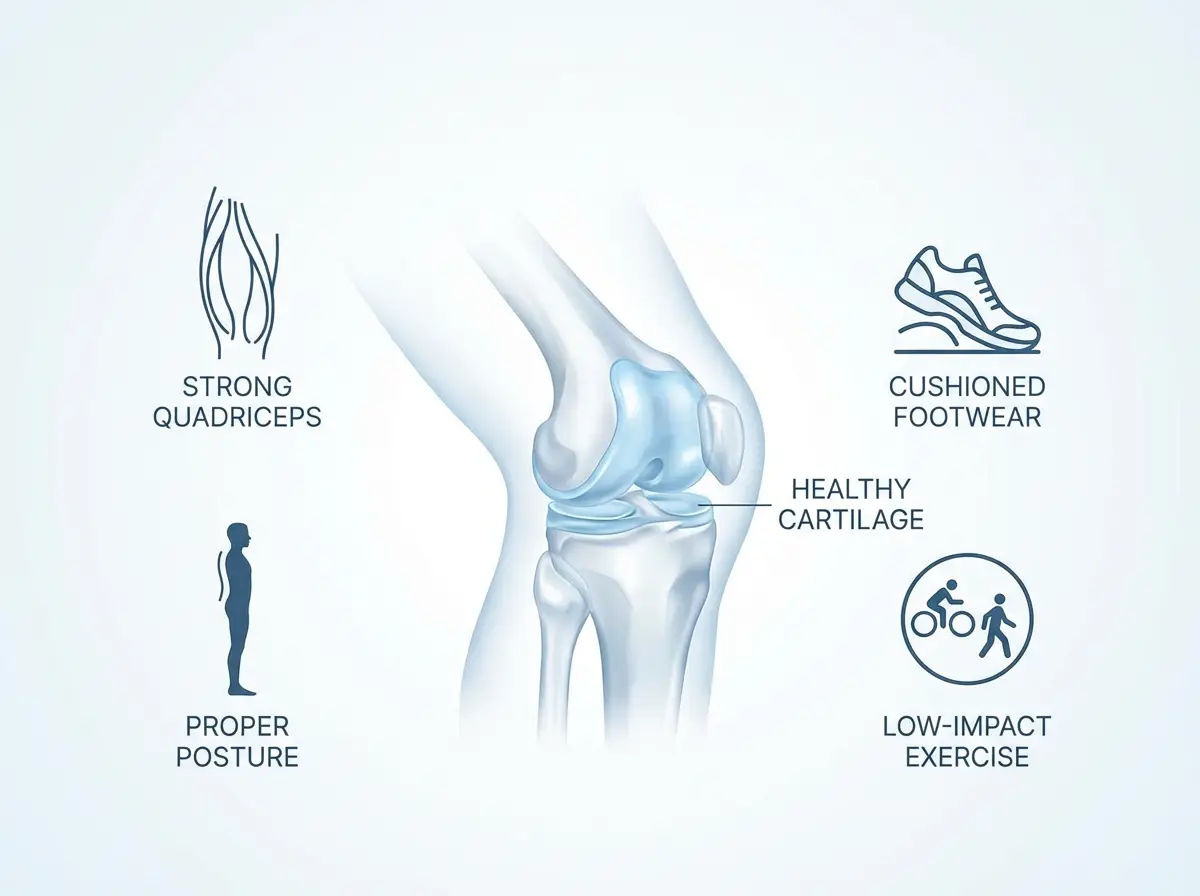
In a column for Verywell Health, orthopedic surgeon Steven Svoboda argues that knee pain is not an inevitable part of aging and that preventing injuries early offers better long-term outcomes than relying on joint replacement.
“A lot of things get attributed to aging, but knee pain isn’t always part of normal aging,” said Steven Svoboda, a board-certified orthopedic surgeon at MedStar Washington Hospital Center, in the interview published by Verywell Health.
He said pain often stems from “subtle changes that occur when you’re expecting more from your body than what it was built for,” such as starting an intense new workout regimen without proper conditioning.
Svoboda said a serious ligament injury like an ACL or meniscus tear raises the risk of arthritis seven or eight times, according to some studies. He advised seeing a physical therapist or strength coach before beginning new activities — for example, training for a 10K — to learn exercises and stretches that protect the knee.
“If some is good, more isn’t always better,” he said. Obesity and nicotine use also increase the risk of knee pain and arthritis, he added, and patients with concerns about weight management or smoking cessation should speak with their health-care provider.
On the prospect of knee replacement as a fallback, Svoboda said surgeries “can make a bad case a lot better, but there are no quick fixes.”
“Knee replacements aren’t that good, and they don’t make your knee normal,” he said. He warned against operating on patients seeking a quick fix who lack realistic expectations about the long recovery period.
Steven Svoboda, a board-certified orthopedic surgeon with sub-specialty certification in orthopedic sports medicine from the American Board of Orthopaedic Surgery, is directly employed by MedStar Health and holds hospital affiliations that include MedStar Washington Hospital Center.
His credentials include a sports medicine fellowship at Keller Army Community Hospital in 2005 and residency and internship through the National Capital Consortium Graduate Medical Education program, completed in 2002 and 1996 respectively, following his 1995 graduation from the University of Maryland School of Medicine.
From 2005 to 2007, Colonel (retired) Svoboda served as Chief of Orthopaedic Sports Medicine at Brooke Army Medical Center and Director of Orthopaedic Research at the US Army Institute for Surgical Research at Fort Sam in Houston, Texas.
“If you can avoid things that are bad for you, that can pay off in the end,” he said. He did not discourage contact or collision sports outright, but urged participants to wear braces, complete proper training, build strength and master technique.
Worth a look

Hawks Arrest Two for Alleged R2m Bribe Attempt to Interfere with Umngeni Water Investigations
The Hawks arrested two suspects in KwaZulu-Natal on Friday for allegedly attempting to bribe a senior officer with...

Muhammad Zeeshan Ali Became First Pakistani in Orbit Aboard Tiangong Station
“I carry the name of Pakistan on my shoulder, the hopes of 250 million Pakistanis,” Muhammad Zeeshan Ali...
Explainable Rule-Based AI Evaluated for Antimicrobial Stewardship in Ecuadorian Hospital
An explainable rule-based artificial-intelligence system processed 389 restricted-antibiotic authorization episodes at a public hospital in Ecuador over 13...

Six Rescued After Boat Sinks Near Mount Maunganui in Tauranga Harbour
Six people — three adults and three children — were rescued from the water after their vessel sank...