
Devastating Double Flood Leaves Hurricane Residents Questioning City Response
Residents of Hurricane, Utah, are grappling with the emotional and financial toll after two catastrophic floods in just two months, leaving families displaced and raising pointed questions about the city’s preparedness and response. The second deluge, which struck on Oct. 22, 2026, followed a devastating flood on Aug. 14, 2026, trapping many in a cycle of recovery only to face ruin again. The Salt Lake Tribune, reporting from the ground, captured the raw frustration of homeowners who watched the same channel that failed them the first time unleash its wrath a second time.
The storm on Oct. 22 was not a repeat event; it was a catastrophe on a larger scale. While the August flood was severe, the October storm brought even more water, impacting over 100 homes and RVs in the Pecan Meadows area alone, according to FOX 13 News. For the Carter family, who have five children, the loss was particularly acute. “We had brand new carpet installed in the master bedroom and it hasn’t even lasted 72 hours,” said Sheena Carter, showing the mud and damage now permeating her home. “We have five kids, so I try to buy in May, and just like one or two toys every paycheck, to get us to December so they have a decent Christmas, and a lot of that was in our Conex that got destroyed.”
The Human Toll: A Vicious Cycle of Loss
The story of Elizabeth Lucas, who lives at 850 West, has become a symbol of the community’s ordeal. In August, the flash flood from Gould Wash devastated her home of over two decades. After pouring thousands of dollars into repairs and just moving back in, she was confronted with the nightmare scenario on Oct. 22. “I was scared because the water came in so fast,” Lucas recalled. She was home alone when the water surged in, so fast that the pressure from the rising tide prevented her from escaping through the front door. She had to crawl out a window into chest-deep water, clinging to parked cars as they floated away until rescuers could reach her.
The trauma is compounded by the mundane details of bureaucratic recovery. Weeks later, Lucas and her husband, Jared, are living in an Airbnb in Colorado City, Arizona, sifting through insurance claims and piles of damaged belongings. The reams of paperwork and slow pace of repairs mean it could be months before they return home. What makes the pain sharper is the irreplaceable nature of their loss. “This time, the water took everything — not just six vehicles and a trailer, but irreplaceable journals, photos, and family keepsakes,” Lucas said. Their resilience is clear, but so is their dread: “I want to come back to my home. I just don’t want to do this all over again.”
The Central Question: Why Wasn’t the Wash Cleared?
For many residents, the most pressing question is why the city failed to dredge Gould Wash and clear debris between the two storms. The sense of neglect is palpable. Juana Puga, who lives in the same neighborhood as Lucas, recalled returning from an errand with her three sons to find waist-deep water engulfing their home. “From August to October there was literally nothing done to the wash,” she said. “If measures had been taken, this flood in October might not have happened or been so devastating to so many families.”
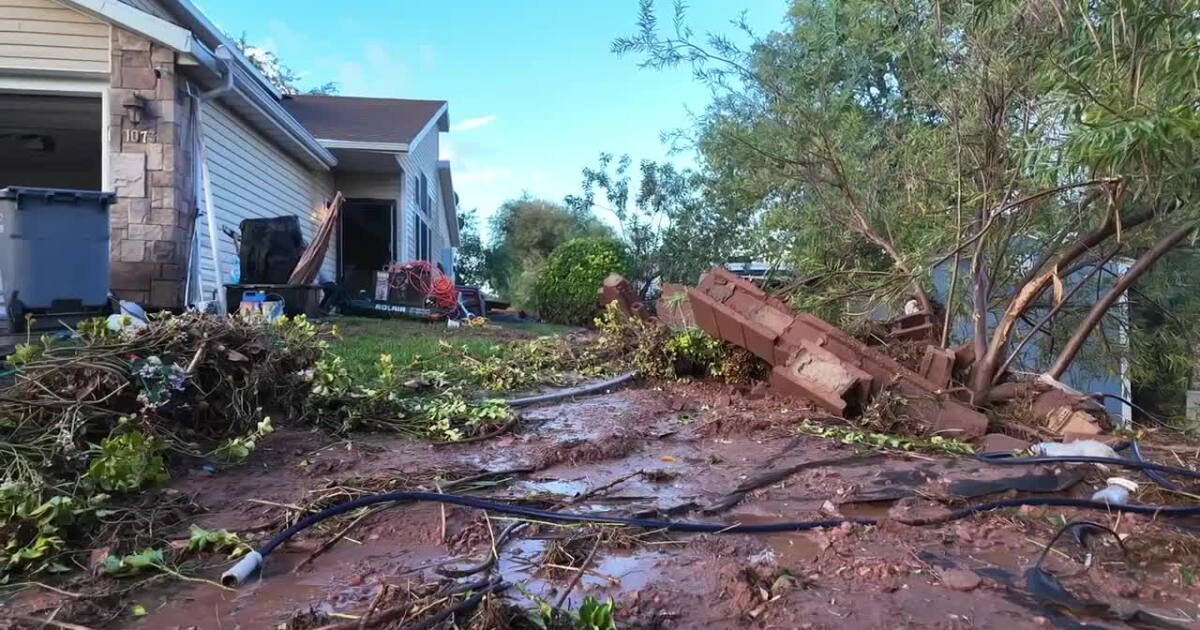
The sentiment is echoed by Sean Carey, whose home suffered only minor damage. He told The Salt Lake Tribune that residents specifically raised the issue of dredging at a city council meeting after the first flood. The response, he said, was a lack of urgency. “It seemed like they didn’t know what to do yet and they didn’t want to throw a lot of money at it either,” Carey stated. This inaction, viewed by many as a critical failure, has left the community feeling vulnerable and abandoned by the very officials tasked with their protection.
The City’s Defense: A Matter of Probability and Process
In response to the growing criticism, Mayor Clark Fawcett has offered a defense rooted in statistical probability and established procedure. He told The Salt Lake Tribune that the likelihood of experiencing two major storms and flood events in such a short timeframe was “statistically near zero,” comparing it to the odds of winning the lottery. The city, he explained, follows standard maintenance schedules by waiting to dredge until after the irrigation season. At the time between the floods, he noted, the channel was saturated from irrigation runoff, creating a high risk that heavy equipment would sink or damage underground utilities.
“It’s kind of hard to get in and out [of the wash] and do anything with it,” Fawcett said.
The mayor insisted that the city is now exhausting all options to prevent future floods. After the second flood, he directed crews to tackle the wash despite the tough conditions. Workers used smaller equipment, cleared brush to avoid getting stuck, and even resorted to hand tools in some sensitive areas to protect a crossing sewer line. The city’s current strategy involves applying for federal funds from the Natural Resources Conservation Service to hire a consultant to design an upstream retention basin. If approved, the city would acquire Bureau of Land Management land east of the flood zone for the basin, designed to slowly release stormwater during heavy downpours.
Future Plans: A Long Road to Recovery
While the mayor outlined ambitious plans for a retention basin and other structural upgrades, the timeline is a source of anxiety for residents. Fawcett cautioned that building a retention basin to forestall future floods could be “four or five years away.” The path to that solution is fraught with hurdles, including the need for an Army Corps of Engineers permit, high project costs, private property boundaries, and utility line constraints. The city is also exploring options to raise the banks and expand the capacity of the wash from 850 West to 1040 West and evaluating a potential replacement for the 700 West bridge. However, the mayor noted the critical risk of inadvertently diverting floodwaters into other neighborhoods.
For now, the immediate focus is on recovery. Utah Rep. Celeste Maloy has signaled that her office is stepping up to help, stating she has been in regular contact with city officials and state and federal partners. “We’re also engaging with the Natural Resources Conservation Service, the Small Business Administration and congressional committees to make sure Hurricane is getting the resources that can help the city and residents recover,” Maloy said in a text to The Salt Lake Tribune. Residents may get some relief through low-interest disaster loans from the U.S. Small Business Administration, but Fawcett doesn’t anticipate Federal Emergency Management Agency assistance for individuals, as the scope of the disaster did not meet the agency’s threshold for aid.
As the Carters and other families salvage what they can, a simple, cold reality sets in. “It’s going to be long and slow and we’re going to constantly be worried, we’re going to be worried every time it rains,” Sheena Carter said. The community’s spirit is tested, but its will to rebuild remains. Yet, as storm clouds gather on the horizon, the question for Hurricane is not just how to rebuild what was lost, but how to build a future that is safe from the waters of Gould Wash.
Worth a look

Denver Launches StartSmart Tool to Speed Up Permit Intake
Denver has launched the StartSmart: Application Intake Assistant, an AI-powered tool designed to speed up the permit application...

Nashville SC announces 2026 club award winners
Nashville Soccer Club capped off its historic 2026 season by honoring its own Tuesday night, announcing the winners...
Iva Marie Howell Passes Away in Little Rock at Age 79
Iva Marie Howell, 79, Leaves Arkansas Family Iva Marie Howell, a 79-year-old resident of Little Rock, Arkansas, passed...

2025 Arizona Fall League Fall Stars Game: Top Prospects and Roster Breakdown
The Arizona Fall League's premier showcase, the Fall Stars Game, will take place on Sunday at Scottsdale's Salt...