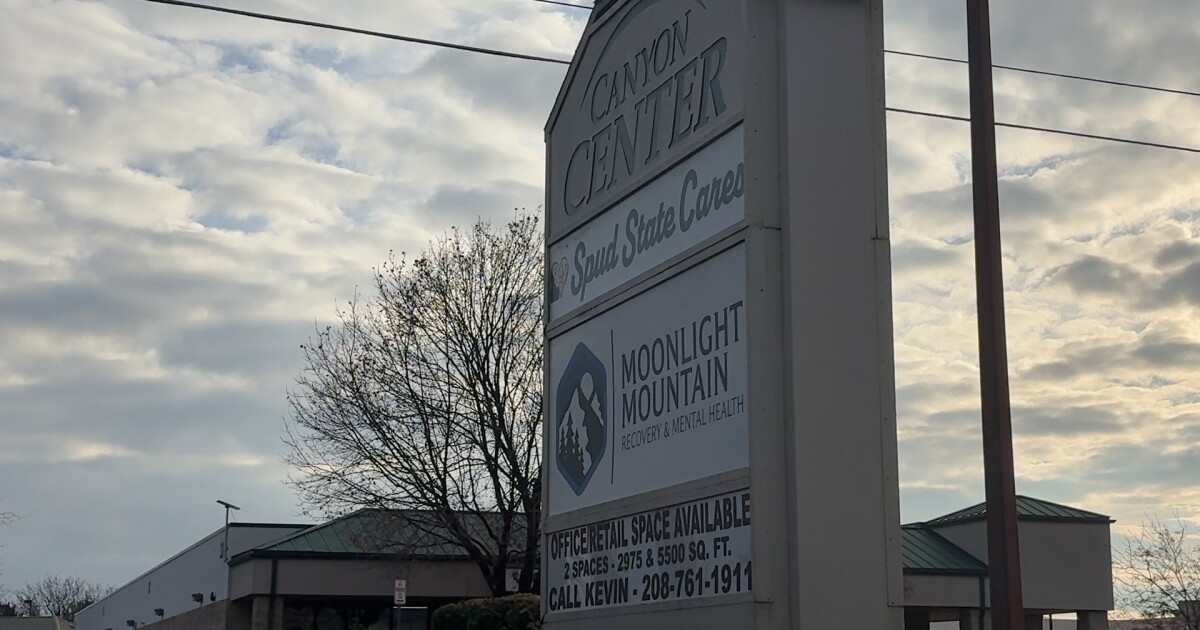
“I think disturbance in the force is a great description,” said Recovery Idaho executive director Norma Jaeger of the sudden closure of Moonlight Mountain Recovery earlier this month.
That abrupt shutdown in Nampa left residents scrambling to find new living arrangements and continue treatment, though recovery leaders say the community quickly rallied to fill the gaps in Idaho’s support network.
Southwest Idaho Recovery Community Center executive director Marti Hooper explained that treatment providers and sober living homes immediately started calling one another to secure open beds. “We had to work together, and that was amazing to me. Nobody was competitive. Nobody was claiming clientele. It was just, what do we need to do to serve these people? And everybody stepped up,” Hooper said.
While the valley retained providers—with Ada County adding about six in the past six months and several more in Canyon County—locating an available bed remains difficult. “I was told it was 130 people across Idaho. How many of those are Canyon and Ada? I do not know,” Hooper said.
Residents lost more than just housing when the facility shuttered. Jaeger said that participants had been attending classes on addiction and relapsing alongside ongoing counseling. “These are people who are living in a recovery residence, people who are participating in treatment groups, had a counselor,” Jaeger said.

Recovery community centers aim to build lasting support beyond immediate treatment. “Crisis centers are for the crisis. Recovery community centers are for the rest of your life,” Jaeger said.
At SIRCC, Hooper said that the center offers recovery coaching, free phones, and transportation to appointments. “We take them to 12-step meetings. We take them to dharma meetings. We take them to doctor’s appointments. We take them to their probation officer appointments. We give them a free phone,” Hooper said.
Idaho’s behavioral health system transitioned on July 1, 2024, when the state awarded a contract to Magellan Healthcare, Inc. to manage the Idaho Behavioral Health Plan (IBHP), making Magellan the managed care contractor for Medicaid and non-Medicaid members’ behavioral health benefits. In that role, Magellan administers the provider network, authorizes services and determines reimbursement for substance use disorder treatment, including residential programs such as Moonlight Mountain Recovery.
When Magellan pulled Moonlight Mountain’s Medicaid funding, the facility lost its primary revenue stream and gave residents one day’s notice to leave. Idaho News 6 reported that the exact reason for the funding cut remains unclear, and the outlet has contacted both Magellan and the Idaho Department of Health and Welfare for answers.
A Nampa man says Moonlight Mountain recovery residents were given one day's notice to leave after Magellan cut Medicaid funding to the provider. pic.twitter.com/DntSNSswyA
Sources told Idaho News 6 that Magellan pulled Moonlight Mountain’s Medicaid funding, though the exact reason remains unclear. Idaho News 6 contacted Magellan and the Idaho Department of Health and Welfare for answers.
Related reading

Indianapolis Holiday Season Opens With Monument Circle Tree Lighting, Ice Rink
Holiday celebrations kicked off in downtown Indianapolis with thousands of multicolored lights on the Soldiers and Sailors Monument...
NASCAR Records 1,923 Pit Road Infractions in 2026; Early Pitting Most Common Violation
NASCAR officials recorded 1,923 pit road infractions across the Cup, O’Reilly, and Truck series during the 94 points...

San Antonio Spurs Beat Lakers 99-96 to Secure West Wild Card Spot
The San Antonio Spurs erased a 20-point deficit to defeat the Los Angeles Lakers 99-96 on Friday night...

No. 5 Texas Defeats Texas A&M 16-6 to Secure SEC Championship Spot
"This game is bigger than us; this is for decades, right? This is over 100 years of this...