The Idaho Shakespeare Festival marked its 50th anniversary this summer, tracing five decades from a makeshift amphitheater beside a downtown bistro to a permanent riverside venue that hosts about 95 performances each year.
Doug Copsey, who founded the company after returning to Boise from college, said he “wanted to start a professional theater company in Boise, so that Idaho kids like us didn’t have to go out of state to have that kind of opportunity.” In 1976 he spotted a grassy amphitheater at the newly built One Capitol Center and persuaded Skip Oppenheimer and his brother Doug to host a summer festival there.
The group rehearsed in a horse pasture near an apartment complex in 1977. “They went and talked to the owner, and he said, ‘Sure, just don’t bug the horses, and you can go ahead and rehearse,’” Copsey told BoiseDev. They staged A Midsummer Night’s Dream because Shakespeare carried no royalties.
Copsey expected 50 to 100 people opening night. “We were all backstage getting ready, and Victoria came running backstage… and she said, ‘My God, there’s 350 people out there!’” The eight-night run drew more than 3,500 attendees. “None of us really had any idea it would be that successful the very first season,” Copsey said.
Attendance grew to about 4,500 for 15 performances of Two Gentlemen of Verona in 1978, then expanded to two plays in 1979 and three in 1980. The festival lost its home when Ray’s Oasis Restaurant was sold in 1981, moved to donated land at Plantation Golf Club for three years, then relocated to Parkcenter Boulevard in 1984.
A capital campaign launched after Charlie Fee and Mark Hofflund arrived in 1992 and 1993, respectively, culminated in the $3.6 million permanent amphitheater on Warm Springs Avenue, which opened in May 1998 with A Midsummer Night’s Dream — the same play that launched the festival.
In 2019 the festival and neighbors challenged a proposal to build 43 homes on 12 acres beside the grounds; a deal was reached to buy the land and preserve it as open space, BoiseDev reported. The 2020 season was canceled because of the COVID-19 pandemic, followed by a shortened 2021 season.
Producing Artistic Director Sara Bruner, who began as a performer in 1996, described the outdoor arc of a performance: “Starting a play in broad daylight, and you’re on stage, and you can see the audience, and they’re drinking and eating, and then the story gets more… joyful. It gets more sad. It gets more tragic. The evening progresses, and it sort of gets darker and darker, and the world sort of goes from wide and open and broad to just narrowing in and narrowing in.”
The festival collaborates with Great Lakes Theater in Cleveland and Lake Tahoe Shakespeare Festival, sharing 50 productions to date. “We share people, we share artists, and we give them longer contracts because their shows have longer lives,” Bruner said.
“It’s a unique business model. There’s nothing else like it in the country.” Off-season tours through Shakesperience and Idaho Theater for Youth reach about 50,000 students and teachers annually across Idaho, eastern Washington, eastern Oregon and western Wyoming, according to Arts Idaho.
The Idaho Shakespeare Festival operates as a regional repertory theatre from a 770-seat outdoor amphitheater along the Boise River, presenting five to six mainstage productions each summer from June through September and serving more than 105,000 individuals annually through professional performances, arts education, and outreach programs, according to its organizational overview.
“The support that this community gave us, and not by ticket sales, (but) obviously by continuing to show up and loving the plays and really wanting us to do more all the time, but also from a business community standpoint, the donations of things like lumber and fabric for costumes and paint and all that stuff for sets and was phenomenal,” Copsey said.
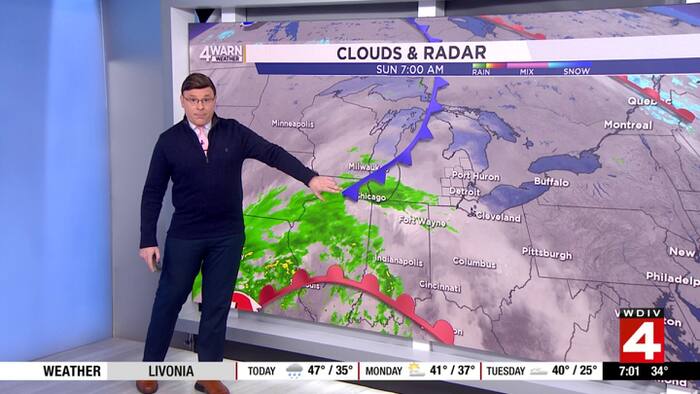
Metro Detroit Soaked by Half to One Inch Rain Sunday, Freeze Monday Night
Soaking rain returned to Metro Detroit on Sunday, with many neighborhoods picking up one-half to one inch of...

Augusta Lincoln League Hosts Emancipation Day Celebration, Scholarships Jan. 1
The Augusta Lincoln League will hold its annual Emancipation Day celebration on January 1 at historic Tabernacle Baptist...
Global Payments Seeks Payroll Tax Analyst II in Columbus, Ohio; No Visa Sponsorship
Global Payments is hiring a Payroll Tax Analyst II in Columbus, Ohio, with the explicit condition that the...
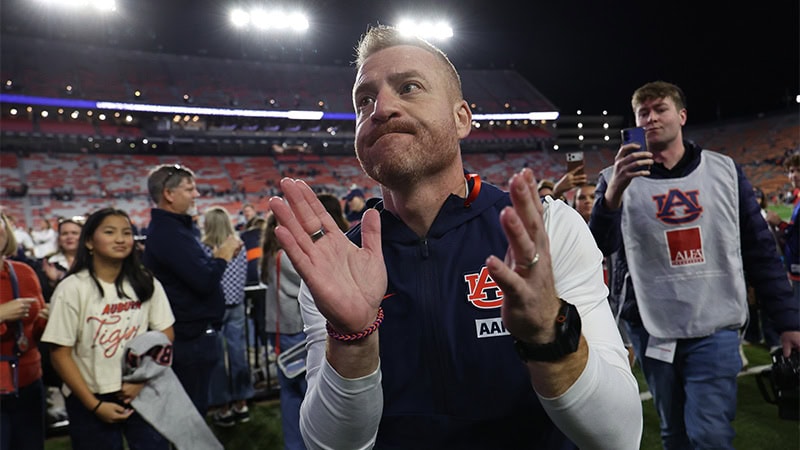
Louisiana Sports Net: SEC Rivalry Week Leaves Playoff Projection at Three Teams
Rivalry week in the SEC concluded Saturday with South Carolina losing to a third-string Clemson quarterback and Auburn...