Women in Idaho will continue to face one of the nation’s strictest abortion bans after voters rejected Proposition 1 on Tuesday, leaving the state’s 2022 near-total prohibition unchanged and forcing those seeking care to travel out of state. The Associated Press called the race early Wednesday morning with roughly 55% voting “No” after about 85% of ballots were counted, according to Boise State Public Radio.
The defeat of Proposition 1 means Idaho’s trigger law—enacted 30 days after the Supreme Court overturned Roe v. Wade in 2022—remains fully in effect. The measure would have allowed abortions until fetal viability and in medical emergencies, creating a legal pathway to challenge the current ban. With the proposition failing, Idaho joins 12 other states with total or near-total bans, and residents seeking abortions may still need to travel to Oregon or Washington for care.
Idaho’s 55-45 Defeat Margin
KUER reported the specific tallies behind the loss: 333,481 voters, or 55.4%, voted against the measure, while 268,793, or 44.6%, supported it. Blaine Conzatti of the Stop Prop 1 campaign told Boise State Public Radio that the result matched months of internal polling.
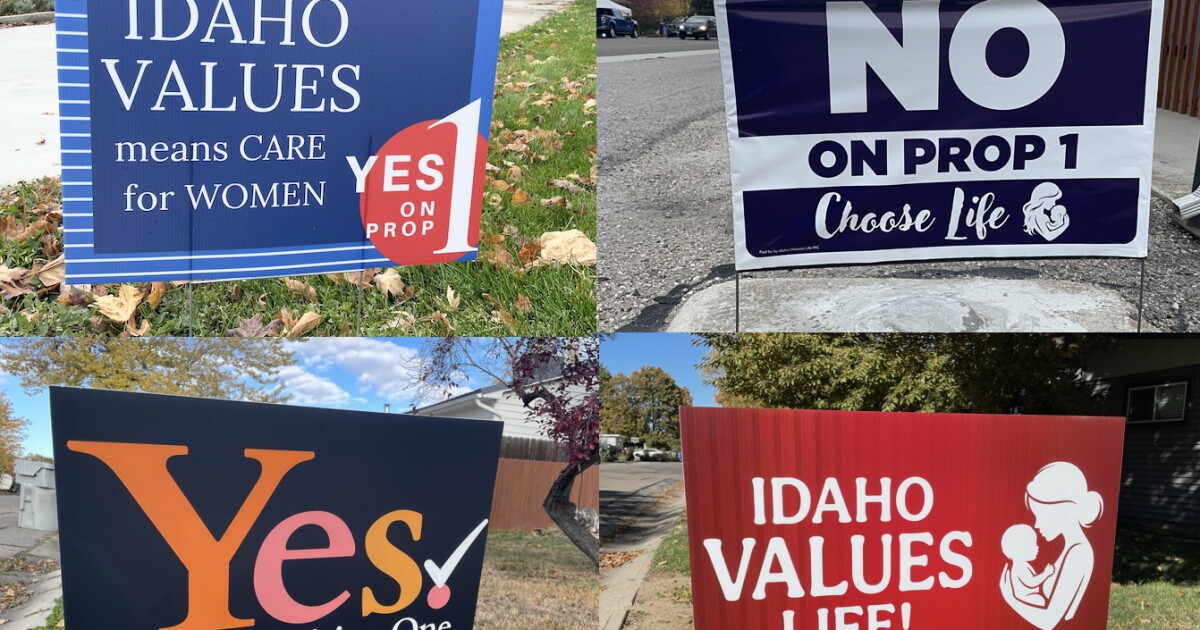
“This is what we were expecting,” Conzatti said. “We’ve been doing internal polling on this for months now, and this tracks with what we’ve been seeing.”
“Our goal all along had been to win this thing so overwhelmingly that the pro-abortion activists never try something like this again in our state,” he added.
Melanie Folwell of Idahoans United for Women and Families, which backed the measure, called the loss devastating for women in the state.
“Women will continue to suffer needlessly under one of the most cruel abortion bans in the nation,” Folwell said in a statement.
Nevada Voters Approve Constitutional Protection
Across the border, Nevada voters gave a nod to Ballot Question 6, which will enshrine abortion rights in the state constitution. The Associated Press called that race in the early morning hours Wednesday. Abortions are already legal in Nevada through 24 weeks after conception, but the constitutional amendment provides stronger protection against future legislative changes.
Voters in line Tuesday expressed divided views. Rita, who declined to give her last name, told Nevada Public Radio she planned to support the measure because it should be a constitutional right “just for anybody to do what they want with their body.” Richard Szuran disagreed, telling reporters, “I don’t agree with abortion. To me, it’s a life, and we are not capable or qualified to decide what should happen with that life.” Near Reno, first-generation immigrant Litalily Sacluti told KUNR that abortion rights shaped her vote, saying it is “pretty messed up to take away someone’s right to be able to control their own body.”
A $10 Million Campaign Fueled by National Players
The Idaho fight drew significant national money, with campaigns on both sides raising approximately $10 million combined. The Church of Jesus Christ of Latter-day Saints donated $1 million to defeat Proposition 1, taking a public stance against both the Idaho and Nevada measures. A church spokesperson cited concerns about the exceptions allowing abortion in cases of rape, incest, threats to the mother’s life or health, and severe fetal complications.
Supporters of Proposition 1 also attracted national funding. Government That Works PAC contributed roughly $650,000, making it the largest single donor, while former New York City Mayor Michael Bloomberg gave $250,000, according to Boise State Public Radio.
Split Results in Missouri and Virginia
The abortion ballot measures produced mixed results nationwide. In Missouri, voters rejected Amendment 3—which combined abortion rights with restrictions on transgender procedures for minors—by a vote of 1,173,172 to 941,065, according to unofficial results reported by Boise State Public Radio. Meanwhile, Virginia voters passed Question 1, enshrining abortion rights in the state constitution by approximately 2.1 million to 1.3 million votes, even as the state maintains a ban after the third trimester.
Thirteen States With Near-Total Bans
Since the Supreme Court’s Dobbs v. Jackson Women’s Health Organization decision in 2022, 13 states have enacted total or near-total abortion bans, according to the Guttmacher Institute. The list includes Alabama, Arkansas, Idaho, Indiana, Kentucky, Louisiana, Mississippi, North Dakota, Oklahoma, South Dakota, Tennessee, Texas and West Virginia. States with abortion protections have seen patient influxes from these restrictive areas, with Texans traveling to Colorado and Idahoans going to Oregon and Washington for care.
With Proposition 1 defeated, that cross-border travel will continue for Idaho residents facing medical emergencies or seeking abortions beyond the state’s narrow exceptions. The ban remains the law of the land in the Gem State.

Gabe Vasquez wins reelection in New Mexico’s 2nd district race
Vasquez Holds New Mexico's 2nd District as National Money Floods the Race Incumbent Democratic U.S. Rep. Gabe Vasquez...

Manchester Commons Offers Comprehensive Senior Care in Erie
Manchester Commons of Presbyterian Senior Care stands as one of Erie, Pennsylvania's large-scale senior living communities, offering residents...

Mikie Sherrill urges port operators to turn away Russian diesel
Diesel at the pump is averaging $6.29 per gallon nationwide as of Tuesday morning, down from $6.50 just...

2 Nevada Ballot Questions Pass on Abortion Rights and Voter ID
Nevada voters have rewritten their state’s foundational legal document, approving two ballot measures on Election Day that simultaneously...