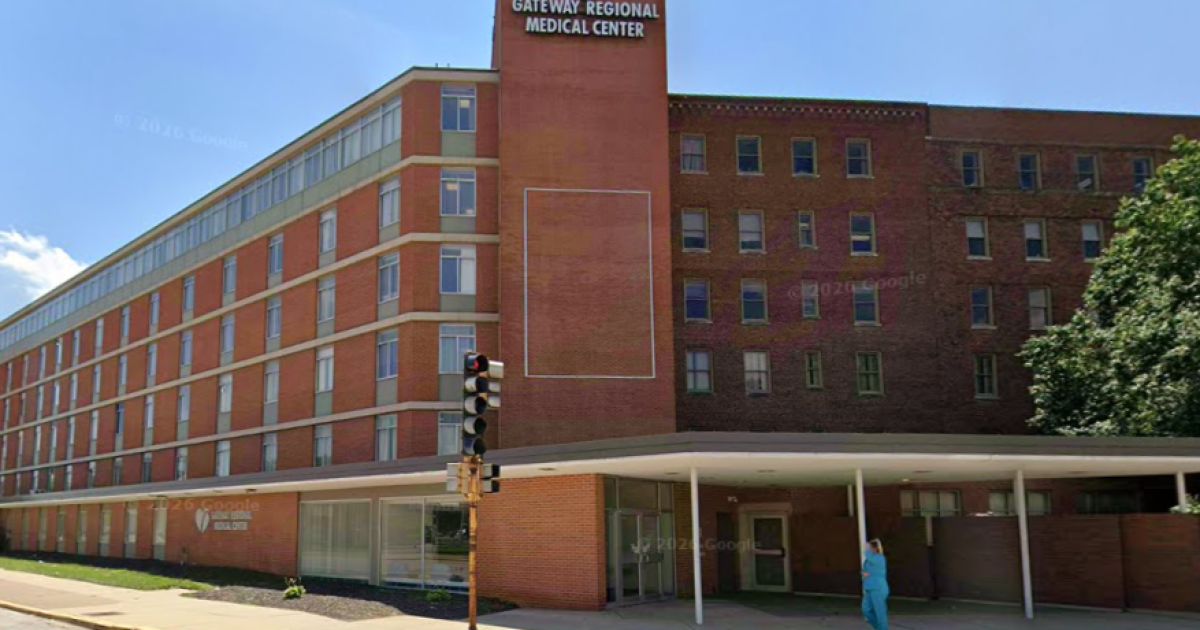
Illinois regulators prepare patient transfers from Gateway Regional
“Their lack of communication, transparency, and responsible financial management and contingency planning is extremely concerning,” an Illinois Department of Public Health (IDPH) spokesman said in an email.
Regulators are preparing to potentially transfer patients out of Gateway Regional Medical Center in Granite City, according to reports from KMOV. The 278-bed safety-net hospital is currently on bypass status due to what state officials call “staffing instability.”
Ambulances are already being diverted to other facilities as the state assesses the safety of the hospital’s environment. The IDPH confirmed that Gateway is not alone in this crisis; Vista Medical Center in Waukegan, also owned by the same parent company, is facing similar bypass restrictions.
Financial instability hits hospital payroll
The staffing issues appear to be tied to deep-seated financial troubles at American Healthcare Systems, the California-based company that manages both Gateway and Vista. The IDPH has alerted the state’s labor and employment security departments regarding unmet payroll obligations at both locations.
“I’m broke and I need my paycheck like everybody else.” Gateway Regional employees say their pay is delayed again. @IDPH is coordinating with nearby hospitals in case patients need to be transferred. @KMOV pic.twitter.com/yI3idlWzF2
This is not an isolated incident for the Granite City facility. Earlier this year, the hospital reportedly issued paper checks to employees and experienced delays in payments to staff health savings accounts.
The stakes for the local community are high. Nearly half of the patients at Gateway rely on Medicaid for their healthcare coverage. For a safety-net hospital, these financial disruptions don’t just affect employees; they threaten the primary source of care for the region’s most vulnerable populations.
The debate over hospital management
The crisis has sparked a disagreement between state regulators and the company’s leadership regarding the root causes of the instability. While the IDPH points to mismanagement, the hospital’s owners argue that the systemic issues are beyond their immediate control.
American Healthcare Systems representative stated in August that the hospital’s challenges predated the company’s 2023 purchase. The representative claimed that “safety-net hospitals across Illinois face a reimbursement system that pays late and below cost.”
In contrast, the IDPH has focused its criticism on the parent company’s operational conduct. The agency noted that the highest immediate priority remains the health and safety of patients, and they are working to communicate with administrative leaders to mitigate risks.
“The Illinois Department of Public Health’s highest immediate priority is the health and safety of the patients and has been working and communicating with hospital administrative leaders in this regard.”
Michael Sarian, the owner of American Healthcare Systems, has attempted to bridge the funding gap personally. Sarian stated that he and his wife have contributed $1 million of their own money to help fund payroll and other operational expenses at Gateway Regional Medical Center.
Limits of state intervention
Despite the severity of the situation, Illinois officials face major legal obstacles to providing a permanent fix. A spokesman for the IDPH clarified that the state does not have the authority to take over the management of the hospital or to force its closure.
Instead, the state’s power is reactionary. If the IDPH determines that the hospital has inadequate staffing, is unable to provide necessary medical services, or constitutes an unsafe environment for care, patients will be transferred to other facilities.
Currently, IDPH officials are meeting with leadership at both Gateway and Vista. These meetings are intended to “offer support around contingency planning for the safe care of patients and other areas of concern,” according to a department statement.
As the situation evolves, the immediate focus remains on whether the staffing instability can be resolved before a full-scale transfer of the patient population becomes necessary.
Keep reading

Kentucky vs. Kansas Champions Classic: Preview, How to Watch, and Matchup Odds
No. 24 Kentucky faces No. 15 Kansas in the Champions Classic at the United Center on Tuesday, November...

How Cowboys Motion Usage and Chemistry Fueled CeeDee Lamb’s Big Game
The Dallas Cowboys utilized motion on 46 plays during their 27-23 victory over the Indianapolis Colts, marking their...

Veterans Use Chaminade University to Transition Into New Careers
Veterans pivot to new careers in Hawaiʻi Four military veterans are using their service experience to transition into...

Georgia Tech Apologizes After Fans Allegedly Ejected for Standing
Two Georgia Tech alumni were escorted from Bobby Dodd Stadium this past Saturday after stadium security allegedly ejected...