
Hundreds of Illinois residents converged on the state Capitol Wednesday, arriving by bus, car and Amtrak to demand lawmakers pass the POWER Act before the veto session ends, Audacy reported.
The legislation, formally known as the Promoting Our Water and Energy Resources Act, would force hyperscale data center operators to pay for the new energy generation their facilities require, mandate transparency on water consumption, cap noise and diesel generator use, and require community benefit agreements.
Senate sponsor Ram Villivalam, a Chicago Democrat, called the roughly 1,000-page bill a “big solution” for a “big problem” and described it as the most comprehensive data center regulation in the nation.
“You’re here because this matters,” Villivalam told the crowd gathered in Springfield. “When something affects your families, your homes, your neighbors, and of course our bills, your voices deserve to be heard.”
The rally comes weeks after two state agency reports proposed delaying the scheduled closure of 11 fossil fuel plants — a cornerstone of Illinois’ landmark climate law — to ensure enough electricity for the projected demand from artificial intelligence infrastructure. Environmental advocates argue the state should not backslide on climate commitments to subsidize private tech expansion.

Data centers have operated in Illinois for years, handling routine cloud storage and streaming traffic. But the generative AI boom has triggered a new class of hyperscale campuses — facilities that can consume as much power as a small city.
That surge is already lifting residential and small-business electric rates, according to advocates and consumer watchdogs who testified at a Senate Energy and Public Utilities Committee hearing scheduled for 4:30 p.m. Wednesday.
“Illinoisans are tired of fighting alone for basic protections without help from the state legislature,” said Lori McKiernan, a local Springfield community organizer and Sierra Club member. “Time is up. Our legislators must take action on data centers.”
— Lori McKiernan, Springfield community organizer and Sierra Club member
Over the summer, legislators met with environmental groups, organized labor and data center industry representatives to negotiate the bill’s details. The measure stalled in the spring session, but advocates are pressing for action during the final days of the veto session next month.
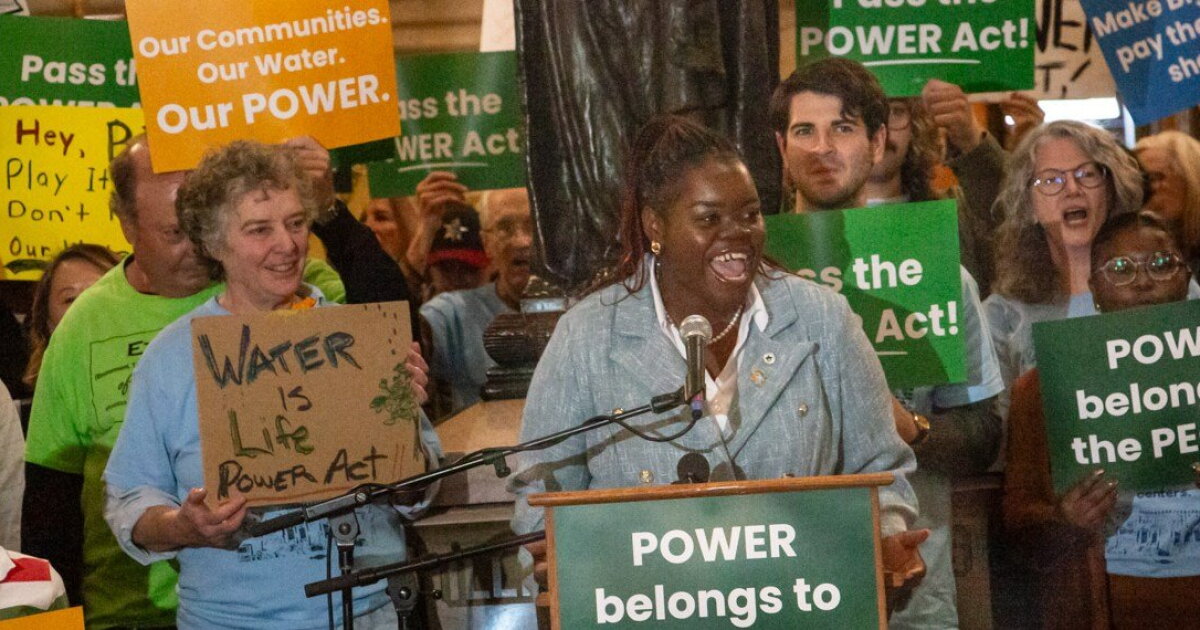
Illinois Environmental Council organizer Cate Caldwell framed the fight as a test of political will against corporate spending power.
“Big tech, they’re counting on us to be intimidated by their big money. They’re counting on us to be overwhelmed by the fight in front of us,” Illinois Environmental Council organizer Cate Caldwell said at the rally. “But as I look at this crowd today, I think big tech should be intimidated by us.”
— Cate Caldwell, Illinois Environmental Council organizer
Industry representatives have argued that data centers bring high-paying construction jobs, tax revenue and digital infrastructure the modern economy requires. They caution that overly restrictive mandates could drive investment to neighboring states with fewer requirements. Lawmakers have not released a final amended version of the bill, and no vote is scheduled this week.
- New energy generation procurement paid by the data center operator, not ratepayers
- Public reporting of water usage and conservation plans
- Noise limits and restrictions on backup diesel generator runtime
- Community benefit agreements negotiated with local governments
The bill’s fate hinges on whether the General Assembly can reconcile the competing pressures before the veto session adjourns. The next legislative days are scheduled for early December.
Worth a look

Beverly Hills Names Glendale Fire Chief Jeff Brooks as New Fire Chief
“It is my honor to join the world-renowned City of Beverly Hills as Fire Chief,” Jeff Brooks said...
Mississippi Ranks 11th in Unemployment Insurance Tax Structure, Down From 6th in 2020
Mississippi now ranks 11th nationally for its unemployment insurance tax structure, a five-place slide from 6th in 2020,...

Minneapolis Cash Home Buyers: Compare Net Proceeds, Avoid Closing Surprises
Selling a house for cash can sound almost too convenient. No repairs, no open houses, no months of...

No. 18 Maryland Women Rout Coppin State 84-31
No. 18 Maryland opened a 30-point lead before Coppin State scored again, turning a competitive first quarter into...