
In a recent keynote address at Austin Tech Week, a veteran technology leader argued that Austin’s ascent as a global tech hub was not an inevitability, but the result of a series of calculated, bold risks taken by individuals over three decades. The speaker emphasized that the city’s current strength in frontier technologies—specifically space, quantum, defense, robotics, and biomedicine—is built upon a foundation of resilience and a culture of generosity that must be intentionally maintained to survive the next twenty years.
The author notes that Austin’s evolution followed a specific trajectory, moving from semiconductors to hardware, then to software, and finally into the current era of frontier tech. This transition, the author argues, required leaders to actively build the necessary talent pools and attract the capital required to sustain growth.
A 30-Year View of the Austin Ecosystem
The author’s perspective is anchored in a personal history tied to 701 Brazos, the location of STATION Austin and the Capital Factory. He recalls entering those doors in January 1994 as a newly promoted manager at Andersen Consulting to lead a major project for the State of Texas. At that time, Dell Technologies dominated the local market, which he describes as the hottest startup of the era.
By 2013, the author returned to the same building to join WP Engine when it was a 40-person startup being incubated at the Capital Factory. The author contends that every major chapter of the city’s story began with someone deciding to do something that appeared “crazy” at the time.
The Interdependency of Frontier Tech
While Austin is often discussed in terms of separate industries, the author argues that the city’s five primary frontier technologies are deeply interconnected. He posits that robotics, quantum, and space exploration all rely on the same underlying chips, hardware, and components. Similarly, he notes that advancements in biomedicine and defense are inextricably linked to AI and quantum capabilities.
As technology accelerates and problems become more complex, he argues that “boldness” can no longer be viewed as a personality trait, but must be treated as a muscle that leaders intentionally build through resilience.
“When you choose to be bold, you’re signing up to take more hits, not fewer. So you need resilience – that’s what lets you take the hit and still walk in the next morning with your best idea.”
Resilience as a Layered Engineering Problem
To survive the volatility of the tech sector, the author suggests building resilience in layers, similar to how one would engineer a structure to hold weight. He identifies health as the non-negotiable foundation, stating that bold decisions cannot be made with a depleted body or brain. He argues that health is not a distraction from professional work, but the very foundation of it.
Beyond physical health, the author emphasizes the role of strategic relationships and an optimistic mindset. He shares a personal example of a failed venture—an attempt to create what was going to be the Netflix of independent film after his time at Trilogy. While the timing was wrong and the project failed, that specific setback led to a meeting with Bill Wood, who subsequently introduced him to Jason Cohen, the founder of WP Engine. In the author’s view, this detour became the most successful chapter of his career, proving that failure is often a prerequisite for the next breakthrough.
The Role of Generous Leadership
A significant portion of the author’s analysis focuses on the “compounding” effect of generosity within the Austin community. He argues that asking for help is a sign of strength and that mentoring other founders is essential for the ecosystem’s health. He cites the example of Josh Baer, the co-founder of Capital Factory who passed away in June, as the gold standard for this approach. Baer is described as a leader who held doors open for thousands of people without keeping score, acting as both a cheerleader and an honest critic.
The author suggests that the best time to invest in a relationship is long before it is needed. He encourages current leaders to practice one learning and one ask—sharing something they know and asking for something they need—to maintain the social fabric that allowed Austin to grow from a hardware town into a global leader.
The author’s focus remains on the human capital. He concludes that the next generation of Austin’s leaders will be defined by their ability to handle higher stakes and harder problems than their predecessors.
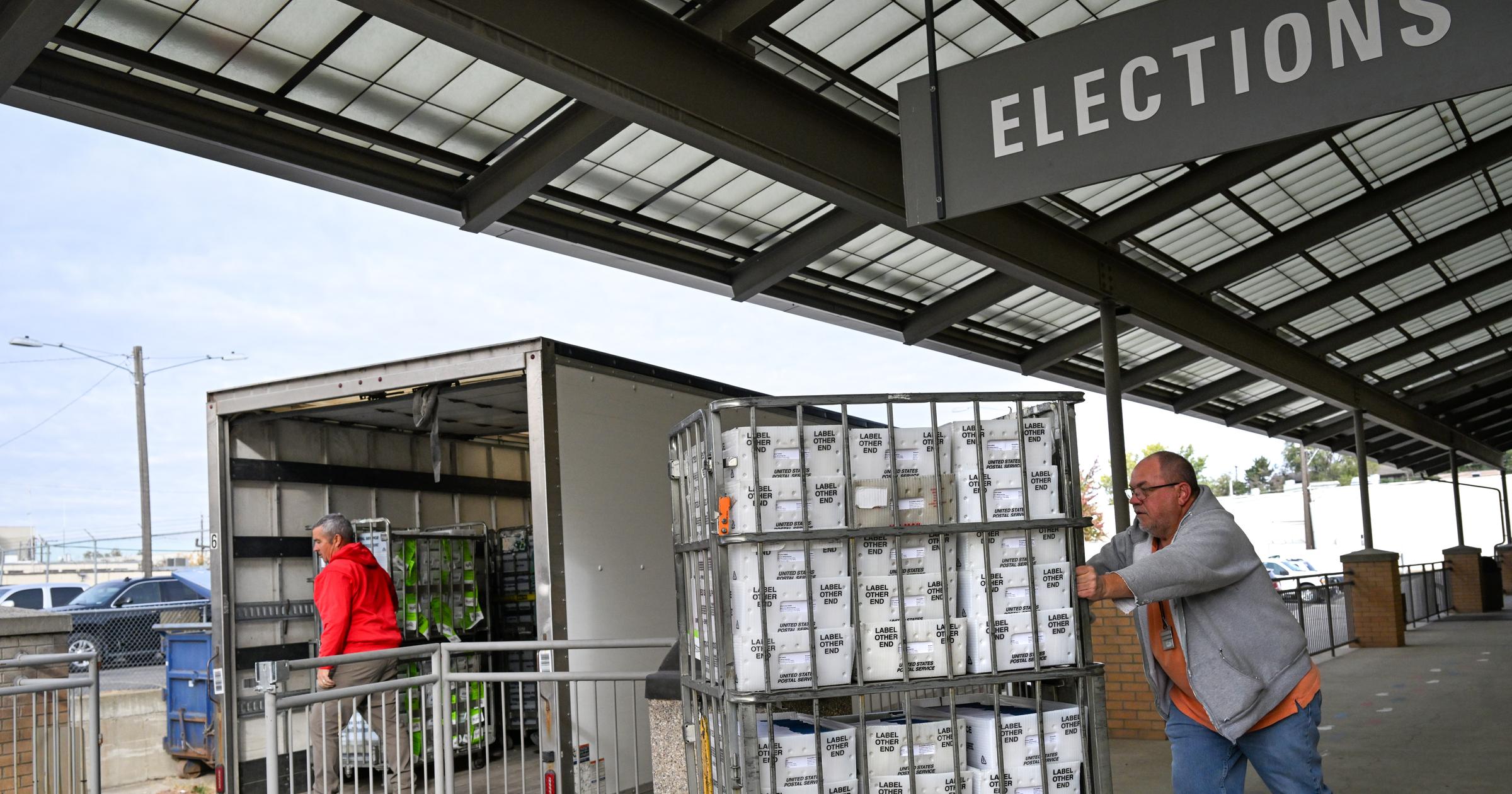
Steve Hobbs says DOJ list of 405 flagged voters includes citizens
Washington Secretary of State Steve Hobbs has confirmed that American citizens are included in a list of 405...

Virginia Beach May Create Animal Cruelty Registry to Protect Pets
Virginia Beach is moving to create a public database of individuals convicted of animal cruelty, a move designed...

How to Register and Vote in Vermont for the Nov 3 Election
Vermont residents can register to vote on Election Day, Tuesday, Nov. 3, at their local polling places or...

Anna Maxwell Says Adaptive Teaching Opened Her Path to Piano
Anna Maxwell, a first-year piano performance student at the University of Utah, argues that the barrier for disabled...