
Anna Maxwell, a first-year piano performance student at the University of Utah, argues that the barrier for disabled musicians is often not a lack of ability, but a lack of adaptive instruction. In a first-person account, Maxwell describes how years of self-teaching and a belief that traditional pedagogy could not accommodate her congenital amputation were overturned by mentors who prioritized adaptation over rigid standards.
The narrative highlights a systemic friction in arts education: the tendency for instructors to either underestimate a disabled student’s potential or push them toward “comfort zones” that are actually physical impossibilities. For Maxwell, the shift from “noodling around” to pursuing a degree in piano performance was not a lifelong dream, but a possibility revealed by colleagues who viewed her disability as a mechanical variable rather than a limitation.
The gap between self-teaching and formal pedagogy
Maxwell spent the majority of her life as a self-taught pianist, avoiding formal lessons because she believed no teacher would be able to work with the fact that a portion of her hands did not develop fully before birth. She writes that she operated under the assumption that because standard instructions would not apply to her, there was no reason to learn. This mindset kept her in the realm of personal enjoyment, where she learned music from the Legend of Zelda series and the works of Paul Gordon, whose piano compositions she notes sit naturally in her hands.
The trajectory of her education was non-linear. After a brief and unsuccessful stint in creative writing and theater at Southern Utah University at age 18, she tabled higher education entirely. It wasn’t until 2017 that she returned to the classroom at Salt Lake Community College to study music theory for fun, often as the only person in her cohort pursuing the subject for non-professional reasons.
The turning point occurred in 2024 while Maxwell was working at the Peterson School of Music, where she had been employed since 2021. A single lesson offered by piano ensemble instructor Cahill Smith served as a “lightning bolt moment,” according to Maxwell. Smith validated the value of her existing playing and demonstrated that effective teachers adapt their methods to the student’s specific needs, rather than forcing the student to fit a predetermined mold.
Adaptive instruction as a catalyst for performance
The transition to professional-level study required a shift in how the mechanics of playing were approached. In June 2024, Maxwell began studying with Koji Attwood, who she credits as the reason she was able to successfully audition for the University of Utah. Maxwell describes a transformative approach where Attwood sought to understand the physical sensation of playing from her perspective, developing equivalents for himself to better understand her mechanics before offering suggestions.
“Something I’ve really valued, especially through the disability lens, is that studying piano is one area where people are okay with me saying what I can do. I’m not pushed to do things that are way too hard, but if I want to play Rachmaninoff, people say, ‘Sure. Okay.'”
This autonomy is a rarity for many disabled individuals, Maxwell argues. She notes a common dichotomy where others either decide on a disabled person’s behalf that a task is impossible or attempt to push them beyond their literal physical limits under the guise of growth. In the context of her current studies, this balance of high ambition and physical reality is maintained by her professors.
When Maxwell provided a “long and overly ambitious” wish list of pieces she wanted to play to her professor, Steven Vanhauwaert, he responded with a list of his own that was equally extensive. Rather than whittling down her possibilities to fit a perceived limitation, the instruction expanded them.
The economic and civic stakes of adult education
When the Peterson School co-founders, Eugene and Vera Watanabe, first suggested she study music, it opened a door that Maxwell had not considered on her own. This suggests that the “dream” often cited in inspirational narratives is frequently a byproduct of external support and the removal of institutional barriers.
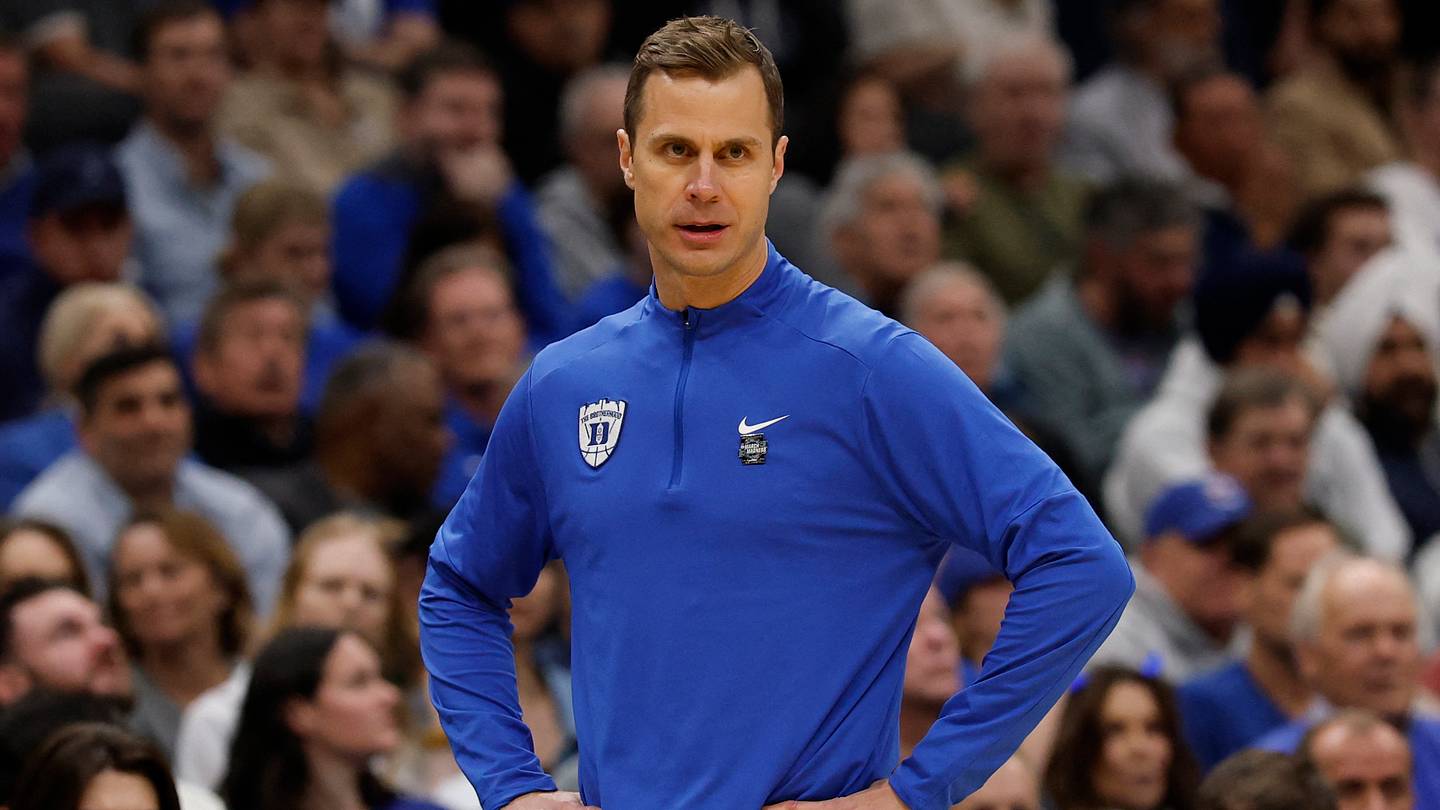
Asa Montgomery commits to Duke as No. 3 recruit in 2027 class
Asa Montgomery, the No. 3 overall recruit in the 2027 class, committed to Duke on Wednesday afternoon, choosing...

Trump Returns to Ohio to Campaign for Husted and Vivek Ramaswamy
President Donald Trump returned to Ohio on October 28, 2026, for a campaign rally at Ohio University Chillicothe’s...

Villa Vie Residences leaves passengers stranded in Cambodia
The suspension of the MV Odyssey’s global voyage in Cambodia followed unsustainable financial pressure caused by extraordinary increases...

1993 Chevrolet K2500 Suburban Cheyenne Shows Only 17k Miles
A 1993 Chevrolet K2500 Suburban Cheyenne with just 17,000 miles is heading to auction at no reserve, Bring...