
Braun Sees Midterm Shakeup as a ‘Wake-Up Call’ for Indiana GOP
Indiana Republicans woke up Wednesday to a political situation that looks dramatically different. Democrats, energized by a wave of voter anger over inflation and affordability, broke the GOP’s supermajority in the state House, ousted the powerful House Speaker, claimed two statewide offices, and even picked up a congressional seat. The shellacking was so thorough it forced Gov. Mike Braun to pivot, calling the results a “wake-up call” and suggesting a major rethink for the party’s methods and message, Indiana Capital Chronicle reported.
The election wasn’t just a bad night; it was a fundamental rebuke. For years, Indiana Republicans had operated with near-total impunity, controlling every statewide office and both legislative chambers with a supermajority that allowed them to pass laws with little to no Democratic opposition. Tuesday’s results shattered that dominance. The party lost 16 House seats, enough to end their supermajority and effectively kneecap their legislative agenda for the next two years. They lost the speakership, a stunning fall from grace for House Speaker Todd Huston. And for the first time since 2012, Democrats will hold statewide offices, with Secretary of State-elect Beau Bayh and Comptroller-elect Jessica Bailey set to take the helm.
A Message from the Ballot Box
Gov. Braun, a key figure in Indiana’s Republican establishment, was quick to react, though his analysis was less an admission of failure and more a strategic recalibration. Speaking to reporters Thursday, he described the election as less a referendum on his own administration and more a reflection of national voter mood.
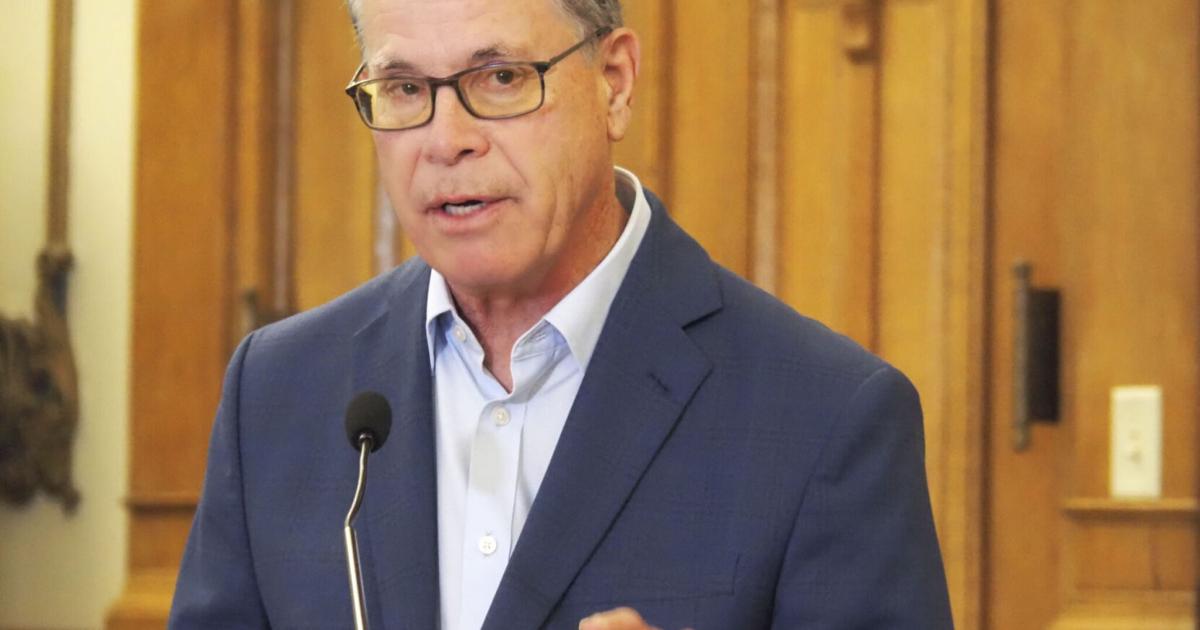
“They were cranky, irritable and we did not read that well,” Braun said, characterizing the electorate as consumed by economic anxiety. He argued that his administration’s focus on inflation—specifically his suspension of the gas tax and controversial firings at the Indiana Utility Regulatory Commission—was the key reason Indiana fared better than other red states like Texas, where Republicans faced even greater losses. noted that Braun maintained, “That is a question I anticipated, and I think that is where you’re completely wrong, because here, what they say out of the gate, it was nationalized, and my administration has done nothing other than emphasizing the big issue out there.”
Yet, the governor couldn’t completely dismiss the local factors. He acknowledged that Republicans lost ground in traditionally GOP strongholds like Hamilton County because, “we weren’t listening enough there.” This concession hints at a deeper disconnect between party leadership and the voters in its own backyard, a common theme in elections where incumbents underestimate local concerns.
Backing Away from Redistricting and Embracing Primaries
The election results also forced Braun to retreat from one of his signature political battles: mid-decade redistricting. Months ago, the governor had thrown his weight behind President Donald Trump’s campaign to oust Republican state senators who opposed the aggressive redistricting plan, viewing it as a way to entrench GOP power for a decade. Now, with the GOP’s political capital spent, that effort looks dead in the water.
“I think that was probably clearly litigated by the results of the election Tuesday,” Braun said, effectively conceding the fight. The stunning loss of so many legislative seats makes any attempt to redraw maps in a way that favors one party politically toxic, at least for the immediate future.

Perhaps the most consequential shift in Braun’s post-election analysis was his call to reform how the party selects its statewide candidates. Currently, powerful state convention delegates—a small, ideologically-driven group of party insiders—choose nominees for key offices like Secretary of State, Attorney General, and Comptroller. This system, Braun now suggests, may be a liability.
“When it comes to our system, which uses a convention, that’s a few people. We’ve done it traditionally. I had to run in a primary. To me, the more you open anything up to the people, you’re probably going to get a better result,” he stated. This directly follows the election of Democrats Bayh and Bailey, who won in a state where the GOP’s insider-favoring nomination process has repeatedly produced candidates who struggled in general elections.
“That’s going to be a big discussion for our party, because we still, at this point in time, have all those levers to play with. And again, the more you democratize how you pick people, I’m going to be for it rather than doing it behind closed doors, or where fewer people can weigh into it.”
The sentiment is a direct challenge to the party’s old guard and an acknowledgment that the current method may be selecting candidates who appeal to the party base but fail to resonate with the broader electorate.
What It Means for Indiana
The political earthquake in Indiana has real consequences. The loss of the House supermajority means Governor Braun will no longer have a rubber stamp for his legislative priorities. Any significant bill, from tax policy to education reform, will now require negotiation, potentially with Democrats who will be emboldened by their newfound power.
For voters, the most immediate impact is likely to be a shift in tone from the Statehouse. With Democrats holding a credible minority and two statewide offices, the conversation is likely to focus more on affordability, healthcare, and education—the very issues Braun suggested the party should refocus on. The new dynamic could lead to more bipartisan cooperation on issues like childcare, which Braun mentioned as a potential area for common ground.
The Republican party now faces a critical fork in the road. It can double down on its current strategy, blaming external factors like inflation and hoping for a national rebound. Or it can heed the wake-up call, embrace a more open and inclusive nomination process, and build an agenda that directly addresses the economic pressures felt by Hoosier families. The choice will define the party’s future in Indiana for years to come.
Gov. Braun himself is set to announce his re-election campaign on November 16, and his performance in that race will be the first true test of whether his party has absorbed the lessons of this week’s election.
Related reading
Utah State Hosts Omaha for First Meeting Nov. 7
Utah State men's basketball (1-0, 0-0 Pac-12) will host the Omaha Mavericks (1-0, 0-0 Summit League) on Saturday,...

Las Vegas Court Warns Residents of Fake Jury Duty Summons Scam
The Eighth Judicial District Court is warning Las Vegas residents about a jury duty scam involving fraudulent notices....

Valley Center City Departments Described
Valley Center, KS maintains a comprehensive network of municipal departments to provide essential services to its community. The...

Lions Prepare for Miami Game Inspired by Jack Campbell
The Lions honor Jack Campbell with a blitz-heavy defensive strategy "We're going to think of Jack and play...