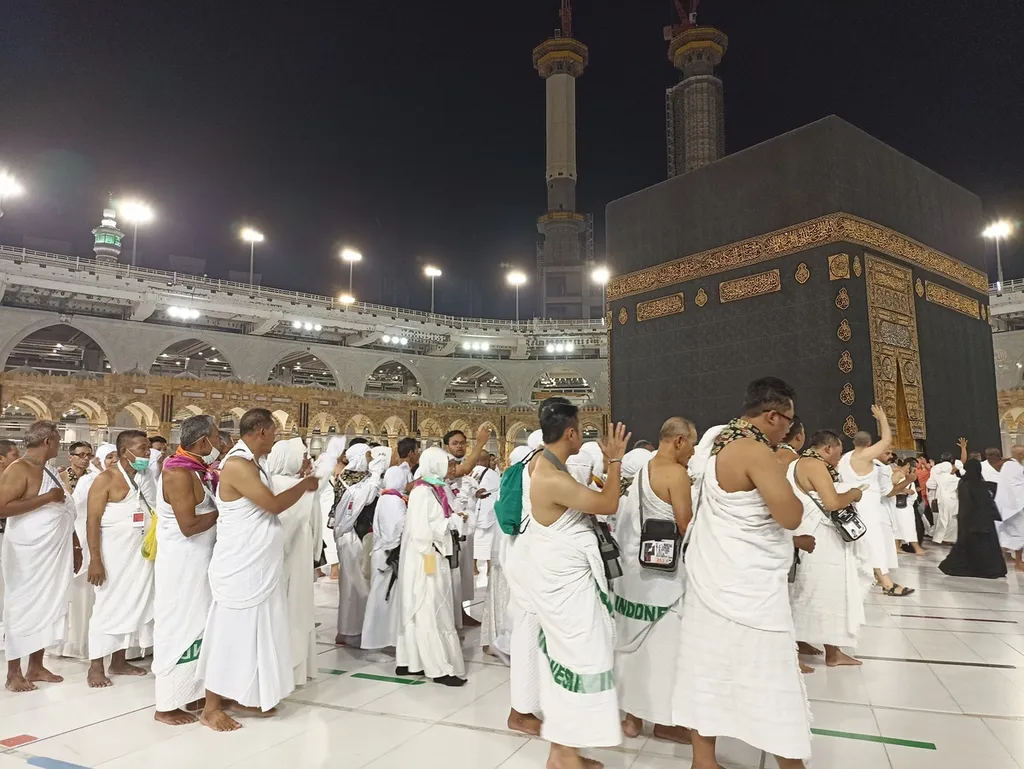
Indonesia’s House of Representatives (Commission VIII DPR RI) and government ministers finalized the Hajj Organising Costs, known as BPIH, for the 1448 Hijriah or 2027 Masehi season during a joint working meeting at the Parliament Complex in Senayan, Jakarta. The overall average cost per pilgrim is established at Rp98,466,351.35.
Total national quota for Indonesia during this 1448 H / 2027 M period is established at 221,000 pilgrims.
Despite the high headline figure, the actual out-of-pocket settlement required from individual regular pilgrims decreases by about Rp3.4 million compared to the previous year. Lawmakers and executive officials structured the financing to absorb a substantial portion of the expenses through investment returns and a direct state intervention.
Pilgrims Pay 55.50 Percent of Total BPIH Expenses
The overall BPIH package is divided into three core financial components. Flight operations account for Rp38,505,046 per person, services while in Saudi Arabia total Rp54,317,360.07, and domestic operational expenses reach Rp5,643,945.28.
| Financing Category | Proportion | Average Amount per Pilgrim |
|---|---|---|
| Total BPIH Average Cost | 100% | Rp98,466,351.35 |
| Bipih (Borne Directly by Pilgrims) | Rp54,648,825.00 | |
| Benefit Value (Managed by BPKH) | Rp43,817,526.35 |
The total Benefit Value utilized for the 1448 Hijriah / 2027 Masehi period amounts to Rp8,832,956,049,415.94, making up 44.50 percent of the total BPIH. Meanwhile, direct payments by pilgrims average Rp54,648,825, representing 55.50 percent of the total expenses.
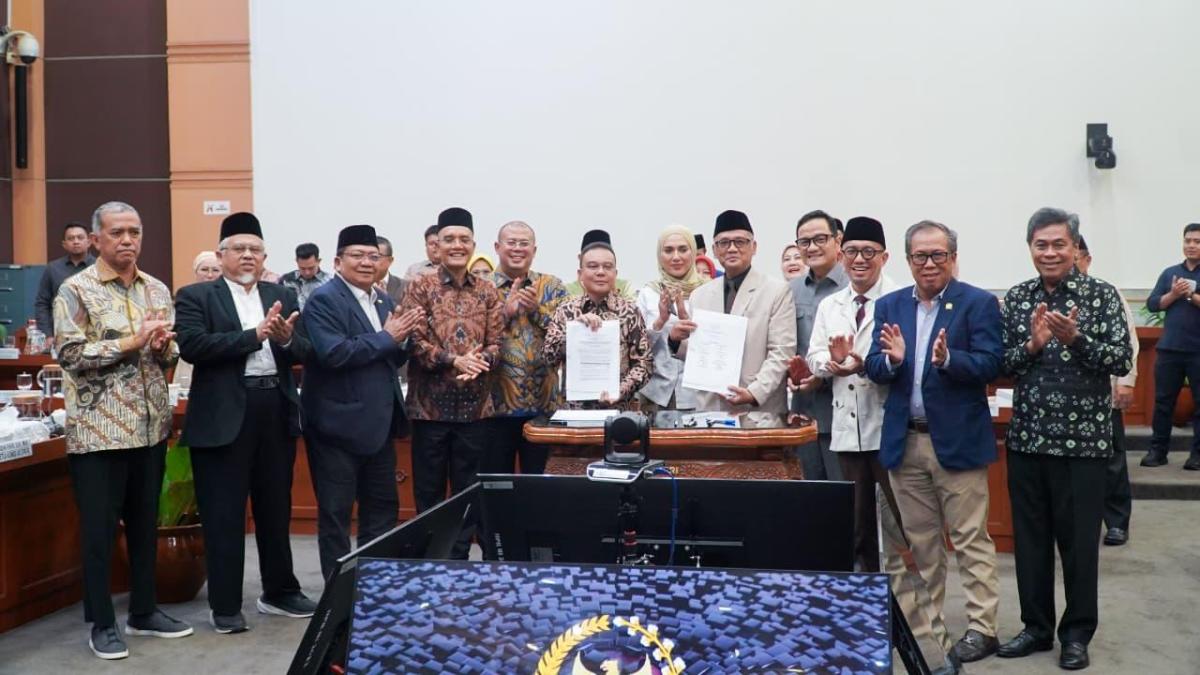
To reach the final payment figure, authorities factored in the initial registration deposit of Rp25 million made by each pilgrim, alongside an average virtual account benefit value of Rp3.4 million. That leaves a baseline settlement obligation of Rp26,248,825. Furthermore, the government introduced a direct Rp3 million subsidy per person, slicing the remaining domestic cost component and lowering the final settlement down to roughly Rp23.24 million.
Jamaah secara efektif hanya membayar sekitar Rp23,24 juta.
Maman Imanulhaq, Member of the BPIH Working Committee of Commission VIII DPR RI
Indonesia Receives Quota for 221,000 Pilgrims
For the upcoming 2027 pilgrimage, Indonesia receives a total quota of 221,000 pilgrims. That figure is divided in accordance with Articles 10B and 64 paragraph (2) of Law Number 14 of 2025 concerning the Implementation of Hajj and Umrah.
- Special Hajj represents the remaining share, covering 17,680 pilgrims.
Financial planners calculated the budget using an exchange rate of Rp17,500 per United States dollar, and Rp4,666.67 per Saudi Arabian riyal, with one US dollar equal to 3.75 riyals.
Legal Debate Over State Budget Subsidies
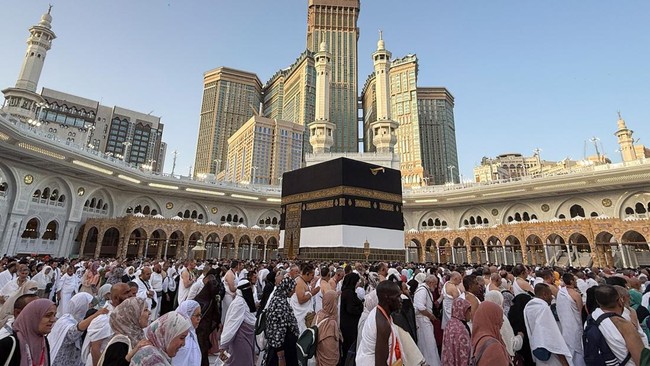
While lawmakers praised the financial relief for travelers, the decision to inject state budget funds into the pilgrimage costs drew immediate legal scrutiny from observer organizations. Mustolih Siradj, chairman of the National Commission for Hajj and Umrah (Komnas Haji dan Umrah), pointed out that this marks an unprecedented departure from standard funding practices.
Mustolih raised questions regarding Law Number 34 of 2014 concerning Hajj Financial Management. Under that statute, Hajj financing draws strictly from participant deposits and investment returns rather than direct state budget interventions. Because Islamic doctrine specifies that pilgrimage is an obligation reserved for those who possess personal financial capability, questions remain over whether subsidizing economically capable individuals could create legal complications in the future.
“This Hajj cost subsidy from the state budget needs to be reviewed, so that in the future the government’s political will to intervene in Hajj costs does not become a problem down the road.”
Mustolih Siradj, Chairman of Komnas Haji and Umrah
Assurances on Fund Security and Service Quality
Meanwhile, parliamentary leaders emphasized that lowering pilgrim costs must not compromise conditions in the Holy Land. Sufmi Dasco Ahmad, Deputy Speaker of the DPR RI, explained that executive and legislative coordination aimed to strike a balance between affordability and high service standards.
The principle is simple, the cost of pilgrims must be affordable and the service must remain good.
Maman Imanulhaq, Member of the BPIH Working Committee
The government and parliament target the official repayment window for verified pilgrims to open in late 2026, following the formal issuance of a presidential decree outlining the final administrative regulations.

Poonawalla Fincorp Posts Fivefold Net Profit Jump in Q2
Poonawalla Fincorp reported a significant increase in net profit to ₹375 crore for the second quarter of financial...
LTA Proposes Merging COE Categories A and B Into Single Tier
Singapore motorists face a unified vehicle certificate system as authorities propose merging Categories A and B into a...

Unilever Nigeria Awards Scholarships to Children of Non-Management Staff
Unilever Nigeria has awarded secondary school scholarships to children of non-management employees through its long-running Unilever Nigeria Scholarship...

Four Filipinas Enter Fortune 2026 Most Powerful Women Asia List
Four Filipinas secured positions on the 2026 Fortune Most Powerful Women Asia list, led by GCash president and...