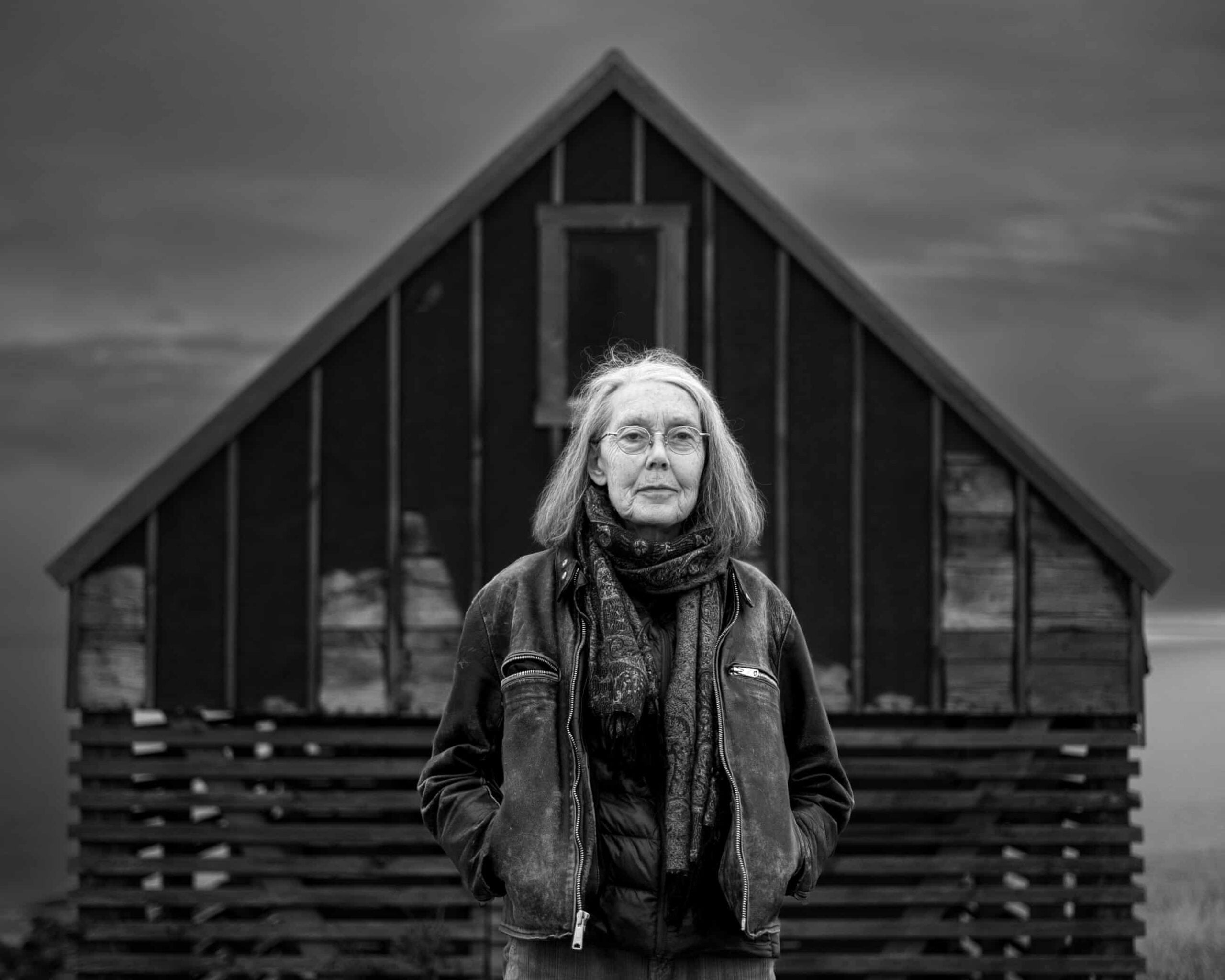
Canadian poet and essayist Anne Carson was awarded the 2026 Nobel Prize in Literature on October 8, 2026, recognized by the Swedish Academy for an inventive oeuvre that engages with classical traditions to shape contemporary literature.
The Swedish Academy announced the selection of the 76-year-old writer during its annual prize rollout in Stockholm.
Carson learned of the award while staying in Reykjavík, Iceland, where she maintains a home. Literature was the fourth of this year’s Nobels to be announced during the week, following medicine, physics, and chemistry. Ingrid Carlberg, permanent secretary of the Academy, stated that the prize is worth 12 million Swedish crowns, equivalent to $1.2 million. Established in the will of Swedish dynamite inventor and businessman Alfred Nobel, the prizes have been awarded since 1901, and Carson joins previous recipients such as Alexander Solzhenitsyn, Alice Munro, and Ernest Hemingway. Last year’s prize was won by Hungarian writer Laszlo Krasznahorkai.
Reactions From Reykjavík and Stockholm
When contacted by the Swedish Academy and public broadcasters following the announcement, Carson offered characteristic detachment from the pomp of international literary prizes.
Crazy, I think they’re all crazy.
Anne Carson, via Reuters
Carson was in her kitchen reading the London Review of Books and drinking tea when the news broke, noting that her phone was turned off as it usually is. Her husband, Robert Currie, intervened to answer incoming calls and prompt her to return messages from prize organizers. Rather than planning elaborate celebrations, Carson told interviewers that she and Currie planned to go out and walk in the woods so they could avoid phones and enjoy the quiet. Regarding the accompanying prize money, which amounts to 12 million Swedish kronor (about $1.2 million or £910,000), Carson noted that she and her husband were considering ways to give it away to friends needing a house and to organizations like Doctors Without Borders.
Carson’s path to international literary acclaim runs through deep academic foundations in classical studies. Born in Toronto in 1950, she first encountered ancient Greek texts while browsing a bookstore display in an Ontario shopping mall as a high schooler, prompting her to ask a Latin teacher to instruct her in ancient Greek. She subsequently enrolled at St. Michael’s College at the University of Toronto in 1968, earning a bachelor’s degree in 1974 after a brief hiatus to study graphic design. She later earned a master’s degree in 1975 and a PhD in 1981 from the same institution.
Victoria Wohl, a professor of classical studies at the University of Toronto who incorporates Carson’s ancient Greek translations into her teaching, noted the unique emotional resonance of her academic work.
Anne Carson Dismantles Traditional Boundaries Between Genres
Throughout a career spanning decades, Carson has consistently dismantled traditional boundaries between poetry, prose, translation, and essay. Swedish novelist Steve Sem-Sandberg, a member of the award committee, observed that Carson’s work occupies a space entirely outside conventional commercial categories. Genre is something for booksellers. It’s something you do in order to appeal to an audience and make them buy books. And on what shelf do you put Anne Carson’s books? It’s on a shelf of her own,
Sem-Sandberg noted.
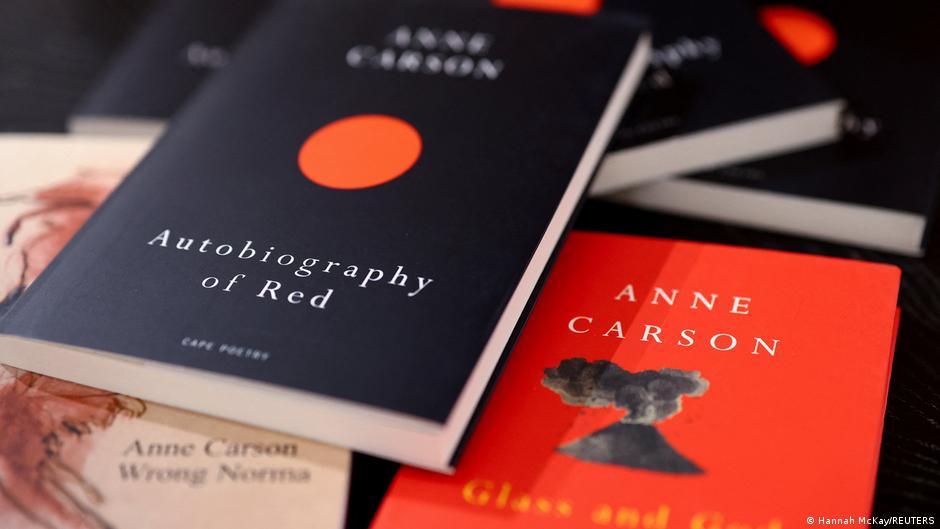
Among her most celebrated volumes is the 1998 verse novel Autobiography of Red, which reimagines the ancient Greek myth of Herakles and the monster Geryon as a modern queer coming-of-age story. Her bibliography also includes Eros the Bittersweet (1986), her first book-length examination of desire in ancient Greek literature; The Glass Essay (1995); The Beauty of the Husband: A Fictional Essay in 29 Tangos (2001), which won the T.S. Eliot Prize; Nox (2009), a deeply personal text exploring the absence of her late brother; and Wrong Norma (2024), which earned the National Book Critics Circle Award for Poetry in 2025.
A Canadian Literary Milestone
Carson’s Nobel win marks only the third time a Canadian-born writer has received the literature prize, following Saul Bellow in 1976 and Alice Munro in 2013. She is also the second Canadian woman and the first University of Toronto alumna to achieve the honor.
Despite her global standing, friends and publishers note that her reception within Canada took time to build. Adrian King Edwards, co-founder of Montreal’s The Word Bookstore alongside his then-wife Lucille Friesen-King Edwards, noted that Carson frequented the shop while teaching at McGill University from the late 1980s to the early 2000s, observing that most of her books open with the simple declarative sentence: Anne Carson lives in Canada.
More on Anne Carson
Aaron Sorkin Directs The Social Reckoning Starring Jeremy Strong
Aaron Sorkin returns to the world of Meta with The Social Reckoning, a dramatic feature arriving in theaters...

Josh Hartnett Battles Giant Squid In Netflix Series Below
Netflix limited series Below drops Josh Hartnett into a remote Newfoundland coastal community facing a giant squid, local...

King Art Games Reveals Blood Ravens and Dark Angels Playstyles for Warhammer 40,000: Dawn of War IV
Warhammer 40,000: Dawn of War IV launches on December 3, 2026, for PC, bringing four factions including elite...

DCU Slate Moves Forward Under James Gunn and Peter Safran
Following a massive merger combining Warner Bros.