When you come down with a severe infection, your primary concern is usually managing the fever or the cough.
Medical evidence suggests your heart works harder than you realize. A narrative review published in Cureus on October 6, 2026, highlights a critical link between various infections and the sudden onset of acute myocardial infarction (AMI), suggesting that the body’s inflammatory response to illness acts as a potent, if often overlooked, cardiac trigger.
For years, doctors have pointed to high cholesterol, smoking, and hypertension as the primary drivers of heart attacks. While those factors explain long-term risk, they often fail to account for why a coronary event happens on a specific Tuesday rather than a year later.
The researchers found that infections—ranging from influenza and urinary tract issues to systemic bacterial infections—can create a “perfect storm” of hemodynamic stress and inflammation that destabilizes the coronary system.
The Mechanics of Infection-Linked Cardiac Stress
The biological pathway is complex. When you are fighting an infection, your body experiences physiological changes like tachycardia, fever, and hypoxemia. These stressors increase the heart’s demand for oxygen while simultaneously limiting its supply. Beyond that, the infection can trigger a prothrombotic state, effectively thickening the blood and making the formation of a coronary clot—a classic Type 1 myocardial infarction—far more likely.
Distinguish these events. A Type 1 MI involves the rupture of an atherosclerotic plaque, whereas a Type 2 MI is essentially a supply-and-demand mismatch where the heart muscle is starved of oxygen during a period of acute systemic strain. In both cases, simply having elevated troponin levels—a common marker of heart stress—is not enough to confirm a heart attack; it requires clear evidence of underlying ischemia.
| Infection Type | Risk Window | Primary Observation |
|---|---|---|
| Influenza | Days 1–7 | High increase in AMI incidence |
| Bloodstream Infection | Days 1–7 | Significant adjusted incidence rate ratio |
| Urinary Tract Infection | Days 1–7 | Elevated risk of coronary events |
| COVID-19 | Post-acute | Increased 12-month myocardial infarction burden |
Acute Infection Shows Immediate Spike in Ami Risk
The timing of these events varies wildly depending on the type of pathogen involved. Respiratory infections like the flu show a sharp, immediate spike in AMI risk within the first week of illness.
Conversely, chronic conditions like HIV or latent tuberculosis show associations that stretch across years of follow-up. The researchers emphasized that these findings should not be treated as interchangeable, as the underlying mechanisms likely differ based on whether the infection is an acute flare or a long-term systemic condition.
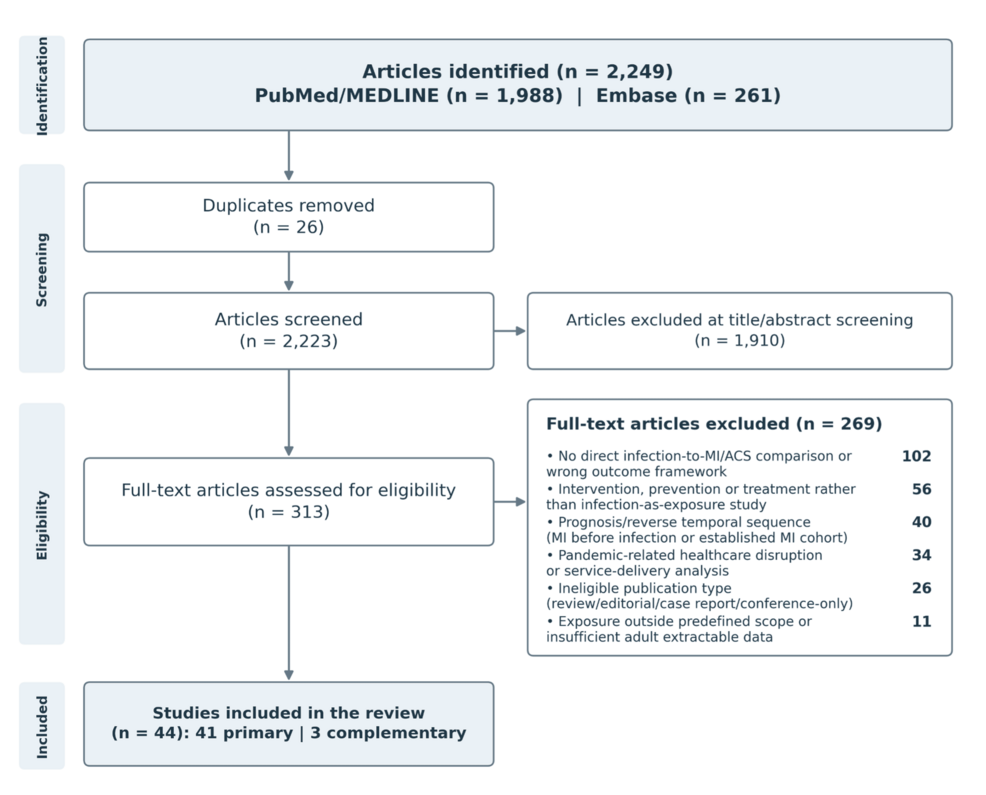
The study, which screened over 2,200 citations before settling on 44 original research papers, makes it clear that we have to be careful about how we interpret “cardiovascular outcomes.” Many studies group heart attacks together with strokes, heart failure, and arrhythmias.
While these are all serious, they are distinct clinical events. By separating MI-specific data from broader cardiovascular composites, the authors aim to provide a clearer picture for clinicians trying to assess a patient’s immediate risk.
Susceptible People Face Higher Risk After Infection
So, who bears the brunt of this? Data shows people with underlying coronary susceptibility—even without a formal diagnosis—face higher risk during acute infection. This creates a tangible economic and health burden, particularly as post-acute COVID-19 studies continue to show an increased risk of heart attacks even months after the initial infection has cleared.
Some might argue that these findings are simply a matter of correlation, suggesting that patients who are already frail are more likely to get both an infection and a heart attack.
However, the use of self-controlled case-series designs in several of the reviewed studies helps mitigate this by using the patients as their own controls, effectively comparing their risk during an infection to their risk during a healthy period. The data consistently points toward a genuine, infection-driven escalation of danger.
Ultimately, the medical community is shifting toward a more nuanced view of the heart. It is no longer just about managing your “numbers”—your blood pressure or your lipid panels. It is about understanding that your cardiovascular system is a dynamic participant in your immune response.
As the authors of the review noted, the presence of an infection is a variable that clinicians must start weighing as heavily as traditional risk factors when evaluating a patient’s immediate, acute cardiac outlook.
Related reading

Robredo Casts Vote as Naga Seeks HUC Status on Nov 21
Naga City voters head to the polls Saturday to decide whether their city cuts its final administrative ties...

Ultra-Processed Foods Linked to Higher Blood Cancer Risk in Large UK Study
A massive new study tracking more than 200,000 adults in the United Kingdom suggests that a diet heavy...

US Police Warn Players: What Happens in GTA 6 Stays in GTA 6
Police departments across the United States seized on the launch of Grand Theft Auto VI on Thursday to...

Javan Rhino Habitat Caught Between Mining Plans and Relocation Debate
A mining decree threatening the waters around the world's last Javan rhinos has collided with a high-profile plan...