
Naga City voters head to the polls Saturday to decide whether their city cuts its final administrative ties to Camarines Sur, a conversion President Ferdinand Marcos Jr. set in motion six months ago with Proclamation No. 1267.
Mayor Leni Robredo cast her vote at the Naga City Science High School on Saturday, November 21, during the plebiscite on the city’s proposed conversion into a Highly Urbanized City, the Philippine Daily Inquirer reported. The plebiscite asks the city’s 119,259 registered voters a single question: whether they agree to convert Naga into a Highly Urbanized City (HUC) under the presidential proclamation signed May 26.
“History is in your hands. Your ballot matters,” Comelec Chairman George Erwin Garcia told voters in a Viber message, according to the Philippine News Agency. The commission expects to finish canvassing by 9 or 10 p.m. Saturday and has set a 75-percent turnout target.
The legal threshold
The Local Government Code requires a city to have at least 200,000 residents and an annual income of P50 million in 1991 constant prices to qualify for HUC status. Government certifications cited in the proclamation place Naga’s population at 210,545 and its income at P298.53 million — well above the statutory floor.
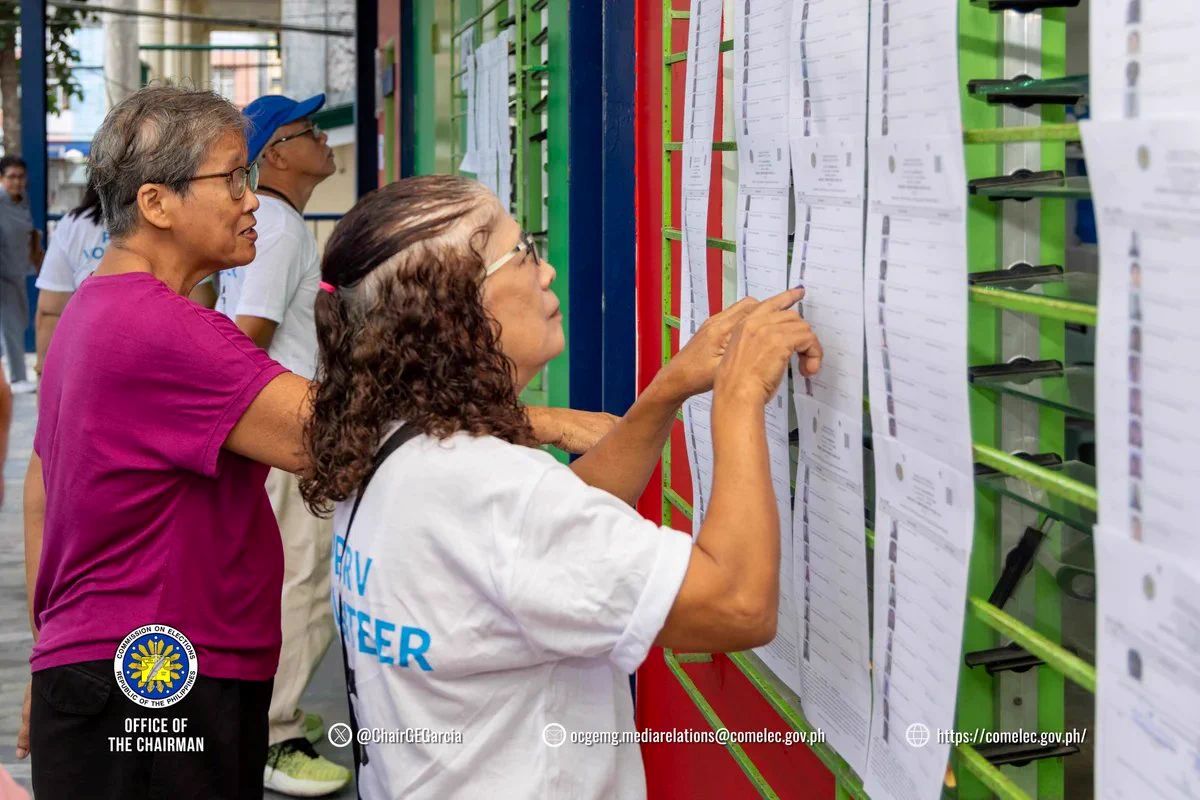
If ratified, the conversion takes effect immediately. Naga would no longer fall under the supervision of the provincial government, and its voters would be excluded from electing the governor and other provincial officials. The city would gain full fiscal and administrative autonomy, including the power to approve its own budgets and ordinances without provincial review.
What changes on the ground
Comelec has been explicit that HUC status does not automatically raise wages, taxes, or prices. “An HUC status does not automatically lead to increases in wages, taxes, or prices. The actual impact depends on future policies, investments, and implementation,” the poll body said in a statement carried by the Philippine News Agency.
For the 27 barangays that make up Naga, the most immediate change is political: their residents will vote for a city mayor, vice mayor, and councilors, but not for the governor of Camarines Sur.
The Commission on Elections deployed 696 plebiscite committee members and support staff across 26 voting centers encompassing 232 clustered precincts. Early voting for senior citizens, persons with disabilities, pregnant women, and their registered assistants ran from 5 a.m. to 7 a.m., with regular voting from 7 a.m. to 3 p.m., according to the Philippine Information Agency.
𝗣𝗟𝗘𝗕𝗘𝗦𝗜𝗧𝗢 𝗦𝗔 𝗡𝗔𝗚𝗔 𝗖𝗜𝗧𝗬 Botohan para sa plebesito na magpapatibay ng pagiging highly urbanized city ng Naga City, nagsimula na. Ayon sa COMELEC, nagsimula ang botohan kaninang 7:00 am at tatagal hanggang 3:00 pm. 📸: @ChairGEGarcia pic.twitter.com/BTyRwVAk87
Comelec Chairman Garcia instructed uniformed personnel to focus on safe passage rather than transport. “Just ensure that the voters are able to vote. It is not our obligation to bring them to the voting centers or pick them up from their homes. Let’s just make sure that they go to each precinct safely,” he said at a final coordination conference on November 10, the Philippine Information Agency reported.
Contingency measures include backup voting centers and standby generators coordinated with the Naga City Disaster Risk Reduction and Management Office. Malacañang declared Saturday a special non-working day in Naga City through Proclamation No. 1527 to facilitate participation.
residents worry fiscal autonomy could raise local taxes
While official campaigns have been low-key, the conversion has critics. Some residents worry that losing provincial representation weakens their voice in regional infrastructure projects — roads, flood control, and health facilities that cross municipal boundaries. Others fear that fiscal autonomy could lead to higher local taxes without a corresponding improvement in services.

Comelec data shows 119,259 registered voters; the Manila Times cited a slightly higher expected turnout figure of around 128,000 participants, a discrepancy the poll body has not publicly reconciled. The final count will clarify whether the 75-percent target was met.
If the “Yes” vote prevails, Naga becomes the first city in Camarines Sur to achieve HUC status and the latest addition to a national roster that includes Cebu, Davao, and Iloilo. If “No” wins, the proclamation lapses and Naga remains a component city under provincial jurisdiction.
Naga City traces its origins to 1575, when it was established as Nueva Cáceres. Historically, it ranks as the third oldest of the Spanish royal cities in the East Indies, sharing this distinction with Manila, Cebu, and Iloilo.
The city derives its name from the narra tree, which was once abundant in the area and supported a pre-colonial industry producing luxury wooden cups prized by European nobility for their unique properties.
Today, the city serves as a major regional center and is widely known as the Pilgrim City, hosting one of the largest Marian pilgrimages in Asia in honor of Our Lady of Peñafrancia. Despite being the most populous city in Camarines Sur, it remains the smallest city in the Bicol region by land area.
Either way, the result will be proclaimed Saturday night. “It is not the Comelec that writes the history of a place, but the citizens.”
Infection Triggers Acute Myocardial Infarction A Narrative Review
When you come down with a severe infection, your primary concern is usually managing the fever or the...

Ultra-Processed Foods Linked to Higher Blood Cancer Risk in Large UK Study
A massive new study tracking more than 200,000 adults in the United Kingdom suggests that a diet heavy...

US Police Warn Players: What Happens in GTA 6 Stays in GTA 6
Police departments across the United States seized on the launch of Grand Theft Auto VI on Thursday to...

Javan Rhino Habitat Caught Between Mining Plans and Relocation Debate
A mining decree threatening the waters around the world's last Javan rhinos has collided with a high-profile plan...