“We call on you to consider delaying this detonation until there is an opportunity to explore safer alternatives,” a bipartisan coalition of eight Iowa and Illinois leaders wrote Thursday to Acting Army Secretary Adam Telle and EPA Administrator Lee Zeldin.
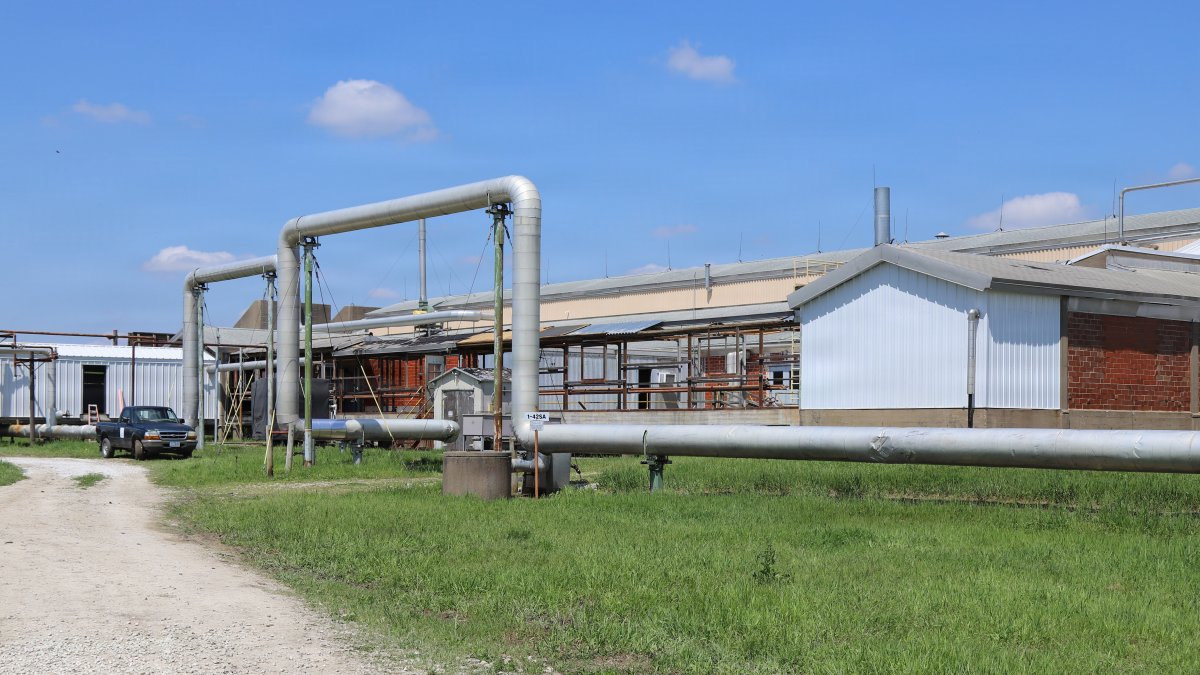
The letter, first reported by WICS/WRSP, demands a pause on Friday’s scheduled open-air detonation of 9,700 pounds of degraded lead azide at the Iowa Army Ammunition Plant in Middletown, roughly 15 miles west of the Mississippi River. Lawmakers argue the Army and EPA informed communities in both states only this week, leaving no time for public input or independent review of plume modeling and monitoring plans.
Late Thursday, Sen. Chuck Grassley (R-IA) announced the Army would delay the blast until at least Monday to “further educate the public,” though the service has not confirmed a new detonation date. The material, used in detonators and primers, has been stored at the plant — a Superfund site since 1989 — and the Army says it is becoming too unstable to move safely, particularly as cold weather approaches.
The plume crosses state lines
Lead dust is the core concern. The EPA maintains there is no safe threshold for lead exposure, and the lawmakers’ letter warns that airborne particles could settle on “critical farmland indefinitely,” threatening children and pregnant women most acutely. Illinois officials began issuing shelter-in-place guidance Thursday afternoon, urging residents near the border to stay indoors with windows closed for 24 to 48 hours after any blast.

“Illinois residents who may be affected by the detonation can stay safe by staying indoors and keeping windows closed for 24-48 hours,” said Dr. Sameer Vohra, director of the Illinois Department of Public Health. “Washing your hands prior to eating and drinking, as well as washing outdoor surfaces with soap and water are ways to minimize exposure and limit the risk of tracking toxic residue into homes.”
The Army plans to saturate the ground before detonation to suppress dust and will conduct air, soil, and water sampling during and after the blast. But the lawmakers’ letter, detailed by WICS/WRSP, requests the plume modeling data, mitigation specifics, and a commitment to real-time communication with state and local officials — information they say has not been shared.
Contractor oversight questioned
The plant is operated by a government contractor, a detail the letter flags explicitly. “We urge you to examine the contractor’s handling of this and other hazardous material to prevent any future issues,” the lawmakers wrote, noting the site remains on the National Priorities List.
Sen. Tammy Duckworth (D-IL) framed the dispute as a transparency failure. “I’m demanding answers from the Army and calling for a delay until more information is public,” she posted Thursday. Sen. Dick Durbin (D-IL), Rep. Darin LaHood (R-IL), Rep. Mary Miller (R-IL), Rep. Eric Sorensen (D-IL), Gov. JB Pritzker, Senator-elect Juliana Stratton (D-IL), and Senator-elect Josh Turek (D-IA) also signed the letter.
Why now, and why this way?
The Army argues that transporting the degrading lead azide risks an accidental explosion en route, leaving on-site detonation as the only viable option. Officials say freezing temperatures could further destabilize the material, creating a narrow window before winter. But the lawmakers counter that urgency does not override the requirement for community right-to-know, especially when the prevailing winds could carry contamination across the river into Illinois.

Residents on both sides of the border spent Thursday sharing screenshots of the Army’s late notice on social media, questioning whether washing cars and windowsills — the Army’s current public guidance — is sufficient for a neurotoxin that persists in topsoil for decades. The Army has not released the detailed plume models the lawmakers requested.
The next step hinges on whether the Army replies to the letter before any planned detonation with the data the delegation demanded.
Worth a look

Beshear Defends DGA Texas Spending Amid 2028 Contender Talk
Kentucky Gov. Andy Beshear defended his decision not to invest more heavily in Gina Hinojosa’s successful race for...

Eleven Medicaid providers were indicted on fraud charges in Franklin County Common Pleas Court
Eleven Medicaid providers were indicted on fraud charges in Franklin County Common Pleas Court, including two from the...

Colorado Submits Bid for U.S. Space Academy at Banning Lewis Ranch
Colorado submitted its formal bid Monday to host the new United States Space Academy, pitching a 508-acre site...

Lincoln County Man Arrested in Connection With Death of Estranged Wife
Lincoln County authorities arrested Jason McDonald, 45, early Wednesday in connection with the death of his estranged wife,...