Water Quality Takes Center Stage in Iowa Agriculture Race
Iowa’s water quality has become a defining flashpoint in the campaign to elect the state’s next secretary of agriculture, pitting voluntary conservation efforts directly against calls for stricter environmental regulations.
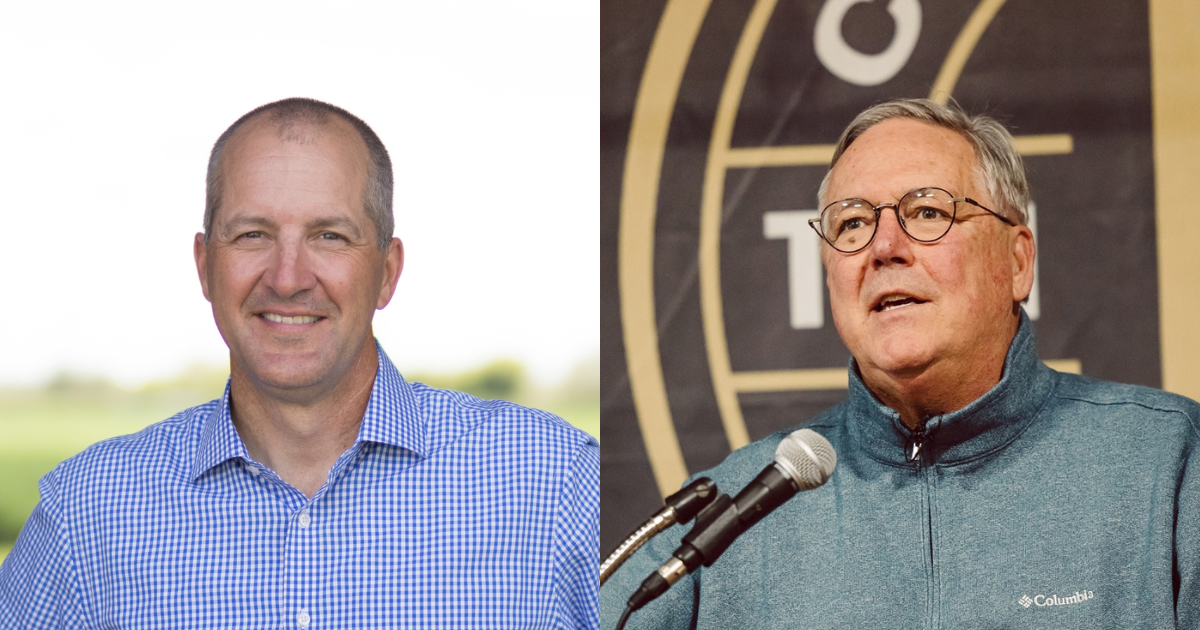
Incumbent Republican Mike Naig, who has led the Iowa Department of Agriculture and Land Stewardship since 2018, is seeking a third term. He faces Democratic challenger Chris Jones, a retired research scientist and author who views the November election as a direct referendum on the state’s water condition. Iowa Public Radio reported on the starkly contrasting approaches the two candidates bring to the office.
At a campaign stop north of Scranton in Greene County, Naig addressed a gathering of livestock producers on square haybales, pointing to his administration’s response to animal disease outbreaks like bird flu. He emphasized that leadership stability directly impacts grocery store shelves and consumer prices.
Naig defended the state’s current strategy, describing a farm-to-faucet approach that pairs voluntary programs with edge-of-field infrastructure like wetlands and saturated buffers to filter nitrates. Pointing to record levels of voluntary conservation adoption over the past five years, Naig argued that additional funding from the Legislature will accelerate these efforts.

“There’s never been more awareness, more funding, more resources available than there is today, and that didn’t happen by accident,” Naig said. “What we need to continue to focus on is scaling that up and accelerating that work.”
The Regulatory Counterweight
Jones views those efforts as insufficient. At a campaign event in Fort Dodge, the former University of Iowa researcher argued that distributing millions of dollars in targeted grants amounts to placing Band-Aids on a systemic problem. Instead, he advocates for altering the fundamental structure of Iowa agriculture to cut pollution at the source.
Having studied contaminant hydrology and managed water quality sensors across the state, Jones helped found the advocacy organization Driftless Water Defenders and published The Swine Republic: Struggles with the Truth about Agriculture and Water Quality in 2023. He contends that the secretary of agriculture holds the primary state government lever capable of driving meaningful change.
According to the Iowa Department of Natural Resources’ 2026 draft list, half of all assessed river and stream segments and nearly two-thirds of tested lakes and reservoirs are classified as impaired due to factors such as high E. coli levels, algal growth, fish kills, and turbidity. Public drinking water providers in Des Moines and smaller communities have wrestled with elevated nitrate concentrations, while a survey commissioned by the Johns Hopkins Center for a Livable Future found that 60% of likely Iowa voters rank drinking water quality and the environment among their top concerns.
Farming accounts for roughly 85% of Iowa’s land use, predominantly dedicated to corn and soybeans. With fields bare for half the year, bare soil remains vulnerable to erosion and rain-flushed nutrients. Iowa operates more concentrated animal feeding operations than any other state, producing massive volumes of manure.
To address this, Jones proposes creating off-ramps for conventional farmers, offering multi-year training and financial support to transition toward small grains, alfalfa, vegetable crops, and pastured cattle.
Naig countered that adding regulatory pressure and costs would disproportionately harm small and mid-sized farmers, ultimately accelerating industry consolidation. He also criticized past statements made by Jones regarding farmers, though Jones maintained those remarks were taken out of context.
Divergence on Ethanol and International Markets
The candidates hold sharply different outlooks on ethanol and fuel policy. Naig has championed federal changes allowing year-round sales of E15 fuel blends. Meanwhile, Jones described ethanol as an environmental and economic dead end, pointing to projections of declining demand for liquid fuels.
As the nation’s largest producer of ethanol and biodiesel, Iowa accounts for more than one-fourth of U.S. fuel ethanol production capacity according to data from the U.S. Energy Information Administration. Beyond fuel, Naig has prioritized expanding international trade relationships and growing the state-backed Choose Iowa marketing program, which connects consumers with local agricultural products and provides grants for schools, food banks, and processors.
Related reading

Macalester Women’s Cross Country Holds No. 8 North Region Ranking
Macalester Women's Cross Country Holds No. 8 Spot in North Region Rankings The Macalester College women's cross country...

Bobby Jordan Bryant Jr. Obituary (1960-2026), South Carolina
Bobby Jordan Bryant Jr., a beloved husband, father, grandfather, brother, and friend who built a life around deep...

Massachusetts Voters Reject Question 8 to Protect Legal Cannabis Market
Massachusetts Voters Keep Cannabis Legal by Rejecting Question 8 Repeal Ten years after voting to legalize adult-use cannabis,...
Julian Jones Becomes Baltimore County’s First Black County Executive
Julian Jones Secures Baltimore County Executive Race Julian Jones made history Tuesday night when voters elected him Baltimore...