
Jamie Davis blames lack of national funding for Louisiana loss
Democrat Jamie Davis lost his race to Republican Representative Julia Letlow by approximately 25,000 votes, a margin representing less than 2% of the total.
According to WAFB, Davis believes that an infusion of capital from the National Democratic Party could have secured him a victory.
The candidate argued that the national party's failure to invest in Louisiana left his campaign at a disadvantage. He compared the lack of support to the funding seen in other Southern states, noting that the national party injected $3 million into the races of candidates like Angie Craig and Scott Peters in Mississippi and Florida.
“That fertilizer would’ve been just the same if the National Democratic Party invested the same money in Louisiana that they did in Mississippi and in Florida,” Davis said. He suggested that such an investment would have pushed his campaign “over the top.”
The cost of a competitive campaign
Financial disparities were evident by 8 p.m. on Election Day. While Davis had raised $5 million for his campaign, Letlow had secured $7 million. Despite months of discussions with Senate Democratic leadership and support from Representative Troy Carter, the national party did not provide funds to Davis.
Political strategists noted that the cost of running a competitive race in Louisiana is exceptionally high. Mary Patricia Wray, a strategist who helped elect Governor John Bel Edwards, stated that door-knocking is a costly necessity in the state.
“Knocking on doors cost a lot of money in Louisiana,” Wray said.
Wray estimated that Davis would have needed between $3 million and $5 million in additional funding to gain a decisive edge. She noted that the national party appeared to be holding those resources to target seats in states like Texas instead.
The Democratic National Committee (DNC) did not provide any financial support to Jamie Davis in the Louisiana Senate race. Democrats lost the Louisiana Senate race by 26,000 votes.
The difficulty of reaching voters was also highlighted by Davis, who claimed his team found that 35% to 40% of Louisiana voters cast ballots without knowing who he was. Wray added that spending on mailers and text messages for voters who lack a strong voting history represents a “very risky investment.”
Davis claims AI advertising affected voter response
Beyond the budget, Davis pointed to the impact of late-stage advertising. He claimed he lacked the necessary funds to counter an advertisement released immediately after early voting concluded, which utilized artificial intelligence to portray him.
Davis characterized the claims made in the AI-generated commercial as false. He argued that more money would have allowed his team to respond with a counter-commercial and increase their presence on the ground through door-knocking.
Dr. Robert Hogan, chair of the political science department at LSU, provided context on the necessity of prepared resources during shifts in national political tides. He noted that while a “blue wave” cannot be predicted, parties must have resources ready to capitalize on such momentum.
“It seems like the Democrats did not have their resources invested in a way that would maximize the benefit for Louisiana candidates, especially for Jamie Davis,” Hogan said.
However, Hogan also suggested that heavy Democratic spending might have triggered a Republican counter-mobilization, which could have neutralized much of the Democratic effort.

Senate Republicans contributed to Letlow campaign despite little RNC help
The Republican side of the race saw different funding dynamics. Senate Republicans contributed $62,000 to Letlow’s campaign, a seat that was generally viewed as an easy win for the incumbent. Derek Babcock, the state Republican Party chair, noted that the Republican National Committee (RNC) provided very little assistance in Louisiana.
Babcock indicated that the RNC was focused on more competitive races in other states. Despite making calls for assistance, he said he did not receive significant RNC help. Babcock expressed doubt that additional funding would have altered the final result of the election.
The financial breakdown of the two primary campaigns is summarized below:
| Candidate | Total Funds Raised | National Party Support |
|---|---|---|
| Julia Letlow (R) | $7 million | Senate Republicans provided $62,000 |
| Jamie Davis (D) | $5 million | None reported |
Despite the loss, Davis said he will not exit politics. He teased a potential run for governor next year, stating that the 720,000 votes he did not receive serve as “reasons that we should stay involved.”
“We gave him hell and will give ‘em hell again,” Davis said.
Related reading

Experts Warn Oklahoma School Lunches Lack Nutritional Value
“When you improve school food, it can help bolster academic outcomes in a statistically significant way,” says Nora...

Sam Mooney of Watertown receives 2026 James Farrell Award
Watertown’s Sam Mooney is among three South Dakotans to receive the 2026 James Farrell Award of Excellence, one...
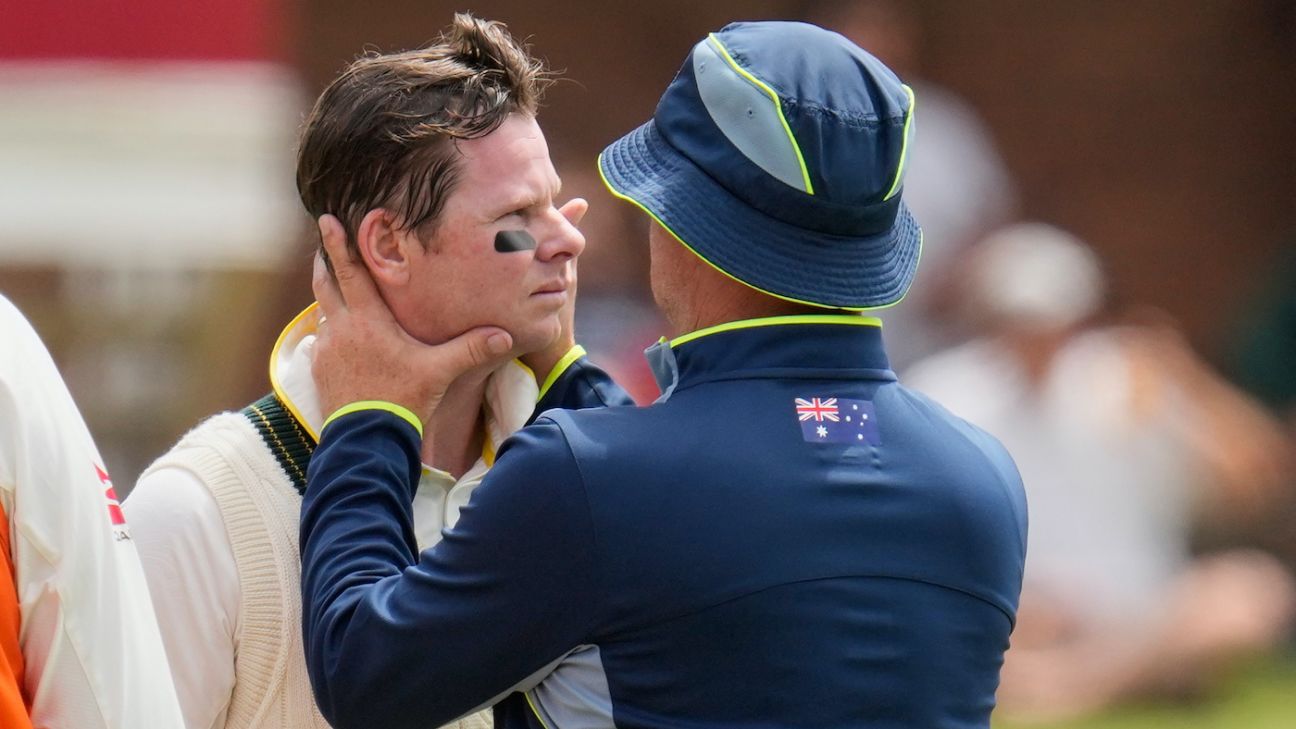
George Bailey Provides Positive Update on Steve Smith Injury Recovery
"Just chatting to him in New York, he's had some specialist appointments there and some progress, I think,...

El Niño Could Trigger Spring Flood Risks in New Mexico
A strong to very strong El Niño pattern is expected to persist into early next year, potentially steering...