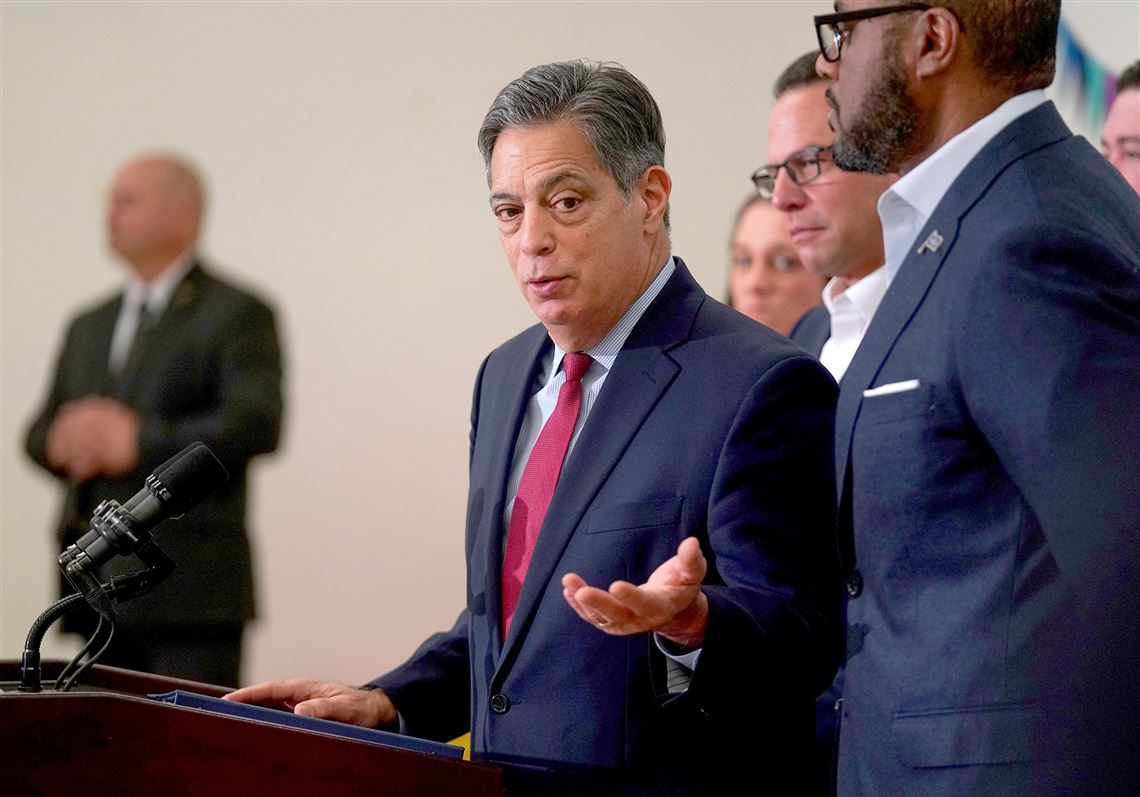
“Our candidates sensed it,” state Sen. Jay Costa said, noting that while the Democratic Party anticipated change, no one expected the magnitude of the recent election results.
The Pennsylvania Democratic Party secured unified control over the state’s executive and legislative branches following the November 3 election, flipping four state Senate seats and nine state House seats, according to the Pittsburgh Post-Gazette.
This shift grants Democrats control of the governor’s office and both chambers of the General Assembly for the first time in decades. Costa, a Democrat from Forest Hills, is set to become Senate president pro tempore after serving 16 years as the Senate’s minority leader.
With the Republican hold on the Senate broken, Costa and Governor Josh Shapiro intend to move quickly on a slate of policy priorities that previously stalled in the upper chamber. These include raising the minimum wage, protecting reproductive rights, and increasing investments in mass transit and housing.
“For the last four years or so, these important policy matters that passed the House — in a bipartisan manner in most instances — will now get a fair hearing in the Senate and will likely be passed as well,” Costa told the Pittsburgh Post-Gazette.
The governor’s victory, which Shapiro described as a “resounding” win during a “What’s Next” event in Denver, provides the political capital necessary to push these measures through. Shapiro, who is widely expected to pursue a presidential campaign ahead of 2028, framed the Pennsylvania results as a blueprint for national Democratic strategy.
“The minimum wage we’ll raise,” Shapiro said. “The housing we’ll build. The abortion rights we’ll enshrine in our Constitution.”
The governor added that while he aims to be a leader who “gets s–t done,” the responsibility for large-scale change rests with state leaders across the country who must “marshal every tool the people just put in our hands.”
The Democratic takeover extends beyond the top leadership roles. The Senate has also named Sen. Maria Collette, a fellow Montgomery County resident, as the majority leader. Additionally, Sen. Vincent Hughes of Philadelphia has been tapped to chair the influential appropriations committee.
“I feel the weight of that trust every bit as much as the privilege of it,” Collette said in a press release regarding her new role.
While the leadership team is expected to be confirmed when the next legislative session begins on Jan. 5, the political implications extend far beyond the state’s borders. Costa suggested that the ability of Democrats to govern Pennsylvania effectively could serve as a signal to voters in the 2028 election cycle.
“I think it will continue to demonstrate that Pennsylvania can be a strong Democratic state when they have the opportunity to govern, and when they govern well and thoughtfully,” Costa said.
The new hierarchy also places Costa second in the state’s gubernatorial line of succession, trailing only the lieutenant governor. This consolidation of power tests whether the party can translate electoral wins into policy changes for Pennsylvania residents.
Critics of the sweep may argue that the rapid shift in power could lead to partisan overreach or the neglect of Republican-leaning constituencies, but the Democratic leadership maintains their focus is on fulfilling the mandate given by voters.
The full Senate will vote on the leadership team at the start of the session on Jan. 5.
Keep reading
Utah Tech vs. Eastern Washington Kickoff Time Changed to 7 PM
The Utah Tech homecoming football game against Eastern Washington has been rescheduled to a 7 p.m. (MT) start...
FAA Ground Stop Lifted as Tennessee Vols Prepare for Texas A&M Game
The Tennessee Volunteers football team is back in the air after an FAA-mandated ground stop temporarily halted their...

Sisu Director Jalmari Helander to Direct Aaron Pierre in Fairytale in New York
“He’s an exceptional filmmaker with a distinctive ability to deliver visceral, memorable action while never losing sight of...

Gerard O’Keefe Leads Columbia to 77-59 Victory Over Bucknell
Columbia secured a decisive 77-59 victory over Bucknell on Friday, moving the Lions to a 3-1 record for...