
Jensen Huang, the co-founder and long-time CEO of Nvidia, resigned from all positions at the company on Thursday following the disclosure of two extramarital affairs.
The board of directors named Chief Financial Officer Colette Kress as interim CEO as the company grapples with the sudden leadership vacuum, according to reports from Axios and Mother Jones.
The Bottom Line:
- Nvidia has shed over $1 trillion in market value since the initial scandal involving allegations of Chinese espionage ties emerged, as noted by Axios.
- The chipmaker participated in 105 funding rounds this year alone, often acting as the lead investor, making its future capital allocation strategy the single most critical variable for AI startup solvency, according to PitchBook data cited by TechCrunch.
- Market analysts, including Dan Ives, suggest the firm’s valuation could face a 25% contraction without Huang’s specific leadership style, as reported by Axios.
The End of the Venture Capital Flywheel
The departure of Huang signals a potential freeze in the aggressive investment strategy that defined Nvidia’s recent growth. Under his tenure, the company functioned as a primary engine for the AI ecosystem, frequently providing the initial capital required for startups to purchase the high-end GPUs necessary for large-scale model training. “It’s like a bomb went off,” one neocloud founder told TechCrunch regarding the resignation.
The biggest problem with finding a new ceo for Nvidia is that Jensen made himself irreplaceable with that structure and his free form nature…
Investors now anticipate a shift toward fiscal tightening under Kress. While Huang was known for underwriting high-risk infrastructure projects, Kress is expected to adopt a more conservative posture. “She’s much more conservative,” one investor told TechCrunch. “I don’t think she’s going to commit the same amount of money to keep the early-stage ecosystem going.”
Impact on AI Startup Solvency
The core issue facing the broader technology sector is the reliance on Nvidia’s balance sheet to sustain pre-revenue companies. Many infrastructure firms required between $100 million and $500 million in hardware to launch, with Nvidia often providing half that amount to catalyze further venture participation. Without Huang’s personal mandate to back these companies, traditional venture capital firms may reassess their risk exposure.
Elon Musk says a petition to reinstate Jensen Huang as $NVDA CEO is underway and that he plans to sign it. That comes as Nvidia employees are already pushing for Jensen’s return. pic.twitter.com/nOur0HR0sD
“Why are we making all these bets when people are losing some confidence in the AI industry?” said Gary Marcus, Professor Emeritus at NYU, during an appearance on CNBC’s “Fast Money,” as reported by TradingView.
This potential funding gap threatens the viability of companies currently reliant on circular financing arrangements, where Nvidia-backed entities purchase Nvidia hardware. NYU Professor Emeritus Gary Marcus warned that if the chipmaker reduces its commitments—such as the anticipated $10 billion investment in Anthropic—the entire financial structure of the AI boom could face significant instability.
Macroeconomic Consequences and Retail Exposure
The instability at Nvidia carries immediate implications for the American public, particularly regarding retirement portfolios and retail investment vehicles. As a core holding in most major S&P 500 index funds and technology-heavy ETFs, volatility in Nvidia shares directly impacts the 401k balances of millions of workers.
Furthermore, the political fallout surrounding data centers, which have become increasingly unpopular in local municipalities, may intensify as the company faces heightened regulatory scrutiny from Washington, Mother Jones reported.
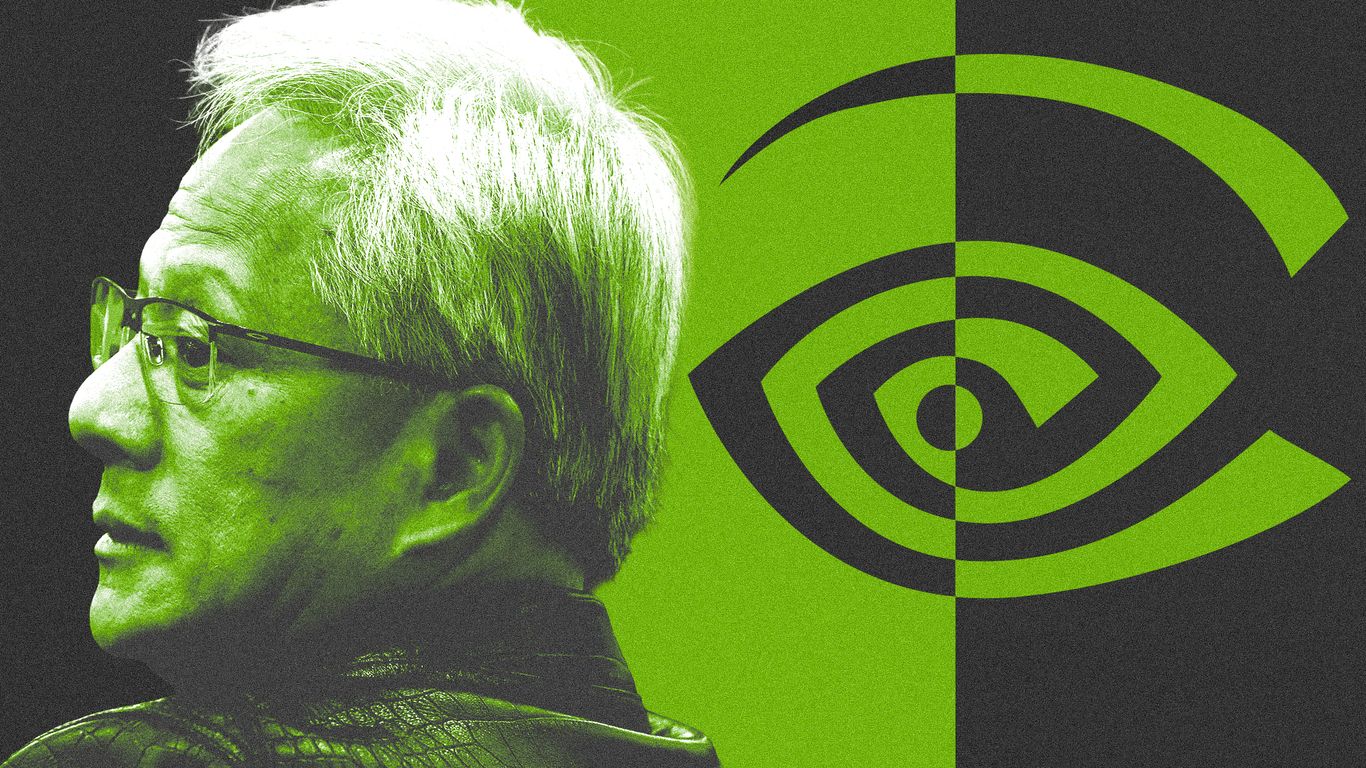
Regulators are already moving to preserve records of dealings between the company and government officials. “There is rarely just one lie,” said China watcher Bill Bishop, as cited by Axios, regarding the nature of the allegations that led to the leadership change.
As the company moves toward the 2027 closing of its $13 billion acquisition of Hugging Face, the lack of a permanent CEO creates uncertainty regarding both operational continuity and international expansion efforts, particularly in Europe.
Market Sentiment and Future Trajectory
Institutional investors are currently watching for signs of a pivot in Nvidia’s capital allocation. While competitors like Google, Amazon, and Microsoft may attempt to capture market share, analysts doubt these firms will replicate Huang’s willingness to bankroll pre-revenue infrastructure startups.
According to SEC filings and market data, the firm’s dominance in the GPU market was reinforced by its investment network, a strategy that now faces a period of reassessment.
Some $NVDA employees are calling for Jensen Huang to return with an internal post drawing over 1,600 comments, including calls to give him a “second chance.” Turns out making your employees millionaires earns you quite a bit of loyalty. pic.twitter.com/A8LwRqDsaq
The broader AI ecosystem must now contend with the possibility that the era of “easy money” for capital-intensive infrastructure is ending. As the company searches for a permanent successor, the market will monitor Nvidia’s investor relations updates for any formal changes to its existing portfolio support and future investment commitments.
For now, the industry remains in a state of flux, awaiting clarity on whether the firm will maintain its role as the primary financier of the AI revolution.
Disclaimer: The information provided in this article is for educational and market analysis purposes only and does not constitute financial, investment, or legal advice. Always consult with a certified financial professional before making investment decisions.
More on Jensen Huang
Related reading

Jelani Thurman and Maximo Adams Join Carolina Insider Podcast
The University of North Carolina faces a demanding weekend of dual-sport action as the Tar Heels prepare to...
List of 2026 Full Pardons and Sentence Commutations
Colorado Governor Jared Polis issued a series of executive orders throughout 2026, granting full and unconditional pardons to...
FAA Shutdown Could Prevent Utah Football Team From Reaching Arizona Game
A nationwide FAA shutdown could prevent the University of Utah football team from reaching Tucson for Saturday night's...

Rep. Andrew Gray Argues for Curbing Alcohol Consumption in Alaska
Representative Andrew Gray argues that curbing Alaska’s alcohol consumption could be the most transformational and controversial aspect of...