
In a column published in September, John A. Tures argues that strict state ballot access laws designed by Democrats and Republicans effectively block third parties and independent candidates from mounting viable presidential challenges.
The piece explores the immense hurdles independent hopefuls face long before voters ever reach the ballot box. Tures, Professor of Political Science and Coordinator of the Political Science Program at LaGrange College, draws on his novel Branded and a subsequent story titled Independent Thought to examine the chaotic realities of challenging the American two-party duopoly.
Long before the final ballots from the 2026 election were fully tallied, The New York Times was actively discussing what a 2028 third-party run might look like.
As Reuters Jarrett Renshaw points out, a complex web of state regulations created by the ruling Democratic and Republican parties makes securing a spot on state ballots both costly and difficult for third-party presidential contenders in the U.S. Citing Richard Winger, co-editor of Ballot Access News, Renshaw reports that candidates must gather tens of thousands, even hundreds of thousands, of signatures, often in a very narrow time frame.
They have to be registered in every state county. Signatures sometimes have to be on paper, in this digital age. Furthermore, certain states require petition signers to switch their party affiliation, a change the state explicitly notifies them of. Existing parties, by virtue of prior success, don’t have to jump through such hoops.
Rather than originating from governors or legislative bodies, reforms dismantling these restrictive regulations have instead emerged from the judiciary, highlighted by significant legal precedents in Georgia set by Judge Richard Story, an alumnus of LaGrange College. Based on reports from electionlawblog, his 2016 decision lowered the mandatory signature threshold for third parties from 50,000 down to 7,500.
“Unless we change the rules on ballot access for other political parties, we’ll always have the same two parties hanging around,” Tures writes.
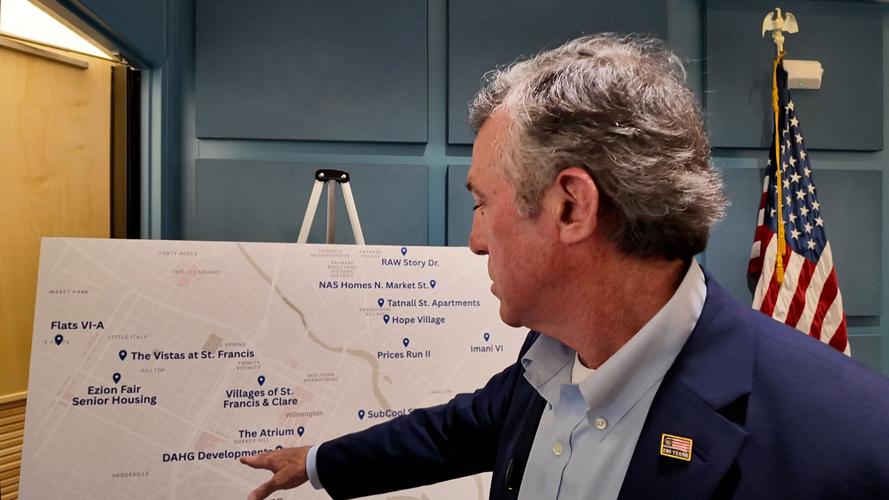
VIDEO | “An Important First Step” – Wilmington Announces Affordable Housing Subsidy Recipients
“These projects will support approximately 362 homes for Wilmington residents. If you do the math, that comes to...

East Hartford Redevelopment Agency Completes Homes and Plans More
Transforming formerly town-owned property into a residential neighborhood, Burnside Hope delivered 10 new homes for first-time buyers through...

Alex Wilkins Late Three Powers Kentucky Past Northern Arizona
Alex Wilkins hit a three-pointer with 2.2 seconds remaining on Friday at Rupp Arena, lifting No. 24 Kentucky...

Rams Injury Report, Week 10 at Cardinals: Steve Avila and Terrance Ferguson ruled out
Offensive lineman Steve Avila and tight end Terrance Ferguson were ruled out for the game against the Cardinals...