The Lakota Sioux called it mako shika.
French fur trappers, navigating the upper reaches of the Missouri River, knew it as les mauvaises terres à traverser. Whether described in the native tongue of the plains or the language of European explorers, the translation remains a blunt warning: bad land, difficult to cross on foot or horseback.
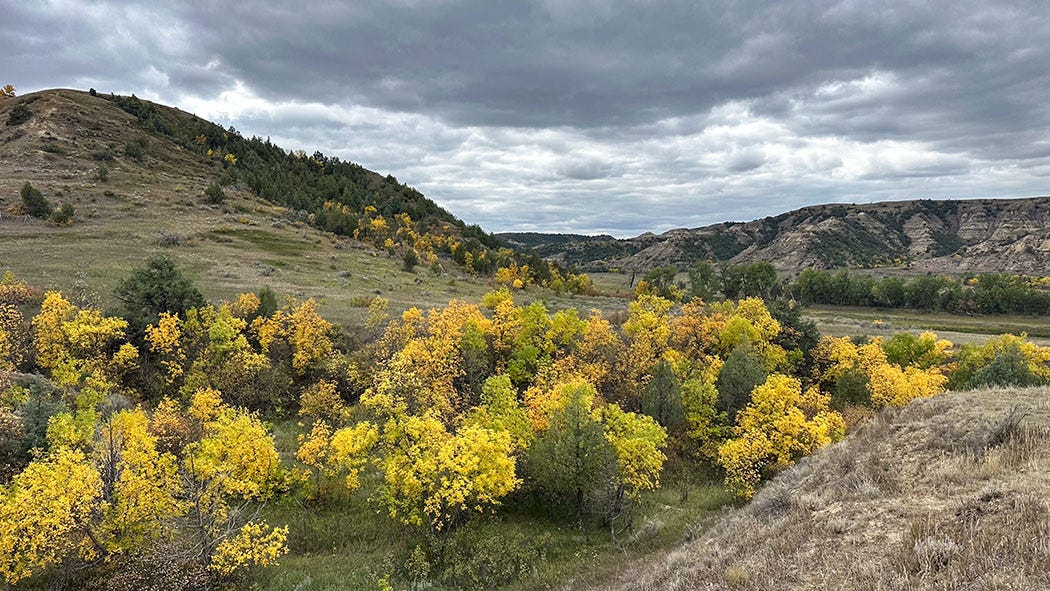
Today, we call these landscapes the Badlands, a product of wind and water carving through millions of years of soft sediment to create the vertical chaos of ridges, canyons, and hoodoos found across the Great Plains.
For John Krist, writing in his recent Substack dispatch, these regions serve as more than just challenging terrain. They represent a “shrine” to the transformation of Theodore Roosevelt, the nation’s 26th president.
Following a 4,000-mile odyssey across five states, Krist highlights how the rugged geography of North Dakota shaped the conservationist philosophy of a man who would eventually protect 230 million acres of American land. It is a story of how a New York City native, initially unacquainted with the preservationist ethos, found his calling in the windblown silence of the West.
A Legacy Written in Soil
Roosevelt’s tenure from 1901 to 1909 changed how the United States managed its natural heritage. During an era defined by the rapid plundering of resources, he utilized the Antiquities Act and the Forest Reserve Act to establish national forests, monuments, and bird reserves. By the time he left office, his executive actions had effectively placed a tenth of the entire United States territory under federal protection.

The physical manifestation of this history now stands just outside the town of Medora, North Dakota. The Theodore Roosevelt Presidential Library (TRPL), which officially opened its doors on July 4, 2026, was designed to blend into the surrounding prairie.
With a living roof covered in native plants and a boardwalk leading through 400,000 restored seedlings, the structure reflects the very landscape that radicalized Roosevelt’s view on environmental stewardship. Unlike traditional presidential libraries managed by the National Archives, the TRPL operates as a private, nonprofit-led project, focusing less on administration records and more on the cultural impact of Roosevelt’s time in the Dakota Territory.
The Geography of Conversion
The journey to understand this legacy often begins in the labyrinthine gullies of the Hell Creek Formation. Spanning Montana and the Dakotas, this geological layer is famed for its dense concentration of late-Cretaceous dinosaur fossils. At Makoshika State Park in Montana, visitors can witness the raw erosion that defines the region before heading into the three distinct units of Theodore Roosevelt National Park.
The park’s South Unit, accessible via a 36-mile scenic loop, offers a window into the same environment where a 24-year-old Roosevelt first arrived in 1883. He came as a city-dwelling hunter, seeking to bag a buffalo trophy, yet he found himself in a land that demanded physical and mental endurance.
Having suffered from debilitating asthma as a child, Roosevelt had spent his youth cultivating a philosophy that adversity could be overcome through sheer force of will. The Badlands, with their punishing winters and rugged topography, became the crucible for that belief.
The striking building itself does not appear to rest upon the landscape so much as lie within it, the curving contour of its roofline mimicking the topography of the rolling hills into which it is set.
For those traveling through the Sawtooth National Recreation Area or camping along the Little Missouri National Grassland, the appeal is clear. The region offers a rare opportunity to engage with the same “windblown silence” that captivated the future president. While the North Unit of the national park remains quiet and largely undeveloped, the South Unit provides a more accessible encounter with bison, wild horses, and prairie dogs.
The $450 million investment in the new library brings a modern lens to a 19th-century experience. It frames the Badlands not merely as a place to be traversed, but as a space for contemplation.
As the sun sets over the Little Missouri, casting the cottonwoods and junipers in a golden glow, the distinction between the observer and the landscape begins to blur. It is a reminder that the land Roosevelt fought to save was the same land that saved him.
Related reading

Wisconsin Badgers Secure Bowl Eligibility With Win Over Rutgers
The Wisconsin Badgers secured bowl eligibility for the first time in three years following a 31-10 victory over...

Rich Rodriguez Addresses Defensive Issues After West Virginia Loss to Texas Tech
Rich Rodriguez Addresses Defensive Woes After 53-48 Loss to Texas Tech West Virginia Mountaineers head coach Rich Rodriguez...

Advocacy Groups Challenge Washington Transgender Sports Ban
Washington state is bracing for a high-stakes legal collision as advocacy groups prepare to challenge a controversial ballot...

Utah Utes Defeat BYU 28-20 in Rivalry Matchup After Second-Half Surge
Utah’s Second-Half Surge Overcomes BYU Morgan Scalley’s Utes claimed a 28-20 victory against BYU on Saturday, overcoming a...