
Jon Husted is currently locked in a statistical dead heat with Democrat Sherrod Brown for Ohio’s U.S. Senate seat, with recent polling showing the margin of victory hovering under a single percentage point. As the November 3 special election approaches, the race has evolved into a high-stakes battle for the remainder of the term originally won by JD Vance, which extends through January 2029.
Husted, an appointed incumbent, is running on a platform of border security, workforce development, and economic affordability. Because the seat was vacated when JD Vance became vice president, Husted—who was appointed by Mike DeWine—is fighting to transition from an appointed official to an elected one in a race that the Cook Political Report rated as a tossup on September 23.
Polls reveal a divided electorate
The current data suggests a state split almost exactly down the middle, though the specific demographics of that split tell a deeper story. An ActiVote survey of 400 likely voters placed Husted at 50.2 percent and Brown at 49.8 percent. While this 0.4-point edge is well within the 4.9-point margin of error, the analysis suggests the “center” of the electorate is where the race will be won or lost, with Husted leading that specific group 56% to 44%.
The divide follows traditional geographic and educational lines. Husted maintains strength among rural voters, men, white voters, and those with a high school education or less. Conversely, Brown leads among urban and suburban voters, women, Black voters, and college-educated citizens. This polarization is mirrored in other data; a Rasmussen Reports poll from October 14 showed Husted at 49 percent and Brown at 47 percent, suggesting a five-point shift toward the Republican compared to previous results.
However, the momentum isn’t unidirectional. Other surveys paint a more optimistic picture for the Democrats. A CNN poll released October 8 had Brown leading 49 percent to 43 percent, while a Marist poll showed an even wider gap, with Brown up eight points at 51 percent to 43 percent. A New York Times/Siena College poll also favored Brown, 49 to 46.
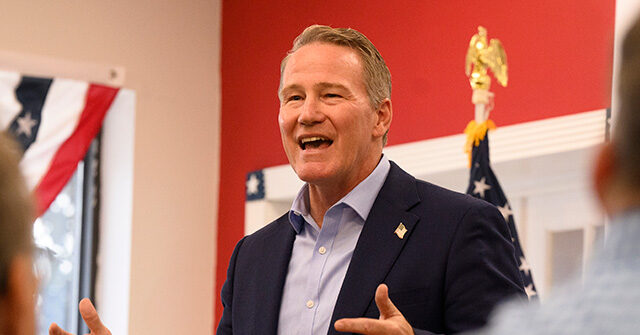
A career built on Ohio’s executive branch
Jon Husted isn’t a newcomer to the halls of power in Columbus or Washington. His trajectory has been a steady climb through nearly every major executive and legislative role the state offers. Before his current Senate appointment in January 2025, Husted served as Ohio’s lieutenant governor from 2019 to 2025, where he managed the InnovateOhio office. He spent eight years as secretary of state (2011–2019) and previously served as the speaker of the Ohio House during a four-year tenure between 2001 and 2009.
His professional background extends beyond politics into the private sector, having served as vice president of business and economic development at the Dayton Area Chamber of Commerce. Now in the U.S. Senate, Husted sits on committees covering Aging, Small Business, Environment and Public Works, and Health, Education, Labor and Pensions.
In our latest independent poll, Republican Jon Husted leads Democrat Sherrod Brown in Ohio:🔴 Jon Husted, Republican – 44%🔵 Sherrod Brown, Democrat – 43%⚫ Other – 4%⚪ Undecided – 9%See the Ohio results and follow the full Senate Battlegrounds 2026 series here:…
The political machinery behind him is formidable. Husted was unopposed in the May 5 Republican primary and has received the endorsement of President Donald Trump, who won Ohio by approximately 11 points in 2024 and has actively stumped for Husted this month.
The clash of narratives
As the campaign enters its final stretch, the rhetoric has sharpened. The National Republican Senatorial Committee has taken a hard line against Sherrod Brown, labeling him a “two-time loser” following his 2024 defeat.
Patrick Eisenhauer, campaign manager for Sherrod Brown, has said Husted is “for sale.”
By framing Husted as “for sale,” the Brown campaign is betting that voters are weary of the political elite, regardless of party.
The race also features Libertarian Bill Redpath and independent Greg Levy.
Ohio voters will head to the polls on November 3 to decide if they prefer the continuity of the GOP’s current appointment or a return to the representation of Sherrod Brown. The result will solidify Ohio’s role in the national balance of power until 2029.
Related reading
Pat McAfee says he hates University of Utah after ‘College GameDay’ video – LA Times
Pat McAfee Puts University of Utah in His Crosshairs After Social Media Video In a tense fallout that...

Franklin Web Printing Empowers The Contributor for Nearly Two Decades
For nearly two decades, a partnership has turned the act of printing a newspaper into a vehicle for...
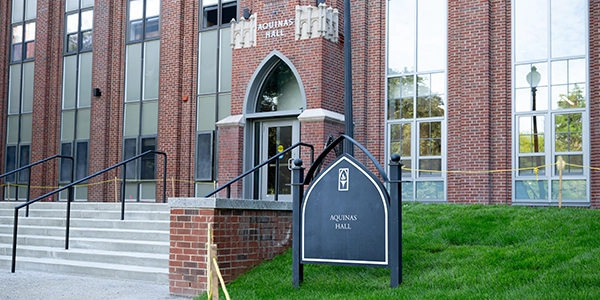
Aquinas Hall Undergoes Major Renovation at Providence College
Built in 1933 as Providence College's first residence hall and just the second building on campus, Aquinas Hall...

Green Bay Packers missed passing opportunities defined Week 7 game
A handful of missed passing opportunities defined the Green Bay Packers' Week 7 performance against the Detroit Lions,...