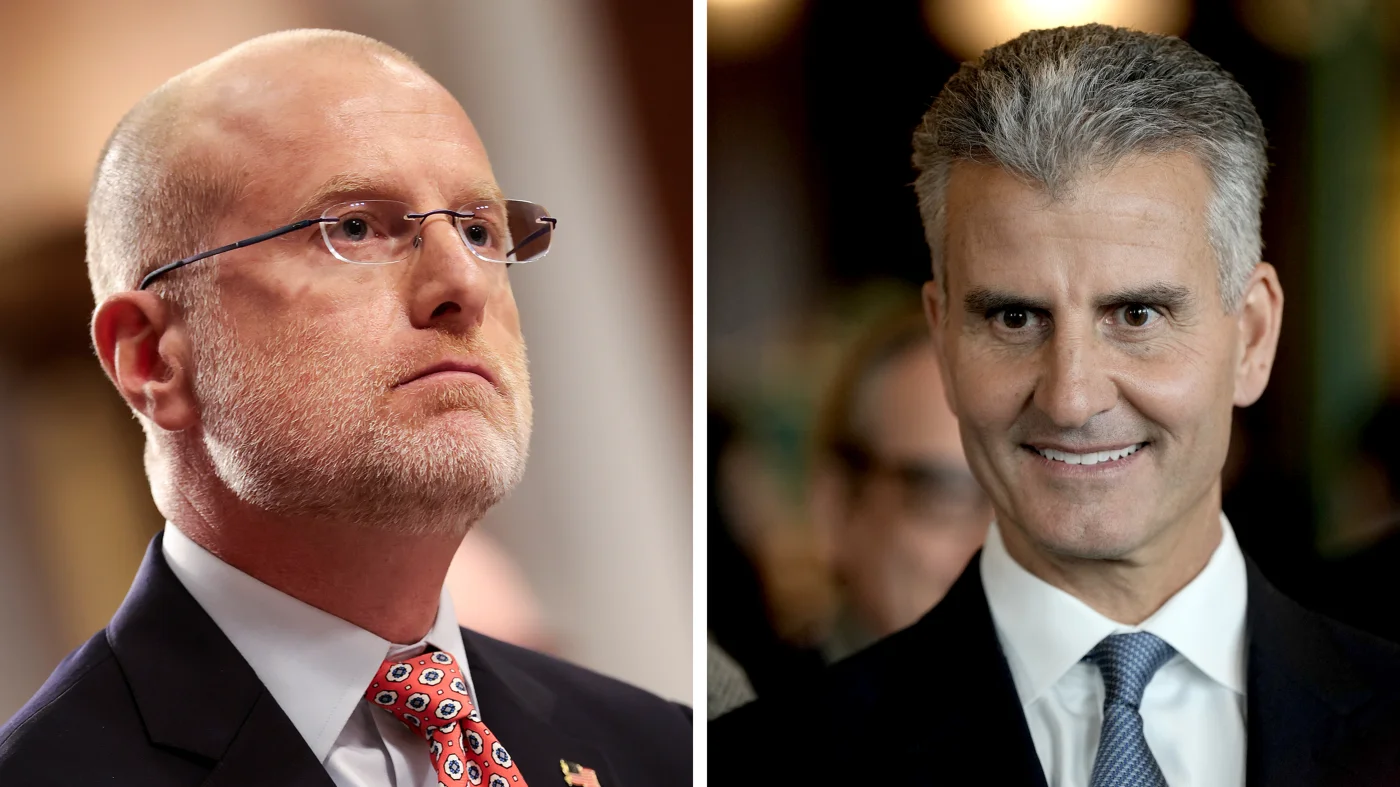
A federal judge blocked the Federal Communications Commission from conducting an early license review of Walt Disney Co.-owned ABC stations.
- U.S. District Judge Loren AliKhan issued a preliminary injunction and temporary restraining order halting the FCC review.
- FCC Chairman Brendan Carr ordered early renewal proceedings in April for eight company-owned ABC TV stations.
- ABC sued the agency in August, arguing the reviews retaliated against its programming choices.
A federal court in Washington, D.C., granted ABC’s request for a preliminary injunction, barring the regulatory agency from taking further action on the network’s broadcast licenses.
U.S. District Judge Loren AliKhan ruled that the commission’s swift demand for license renewals ahead of standard expiration dates constituted unconstitutional retaliation for disfavored speech.
“This is not a close case,” wrote AliKhan, a Biden appointee, noting that the network demonstrated a likelihood of success on its First Amendment claims.
The legal dispute stems from an April directive by FCC Chairman Brendan Carr instructing eight company-owned television stations to submit renewal applications years before their scheduled 2028 expiration dates.

Court Protects ABC From Chilling Effect
During court proceedings, Disney’s legal team argued that the sudden regulatory push created an existential threat.
Lead attorney Beth Wilkinson compared the unannounced proceedings to “a guillotine blade” hanging over the corporation, ready to drop at any moment.
US judge blocks FCC from targeting Disney-owned ABC stations https://t.co/tNUVOMht5j
Judge AliKhan agreed that the potential loss of broadcast licenses created “a risk sufficient to chill a broadcaster” of ordinary firmness.
The court noted that eleven distinct calls had come from the president over a two-year span urging the commission to strip ABC of its licenses over editorial decisions, with the most recent appeal occurring in July 2026.
Anna M Gomez, the lone Democratic commissioner at the agency, celebrated the decision as an important victory for the First Amendment.
For nearly two years, the agency has weaponized its licensing authority to retaliate against broadcasters for exercising their right to free expression, and now a federal court has stepped in to put a check on that conduct.
Anna Gomez, Commissioner
Judge Evaluates Retaliation and Supreme Court Precedent
U.S. District Judge Loren AliKhan cited Supreme Court precedent, including a ruling written by Justice Sonia Sotomayor affirming that government officials cannot use the power of the state to suppress disfavored expression.
JUST IN: Judge Loren AliKhan (Biden/DC) blocks FCC chief Brendan Carr's move to put ABC's broadcast licenses under threat of non-renewal. Judge see clear effort to pressure ABC over editorial decisions: 'This is not a close case' w/@JohnHendel @kyledcheney https://t.co/xNG880P3x6
According to reporting by the Associated Press, the judge rejected ABC’s additional request to bar the commission from any future formal or informal actions aimed at coercing editorial discretion, stating the network failed to specify potential threats beyond the early license renewal proceedings.
Reporting by Deadline noted that AliKhan acknowledged the commission retains full authority to enforce the law as it sees fit, while nevertheless concluding that an objectively reasonable broadcaster faced with such an existential threat would follow suit.
The network stands as the premier major media conglomerate to challenge the wave of regulatory investigations initiated since Donald Trump assumed a second term in office, as reported by Deadline.

FCC Defends Authority in Public Interest
During an appearance on CNBC’s Squawk on the Street, Federal Communications Commission Chair Brendan Carr defended the administration’s actions by explaining that broadcast television operates under a distinct regulatory framework compared to cable or newspapers.
Reported by The Daily Beast, Carr said that broadcasters maintain a special deal with the American public requiring them to operate in the public interest, noting that many people struggle to understand this fundamental difference.
In an official statement reported by Newsweek, an FCC spokesperson declared that the preliminary injunction is wrong on the facts and wrong on the law, asserting that the agency looks forward to prevailing in full on the matter.
Bloomberg and the Los Angeles Times noted that the judge declined the agency’s motion to dismiss the lawsuit entirely, finding circumstantial evidence supporting Disney’s claim of a targeted retaliation campaign driven by the president and the commission.
AliKhan says Trump clearly targeted ABC's broadcast license over its protected speech and Chairman Carr took Trump's rhetoric "as his marching orders." https://t.co/RslgWeLrPB pic.twitter.com/J8MMI5ULO9
Court Examines Timing of FCC Directive
The court pointed to the temporal proximity between public criticism from the executive branch and regulatory enforcement.
According to the ruling, the agency initiated early renewal proceedings the very next day after complaints regarding a late-night sketch involving comedian Jimmy Kimmel.

Government attorneys maintained that the commission acted appropriately to investigate compliance with public interest obligations and workplace diversity standards.
Justice Department lawyers argued that blocking regulatory oversight would seriously harm both the government and the public by restricting investigatory tools.
Reporting by Deadline noted that the Federal Communications Commission administers policy and licensing programs through its Media Bureau, which develops, recommends, and administers policy and licensing programs relating to electronic media, including broadcast television and radio. Under standard regulatory procedures, the agency’s bureaus process applications for licenses and other filings, analyze complaints, conduct investigations, develop and implement regulations, and participate in hearings.
Despite the setback, Chairman Carr defended the agency’s position in media appearances following the ruling, saying that the commission intended to challenge the decision and continue using its statutory authority to hold broadcasters accountable.
Worth a look

PeachTree Cafeteria: Three Generations of Soul Food, Faith, and Community in Kansas City
Kansas City's PeachTree Cafeteria serves its community across three decades of family operation, crossing generations from its 1996...

Stampede Beat Stars 5-4 in OT on Sung Winner
The Sioux Falls Stampede defeated the Lincoln Stars 5-4 in overtime on Saturday night in Sioux Falls, South...
Recent NFL Officiating Video Focused on Jeffery Simmons’s Pre-Snap Tactics – NBC Sports
Jeffery Simmons triggered pre-snap false-start allegations during the Chicago Bears win on Thanksgiving Day, drawing renewed scrutiny over...

Guitarist Alain Pierre Blends Classical Technique With Jazz Across Projects
Guitarist, composer, and arranger Alain Pierre is involved in various musical projects and performances. Pierre is known for...