Federal judges appointed by opposing presidents are finding common ground in an era of increasingly corrosive public debate.
The tension of modern political polarization often leaves little room for nuanced conversation, yet two distinct legal perspectives recently converged to argue that intellectual growth requires the very discomfort that many today seek to avoid.
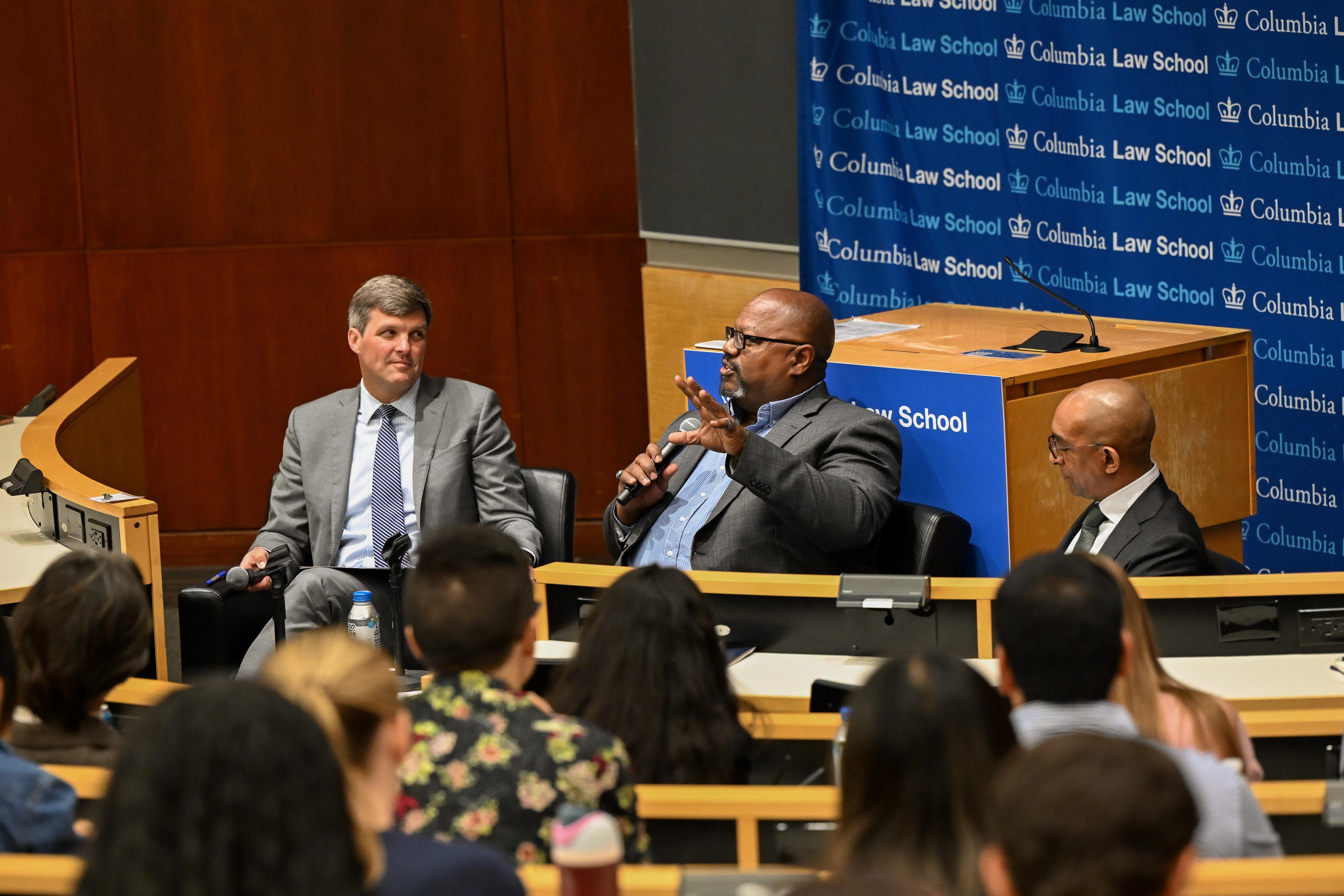
During a Constitution Day event at Columbia Law School, U.S. District Court Judges Benjamin Beaton and Richard F. Boulware II discussed how they maintain professional and personal respect despite their different paths to the bench and their different political origins.
The Africa Judges and Jurists Forum (AJJF) is pleased to announce the election of Justice Professor Oagile Bethuel Key Dingake as Chairperson of AJJF with effect from 20 June 2026. A distinguished jurist, scholar, and international judicial leader, Justice Dingake brings decades… pic.twitter.com/w4Tqv4kRCb
The conversation, part of the Weil, Gotshal & Manges Distinguished Jurist Speaker Series, centered on the necessity of engaging with those outside one’s own “bubble.” According to law.columbia.edu, the discussion highlighted a growing concern that modern discourse often fails to advance knowledge because it lacks the constructive friction necessary for true learning.
“I think we live in a world where the discourse is more and more corrosive. People are pulled to their sides, if you will, and the debate doesn’t really happen in a way that advances knowledge,” said Dean Daniel Abebe, Dean and Lucy G. Moses Professor of Law.
Paths to the federal bench
The two jurists represent different eras of judicial appointments. Beaton, who serves as the U.S. District Court Judge for the Western District of Kentucky, was appointed in 2020 by President Donald Trump. Boulware, the U.S. District Court Judge for the District of Nevada, was appointed in 2014 by President Barack Obama.
For Beaton, the drive toward the judiciary was sparked by the practical reality of trial work. While working as a senior associate at Sidley Austin, he took on a pro bono civil rights case involving a man beaten by police during a high-speed chase. The experience of deposing deputies in Danville, Virginia, shifted his perspective from appellate advocacy to a desire for judicial impact.
Boulware’s journey was shaped by both family legacy and a specific moment of legal observation. Inspired by his great-uncle, civil rights lawyer Harold Boulware—who served as co-counsel in Brown v. Board of Education—he later watched Deputy White House Counsel Cheryl Mills defend President Bill Clinton during his 1999 impeachment trial. This moment solidified his desire to enter a profession where the law touches every facet of life.
Boulware, who previously worked as a federal public defender, said that his decision to join the bench was an effort to bring representation to those often overlooked by the system. He told law.columbia.edu that he wanted to ensure that people without significant resources would feel seen and heard in the courtroom.
The necessity of productive discomfort
The judges met and formed a friendship at a judicial retreat designed to foster communication across different levels of the legal system. They argued that maintaining such relationships requires a conscious rejection of the assumption that those with different views lack good intentions.
“You will not grow intellectually and emotionally unless you take the risk to spend time with people who are completely different from you,” Boulware said.
Beaton emphasized that in a digital, “frictionless” world, these opportunities for disagreement no longer happen automatically. Unlike previous generations who encountered diverse perspectives at local community hubs, modern professionals must be more intentional about seeking out different viewpoints. He advised law students to treat listening as a muscle that requires constant exercise to prepare for the negotiations and litigation ahead of them.
This approach to discourse serves as a counter-argument to the prevailing trend of ideological segregation. While some argue that political polarization is an inevitable byproduct of a fractured media environment, the judges suggest that the solution lies in the "intentionality" of academic and professional leaders to foster environments where respectful disagreement is the standard rather than the exception.
Lessons from the clerkship experience
Both judges pointed to their time as law clerks as foundational to their judicial temperaments. Beaton, who clerked for Supreme Court Justice Ruth Bader Ginsburg ’59, described the appellate clerkship as a rigorous training ground for analysis and argumentation. He said that when hiring his own clerks, he prioritizes mission-driven legal application over personal philosophy.
“It really doesn’t matter what you think about the privileges and immunities clause,” Beaton said, noting that a clerk’s primary job is to help a judge suss out the best arguments for a decision.

Boulware, who clerked for Judge Denise Cote ’75 of the U.S. District Court for the Southern District of New York, found his calling after watching a federal defender argue a case for a young Black man.
He told law.columbia.edu that seeing a colleague raise their voice to ensure a client was heard was a turning point in his career. For Boulware, his clerks must possess the “intestinal fortitude” to provide a different perspective when they believe a judge should consider an alternative view.
The discussion concluded with a reminder of the human element within the rigid structures of the law, with Boulware adding a lighthearted note that his clerks also need to be able to do karaoke, as it remains a regular part of his chambers.
American Airlines to Introduce First Class Light Bites on New York-Chicago Routes
American Airlines is reintroducing fresh food options in first class for flights between New York and Chicago, marking...

Sunny Weather and Weekend Showers Forecast for Cheyenne Wells
Sunny conditions will define Veterans Day for residents in Cheyenne Wells and Cheyenne County as temperatures remain comfortably...

How to File a Weekly Unemployment Benefit Claim
Unemployment insurance recipients in Wisconsin must submit a weekly claim to receive their scheduled benefit payments. This recurring...

Seattle Council Package Adds $50M in Priorities Using JumpStart Funds
Seattle is facing a fiscal crossroads as City Hall attempts to balance a budget that has repeatedly relied...