
Federal Judiciary Nominees Face Senate Vote
As the winter trial season begins, federal and state courts are moving through a dense docket of civil and criminal proceedings.
The U.S. Senate Committee on the Judiciary has previously held a hearing regarding three judicial and legal nominations. Among those awaiting confirmation are Oklahoma attorneys Trevor Pemberton and Zach West, both nominated for federal judgeships, and U.S. Attorney Robert Troester.
The nomination process for Pemberton and West has seen notable shifts. Originally, President Donald Trump selected West for a Northern District seat and Pemberton for the Eastern District. However, in a September filing to the judiciary committee, West disclosed that White House officials requested the pair swap districts.
West has drawn significant scrutiny during his confirmation process. Beyond his previous legal work for Senator Ted Cruz and his role as the state’s director of special litigation, Zach West’s disclosures revealed fellowships with the Claremont Institute, the Alliance Defending Freedom, and the Heritage Foundation.
Critics have pointed to his involvement in past litigation, and during the September 16 testimony, he faced pointed questions from Senator John Kennedy regarding military authority and the constitutional concept of selective incorporation. You can view the full testimony here.

10th Circuit Rules on Inhofe’s ‘Midnight Rider’
A 10th Circuit U.S. Court of Appeals panel issued a 2-1 decision on October 16 upholding a 2005 federal provision known as “Inhofe’s midnight rider.” As reported by NonDoc, this provision effectively limits the ability of tribal governments in Oklahoma to obtain “treatment-as-states” (TAS) status under the Environmental Protection Agency.
While tribes elsewhere in the country can apply for TAS status to implement environmental regulations on their lands—provided they meet or exceed federal standards—the rider forces Oklahoma tribes to compact with the state government first, granting the state a functional veto.
“We conclude § 10211(a)’s plain meaning unambiguously indicates that the provision remains active and did not expire in 2009,” wrote Judge Timothy Tymkovich in the majority opinion.
The provision, named for the late Senator Jim Inhofe, was attached to a highway bill with little debate. The legal challenge, brought by the Pawnee Nation, argued that the rider had expired and that the EPA’s administrative process for granting Oklahoma regulatory authority over Indian Country was flawed.
In his dissent, Judge Richard Federico argued that Congress failed to speak with the “unmistakable precision” required when intruding on tribal interests.
The decision effectively solidifies the state’s regulatory control over petroleum waste injection wells within Indian Country, a point of contention since the 2020 McGirt v. Oklahoma decision. The full text of the court’s decision can be reviewed here.
Criminal Appeals Court Affirms Firearm Ban
The Oklahoma Court of Criminal Appeals recently ruled against a challenge to the state’s firearm possession laws. In the case of Jaime Jose Gutierrez, who was convicted of possessing a firearm while on probation, the court held that the state’s ban applies even to individuals serving a deferred sentence for a felony.
The five-judge majority, led by Judge William Musseman, rejected the argument that the Second Amendment protects firearm possession for those under a deferred sentence who have not yet been formally adjudicated as felons.
This decision shows the state's stringent approach to firearm restrictions for those currently within the probation system. As the state’s laws change, these rulings show how the judiciary intends to balance federal oversight, state-level environmental authority, and local criminal enforcement.
Keep reading
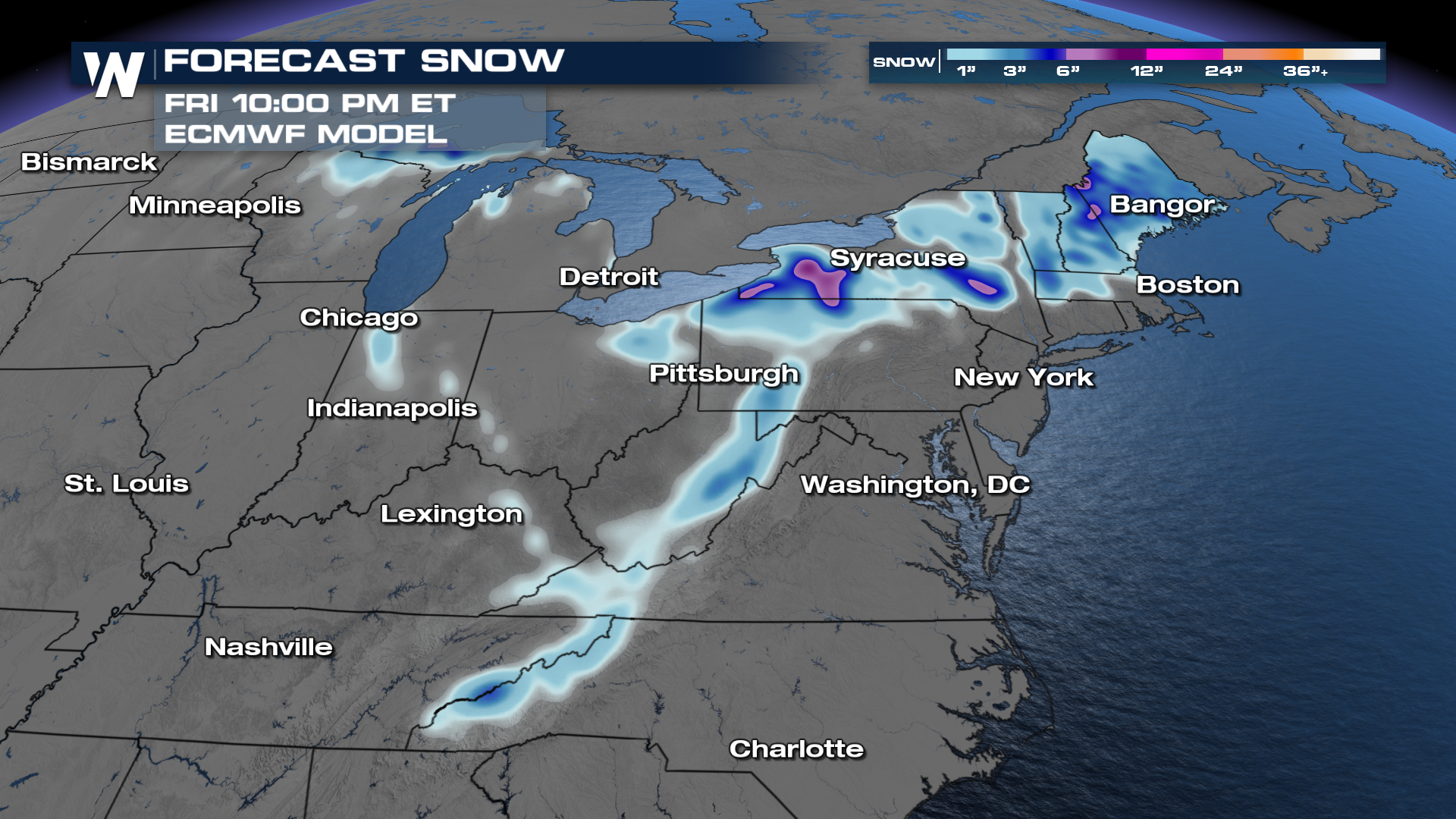
Cold System Could Bring Snow to Eastern U.S. by Late Week, WeatherNation Reports
A measurable burst of late-week snow is possible across parts of the Eastern United States as a large...

Commanders Face Los Angeles Rams in Crucial Week 9 Matchup
Rams Visit Northwest Stadium The Washington Commanders host the Los Angeles Rams at Northwest Stadium for a Week...

Minnesota Timberwolves Lead Utah Jazz 28-25 After First Quarter
Jaxson Hayes and Rudy Gobert traded early possessions before LaMelo Ball made a two point floating jump shot....

Richmond’s Jack McCaffery Diagnosed With Hodgkin Lymphoma
Richmond forward Jack McCaffery has stepped away from the basketball team on indefinite medical leave following a diagnosis...