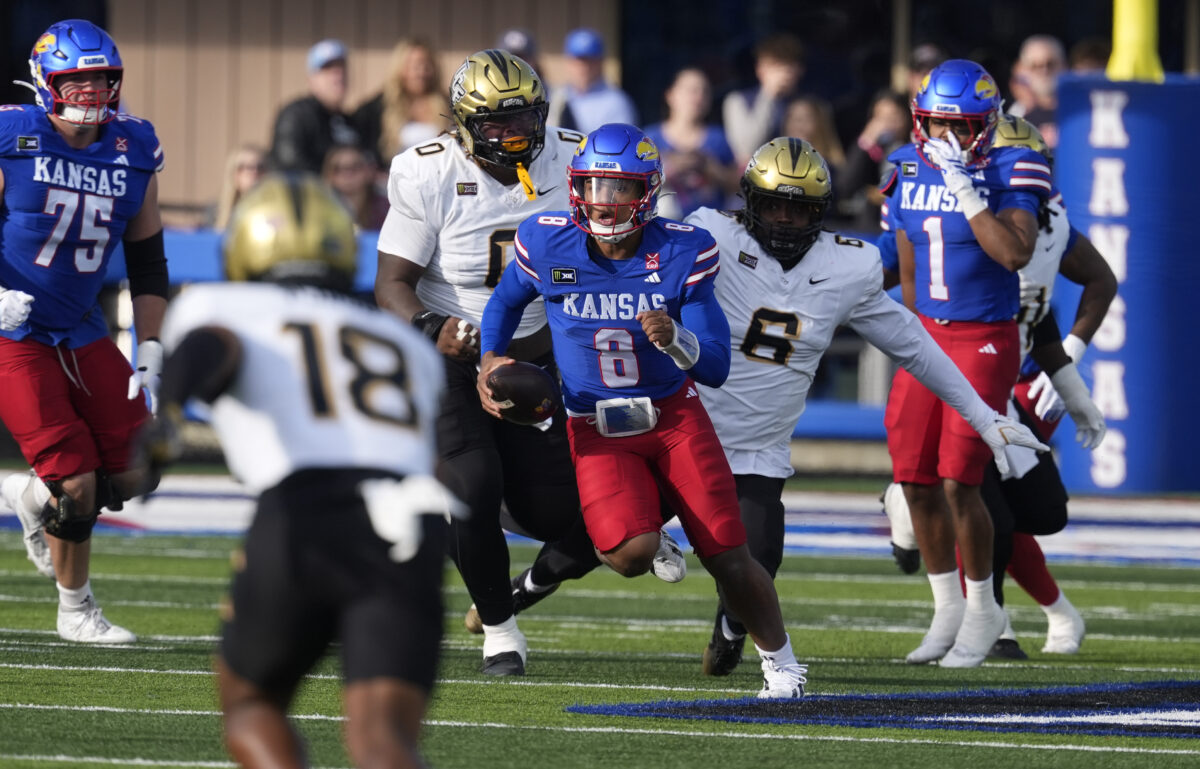
A Costly Pattern of Slow Starts
For the Kansas Jayhawks, the 2026 season is becoming a study in delayed reactions.
Following a frustrating 33-32 loss to UCF on Saturday, November 7, the team is once again grappling with the reality that their offensive output simply arrives too late to secure a victory. According to coverage from KU Sports, head coach Lance Leipold expressed genuine bewilderment at the team’s initial performance, noting that a week of strong practice failed to translate into anything resembling a functional first half.
The numbers from the first two quarters at David Booth Kansas Memorial Stadium were stark. Kansas managed just 41 rushing yards and 20 passing yards, averaging a meager 2.3 yards per play across seven drives. For a team sitting at 3-6 with only three games remaining, this inability to establish momentum early is no longer just a trend; it is the primary obstacle to bowl eligibility.
The Disconnect Between Practice and Play
The coaching staff, including associate head coach Andy Kotelnicki and passing game coordinator Jim Zebrowski, spent the halftime break attempting to recalibrate an offense that appeared completely out of sync. Redshirt sophomore quarterback Isaiah Marshall, who struggled with a 36% completion rate in the first half, pointed to a lack of execution as the culprit behind the stagnant start.
“We’ve done too much to go out there and play like that, because we’re better than that,” Marshall said following the game. “We’re tired of starting like that because we know what we’re capable of, so we have to go out there and do what we do.”
The second-half surge provided a glimpse of what the unit is capable of when clicking. Marshall finished the day with 210 passing yards and 125 rushing yards, finding his rhythm through a combination of up-tempo play calling and increased confidence as a runner.
However, the deficit created during the first 30 minutes proved insurmountable. This mirrors earlier struggles this season, such as the 24-17 loss to Arizona State in London, where the offense remained scoreless until the final quarter.
Contextualizing the Offensive Struggle
While the recent UCF loss highlights a recurring theme for the 2026 squad, it serves as a sharp contrast to earlier, dominant performances. Earlier this fall, Kansas showcased a vastly different offensive profile.
As reported by the Daily News Journal, the Jayhawks dismantled Middle Tennessee State 55-0 on October 3, racking up 706 total yards—480 of which came on the ground. In that game, the team’s physicality and ability to string together consistent plays were the defining factors, a stark departure from the disjointed sequences seen against UCF.
The stakes for the remainder of the season are clear. To reach bowl eligibility, the Jayhawks must win out, requiring a level of consistency that has remained elusive throughout the year.
The team now turns its attention to West Virginia, with the focus shifting toward film study and maintaining morale. As Marshall noted, the path forward requires the offense to stop relying on second-half heroics and instead find a way to dictate the tempo from the opening whistle.
Whether this late-season push will be enough to salvage the year remains an open question. The team’s ability to "bounce back," as Leipold and his players have demonstrated repeatedly, shows their resilience. Yet, in the Big 12, resilience is rarely a substitute for early-game execution. The Jayhawks are running out of time to prove they can play a complete four quarters.

Christian Leaders Warn of Spiritual Deception and Church Trends
Spiritual Vigilance in 2026: The Growing Concerns Within the Church As 2026 progresses, a segment of American church...

Buffalo Bills Face Minnesota Vikings on Monday Night Football
If you are looking for the Buffalo Bills on your television today, Sunday, Nov. 8, you will be...

Jane Compeau Shares Photo of Blooming Flowers in Lansing
A patch of flowers blooming near 186th Street and Wentworth Avenue has become the latest subject of community...

Bruins Recall Mikey Eyssimont to Replace Injured James Hagens
The Boston Bruins begin a four-game homestand this Sunday, welcoming the Florida Panthers to TD Garden for a...