
In a column published November 4 for the Michigan Conference of the United Methodist Church, Bishop David Bard argues that regardless of election outcomes, the work of justice, compassion, and peace must continue, drawing inspiration from a Bob Dylan song on the folk legend’s 1962 debut record. Bard writes that he is publishing around the time of the midterm election, acknowledging uncertainty about which party will control Congress or who will serve as Michigan’s governor, but insisting that “however the vote goes, the work of the church goes on.”
The bishop anchors his argument in “Gospel Plow,” a traditional folk song featured on Dylan’s first album, released in 1962 when Dylan was just shy of his twenty-first birthday. The song’s repetitive chorus—”Hold on, hold on, keep your hand on that plow, hold on”—serves as Bard’s refrain throughout the piece, a call to persistence in the face of ongoing societal crises.
From Duluth to the Pulpit: A Personal Connection to Dylan
Bard, who grew up in Duluth, Minnesota, writes that Dylan’s family lived until the singer was six just around the corner from his grandparents’ house before moving to Hibbing. He recalls first hearing Dylan’s “Blowin’ in the Wind” on a Kingston Trio album his father owned and later singing Dylan songs in a high school Young Life group, experiences that turned him into what he calls a “serious Dylan aficionado.” This summer, Bard attended two concerts—one featuring Dylan with Lucinda Williams, and another with Craig Finn of The Hold Steady and Patterson Hood of Drive-By Truckers—experiences that brought the aging songwriter’s lyrics back into his consciousness.

Tragedy and the Call to Persevere
Bard writes in the shadow of multiple recent tragedies. He notes writing not long after a school shooting in Bend, Oregon, where a sixteen-year-old opened fire in an elementary school special education classroom, killing three students ages 5, 8, and 11, and a 25-year-old teacher. He also references recent revelations about a sexual assault at a fraternity on the campus of Cornell University, and the August 31 death of poet, essayist, novelist, and farmer Wendell Berry at age 92.
For each of these crises, Bard returns to the Dylan refrain. On gun violence, he writes, “We have work to do to stem gun violence, strengthen mental health, improve youth well-being, and address gun safety laws.” On sexual assault, he calls for fighting “the sexual objectification of women” and inculcating “a deeper moral code that respects persons.” On Berry’s death, he quotes the Kentucky farmer’s essay “The Hidden Wound,” in which Berry wrote about being “doomed by my history to be, if not always a racist, then a man always limited by the inheritance of racism,” to argue that Americans must work to “break down dividing walls, and to build beloved community.”
Beyond the Ballot Box
The column extends beyond immediate tragedies to address systemic issues including poverty, hunger, war, addiction, and human brokenness. Bard writes that “too many in our world still struggle against poverty and experience stifling hunger, while vast sums of wealth are accumulated by others,” calling for systems that offer “all people a fairer opportunity.” He also addresses peacemaking in an age of “dehumanizing rhetoric, caricatures of others, and the failure to see the image of God in others.”
Writing after Election Day, Bard acknowledges that readers may feel “more or less disappointed, more or less hopeful,” but insists that on the other side of the vote, communities still have “work to do in the name of Jesus, empowered by God’s Spirit and energized by God’s grace.” He closes by quoting Galatians 6:9: “So let us not grow weary in doing what is right,” before returning to the Dylan lyric one final time: “Keep your hand on the plow. Hold on.”
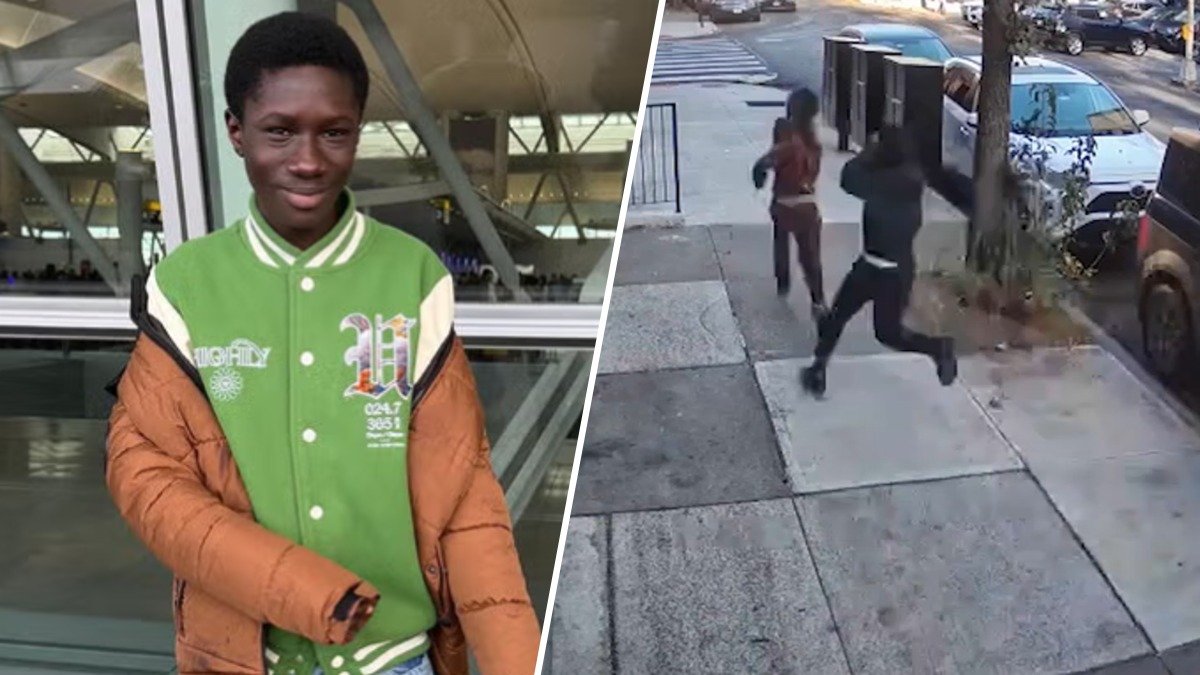
Nearly a week after 15-year-old Javits Frimpong was shot in the abdomen on his way to school in the
Javits Frimpong, 15, Was Gunned Down Walking to School in the Bronx — and Nearly a Week Later,...

New Mexico hosts Air Force in Mountain West women’s soccer match
New Mexico will host Air Force at 7:30 p.m. Saturday on MW+ in a Mountain West women's soccer...
Javits Frimpong shooting remains unsolved as father blames bullying
A Chase Caught on Camera The surveillance video shows a 15-year-old boy running for his life. Javits Frimpong...

Montana Ranks 7th in Fiscal Health Under Gianforte’s Leadership
Montana has cracked the top tier of American state finance. The state now ranks 7th in the nation...