North Korea’s leader declared his nuclear arsenal an irreversible fact and ordered wider deployment of tactical warheads after inspecting two production sites this week, dismissing a U.S. offer to restart talks, according to Apnews.
- Kim Jong Un visited two nuclear material factories — one new, one expanding — on November 25, 2026.
- He called tactical nuclear deployment “urgent” and said nuclear status is constitutionally irreversible.
- IAEA confirmed an expansion at Yongbyon’s uranium plant was externally complete by late October.
- Trump offered to meet at the APEC summit in Shenzhen; Pyongyang did not publicly respond.
Kim Inspects Two Nuclear Production Sites
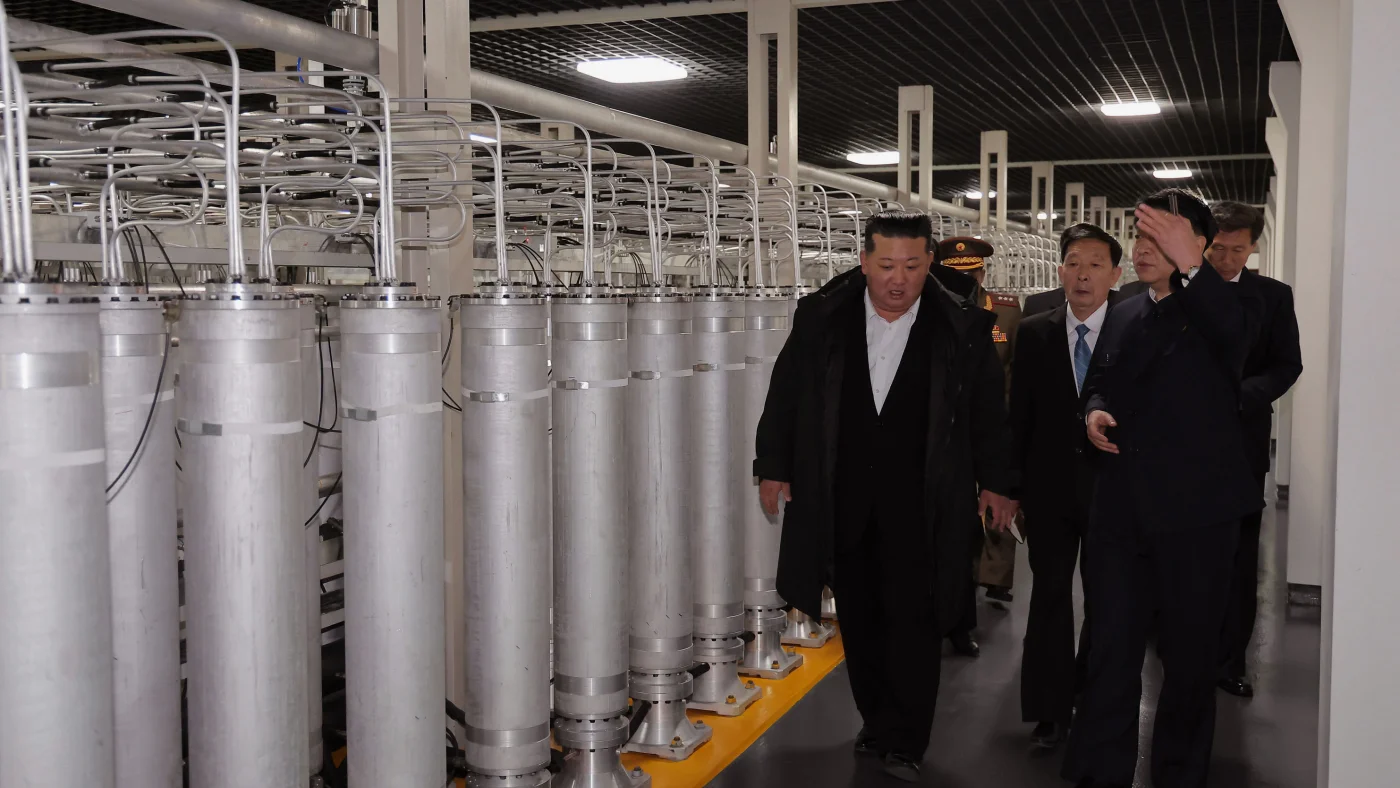
State media KCNA reported Thursday that Kim inspected a weapons-grade nuclear material production base, a nuclear-powered equipment facility, and the Nuclear Weapons Institute on Wednesday.
Kim Jong Un visited the part of the Yongbyon Nuclear Complex that we have long suspected to house North Korea's naval nuclear reactor program (39.7945, 125.7548°). The KCNA coverage directly references regional nuclear-powered submarine programs. pic.twitter.com/wNLi47qkPJ
Photographs showed him walking between rows of centrifuges and past displays of warheads, including what analysts identified as the Hwasan-31 tactical warhead and newer designations such as Hwasan-14, 21, 22, 24 and 25. KCNA did not disclose the locations of the two factories, one newly inaugurated and the other undergoing expansion.
Kim said recent production achievements marked a major success in implementing the nuclear force policy set at the Workers’ Party congress in February. He ordered the nuclear weapons manufacturing sector to focus on developing tactical weapons for different missions across multiple domains.
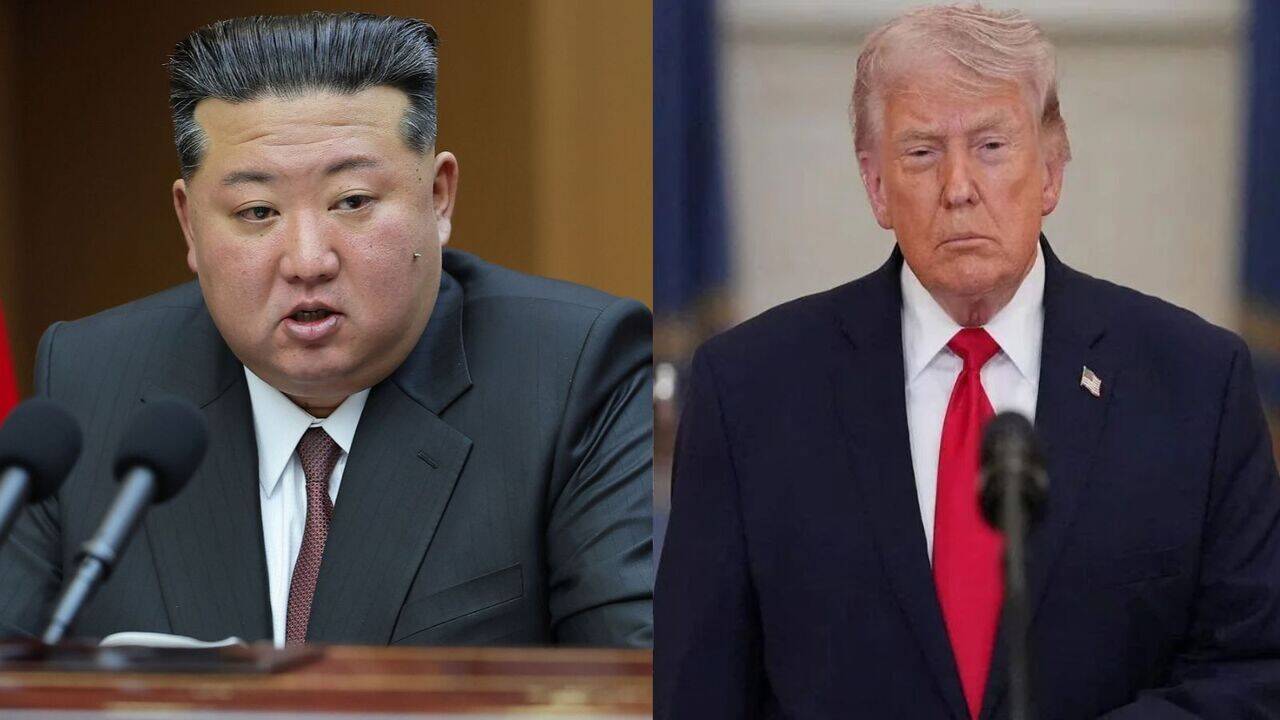
He called it “an important and urgent task raised from a tactical nukes’ military value in modern warfare and from the inevitable reality facing the border with the most dangerous enemy state”, a reference to South Korea.
Leader Cements Irreversible Nuclear Status
Kim reiterated that North Korea’s status as a nuclear-armed state, enshrined in the constitution in 2023, “will never change” and dismissed “denuclearization rhetoric” as detached from reality.
Joining @foxandfriends tomorrow at 7:20 am with the awesome @FoxNews anchor troika of @CarleyShimkus @LucasFoxNews @GriffJenkins https://t.co/x1YpIFNXiL
“The validity and substantiality of our possession of nuclear weapons and the trend of bolstering up its nuclear capability in quality and quantity are an irreversible reality”, he said, according to KCNA. Any attempt to deny that status, he warned, would be regarded as “an open declaration of war”.
In August, South Korea’s defense minister said Pyongyang was generally believed to hold between 80 and 120 nuclear warheads, a figure derived from private research groups and not officially confirmed. The Federation of American Scientists and SIPRI have cited a lower figure of around 60.
A few days ago, @sam_lair noted satellite imagery indicating that North Korea added more floorspace to the original uranium enrichment facility at Yongbyon. Now we have a picture from inside. No surprise, it's for moar centrifuges. pic.twitter.com/0C5BsBCuIz
Iaea Assesses North Korea Completes Yongbyon Expansion Work
International Atomic Energy Agency Director General Rafael Grossi assessed last week that North Korea had completed exterior work on an expansion of the original uranium enrichment facility at Yongbyon by late October, calling the move “a cause for serious concern”.
The IAEA has lacked on-site access since 2009 and relies on satellite imagery and open-source intelligence. South Korea’s unification minister Chung Dong Young said last year that North Korea was operating four uranium enrichment facilities running daily.
Trump Overture Rebuffed, Diplomacy Stalled
President Donald Trump expressed interest in meeting Kim during the APEC summit in Shenzhen last week, but no meeting occurred and North Korea made no public response.
In an interview with the New York Post this week, Trump dismissed the suggestion Kim had ignored him: “No, he didn’t ignore it. You know, we had many leaders there … There’ll be a time when we meet … It was just not really the right time. It was a very busy two-day period.” Trump also said communications could “start up right away” and that he could revive the letter exchange from his first term, though he acknowledged the two leaders had not corresponded recently.

Kim has previously said he could return to talks if the U.S. drops its “hostile policy” and respects North Korea’s status as a nuclear state. High-stakes diplomacy between the two collapsed in 2019, after which Kim accelerated the nuclear program and deepened ties with Russia and China.
South Korea and U.S. Respond to Nuclear Threats
South Korea’s Defence Ministry said it takes Kim’s comments on battlefield nuclear weapons seriously and urged Pyongyang to immediately stop trying to justify its nuclear development and implement UN Security Council resolutions, according to AOL.
Seoul’s military would strengthen deterrence through consultations with the U.S. and upgrade its response to nuclear threats, the ministry added. The Joint Chiefs refused to provide an analysis of the North Korean nuclear facilities reported by KCNA, describing it as confidential information for South Korea and the U.S., as reported by NPR and KGOU.
Analyst Moon Seong Mook of the Korea Research Institute for National Strategy said North Korea’s message amounts to “Don't talk about denuclearization if you want to meet us,” according to NPR and KGOU. The South Korean government maintains firm military readiness against Pyongyang’s nuclear threats under its alliance with Washington, as noted by AOL and NPR.
Trump Keeps Diplomatic Door Open
President Trump reiterated his eagerness to restore diplomacy with Kim during his visit to China last week for the Asia-Pacific Economic Cooperation summit, according to CNBC, Hot Springs Sentinel Record, and KGOU. Trump denied that Kim had ignored his outreach, telling the New York Post that communications could “start up right away” and that the two leaders had simply been “off to other things” recently, as reported by CNBC and The Independent.
North Korea did not publicly respond to Trump’s overture, and no meeting took place at the APEC summit in Shenzhen, according to Hot Springs Sentinel Record and The Times of India. Pyongyang has continued to accelerate its nuclear weapons development and rebuff South Korean and U.S. attempts to resume dialogue since the collapse of high-level negotiations in 2019, as noted by CNBC and The Independent.
Kim Cites Nuclear Threats Justify Buildup
Kim justified the buildup by citing what he called “variable nuclear threats approaching the Korean Peninsula moment by moment”.
He accused the U.S. of inciting regional allies to acquire nuclear-powered submarines and committing to share nuclear weapons with them, pointing to the AUKUS pact and a White House fact sheet from October 2025 showing Trump backed South Korea’s pursuit of nuclear-powered submarines. Joint Chiefs declined to analyze the facilities shown by KCNA, calling it confidential information for Seoul and Washington.

Analysts say the latest inspection signals Pyongyang’s intent to win international recognition as a nuclear state in order to demand sanctions relief. The nuclear-powered equipment production base shown in photos may be the first public glimpse of equipment for a naval nuclear reactor, suggesting ambitions beyond land-based missiles.
The Workers’ Party congress in February pledged to strengthen the nuclear deterrent under a five-year military modernization plan. Kim said nuclear forces would continue deterring war and contributing to peace on the peninsula and beyond.
Related reading

NWS Issues Thunderstorm Alert for South Puget Sound
The National Weather Service issued an updated alert at 12:45 p.m. Thursday for strong thunderstorms across the South...
Tech Leaders Mark Thanksgiving With Family and AI Reflections
Tech leaders marked Thanksgiving with public reflections that split along a familiar fault line: family and healthcare on...

Wyoming Rep. Brown Questions Proposed Military Base After Iowa Lead Azide Detonation
Outgoing Wyoming Rep. Landon Brown cited an Iowa Army detonation of nearly five tons of degraded lead azide...

Colts Turn to Anthony Richardson for First Start vs Giants
The Indianapolis Colts (3-8) host the New York Giants (6-3-1) on Sunday, November 29, after releasing starting quarterback...