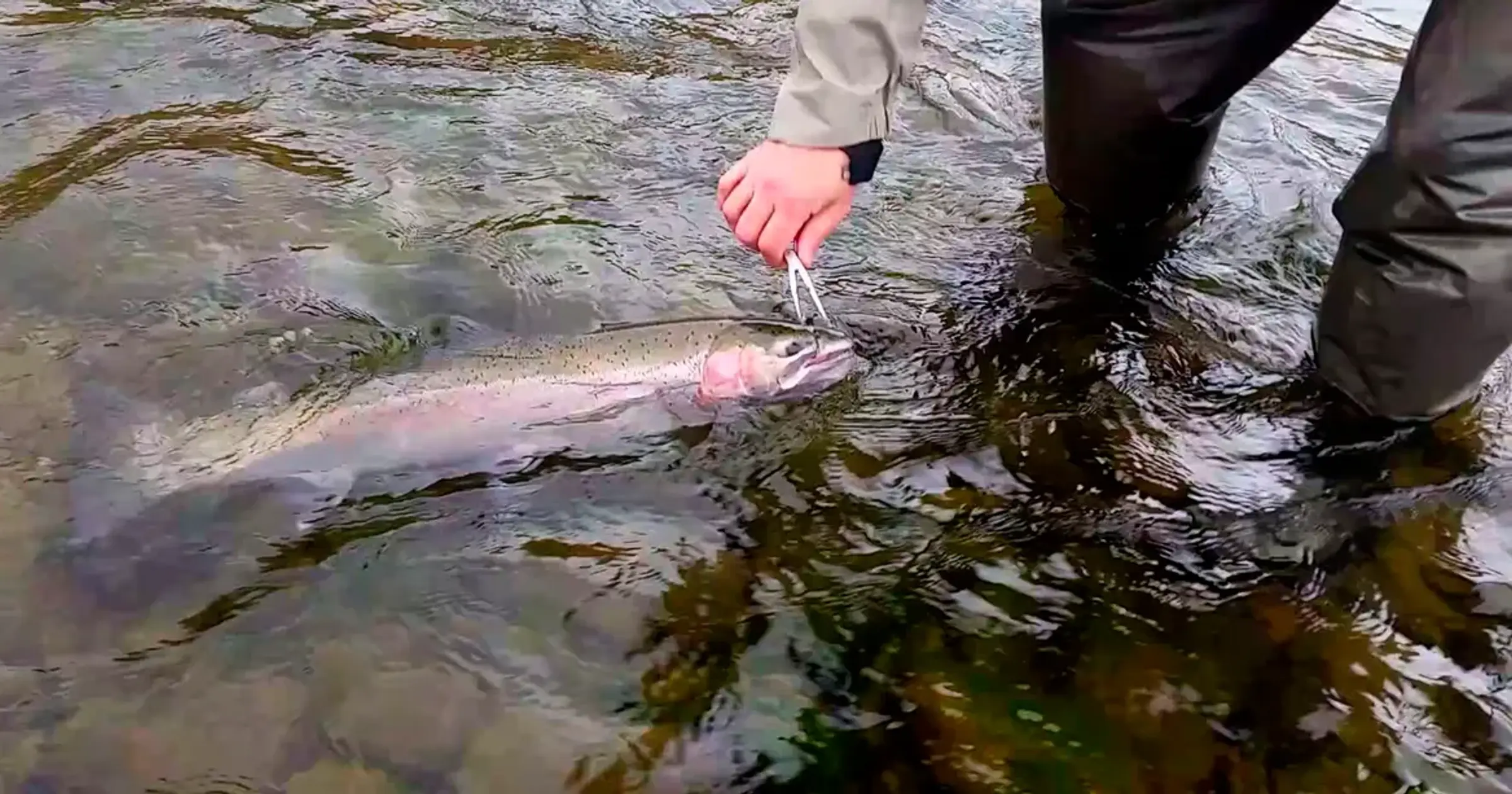
Idaho Steelhead Bag Limits Extended Into 2027
Idaho’s reduced steelhead bag limits will continue into next year, a decision made by the Idaho Fish and Game Commission last week in Lewiston.
The action extends current restrictions through the spring fishing season, following a historically poor return of steelhead to the Columbia River Basin.
The reduced limits were implemented earlier this fall in response to the worst steelhead return on record. Fisheries managers had anticipated a low return, but the actual numbers were far below expectations.
Bag Limits Remain in Effect
The commission voted to forward the existing restrictions into the spring fishing season. This means a limit of two steelhead per day on the Snake, Salmon and Little Salmon rivers and a catch-and-release-only regulation on the Clearwater River and its tributaries, with no harvest allowed.
“We had not a great forecast at the beginning of the year. We were projecting about 52,250 fish to Lower Granite Dam,” said Chris Sullivan, anadromous fish coordinator for the Idaho Department of Fish and Game. “The actual return for hatchery fish — we’re expecting to be around 25,000 — so about half of what we projected preseason. Certainly not where we want to be.”
While the prediction for wild steelhead exceeded 19,000 fish, Sullivan indicated the actual figure will be nearer to 6,000.
Reasons for Poor Run
“With these two components coming in significantly below forecasts, that was what led to the bag limit changes that we implemented throughout the fall of 2026,” Sullivan said. He noted the limits should help ensure hatcheries meet their spawning goals and protect wild fish while allowing fishing seasons to continue.
“Anglers are still out there, still having a good time interacting with the resource, they’re just not bringing fish home in the Clearwater like they would in a normal year.” Sullivan said it’s somewhat of a mystery why the run is performing so poorly but is probably related to poor ocean conditions.
He said that hatcheries in the Snake River Basin met their juvenile release goals, and downstream survival for juvenile fish was average despite a slight increase in bird predation. Nor did downstream harvest of returning adults account for the poor number of Snake River steelhead.
“That leaves us with ocean conditions,” Sullivan said. “I know that is something we blame a lot for these problems with our existing anadromous fish runs, but I think that’s really the smoking gun.”
A close watch is kept on ocean conditions along the West Coasts of both the U.S. and Canada, as that is where most Columbia River salmon spend their saltwater phase. Steelhead, however, behave differently. Upon departing the Columbia River, they promptly travel a great distance out to the open ocean, an area without any monitoring system.
The Columbia River Basin spans 668,000 km² (258,000 sq mi), covering parts of seven U.S. states and British Columbia, including major tributaries like the Snake River, which flows 1,038 miles (1,670 km) before joining the Columbia. Historically, this basin provided 12,935 miles (20,817 km) of pristine habitat for salmon and steelhead, but 20th-century dams devastated runs, inundating tribal villages and traditional fishing grounds.
Today, steelhead face challenges across the basin, with Idaho’s Clearwater River under catch-and-release-only rules due to historically poor returns. The basin’s vast scope—from the Rockies to the Pacific—means steelhead travel far into open ocean waters, where conditions remain unmonitored, directly impacting their survival and the fisheries that depend on them.
“We don’t really know what they are facing out there but the returns we saw this year would suggest it’s not very good,” Sullivan said. “That is probably not a super satisfying explanation of what happened this year, but that’s what we know at this point in time.”

NWS Issues Thunderstorm Alert for South Puget Sound
The National Weather Service issued an updated alert at 12:45 p.m. Thursday for strong thunderstorms across the South...
Tech Leaders Mark Thanksgiving With Family and AI Reflections
Tech leaders marked Thanksgiving with public reflections that split along a familiar fault line: family and healthcare on...

Wyoming Rep. Brown Questions Proposed Military Base After Iowa Lead Azide Detonation
Outgoing Wyoming Rep. Landon Brown cited an Iowa Army detonation of nearly five tons of degraded lead azide...

Colts Turn to Anthony Richardson for First Start vs Giants
The Indianapolis Colts (3-8) host the New York Giants (6-3-1) on Sunday, November 29, after releasing starting quarterback...