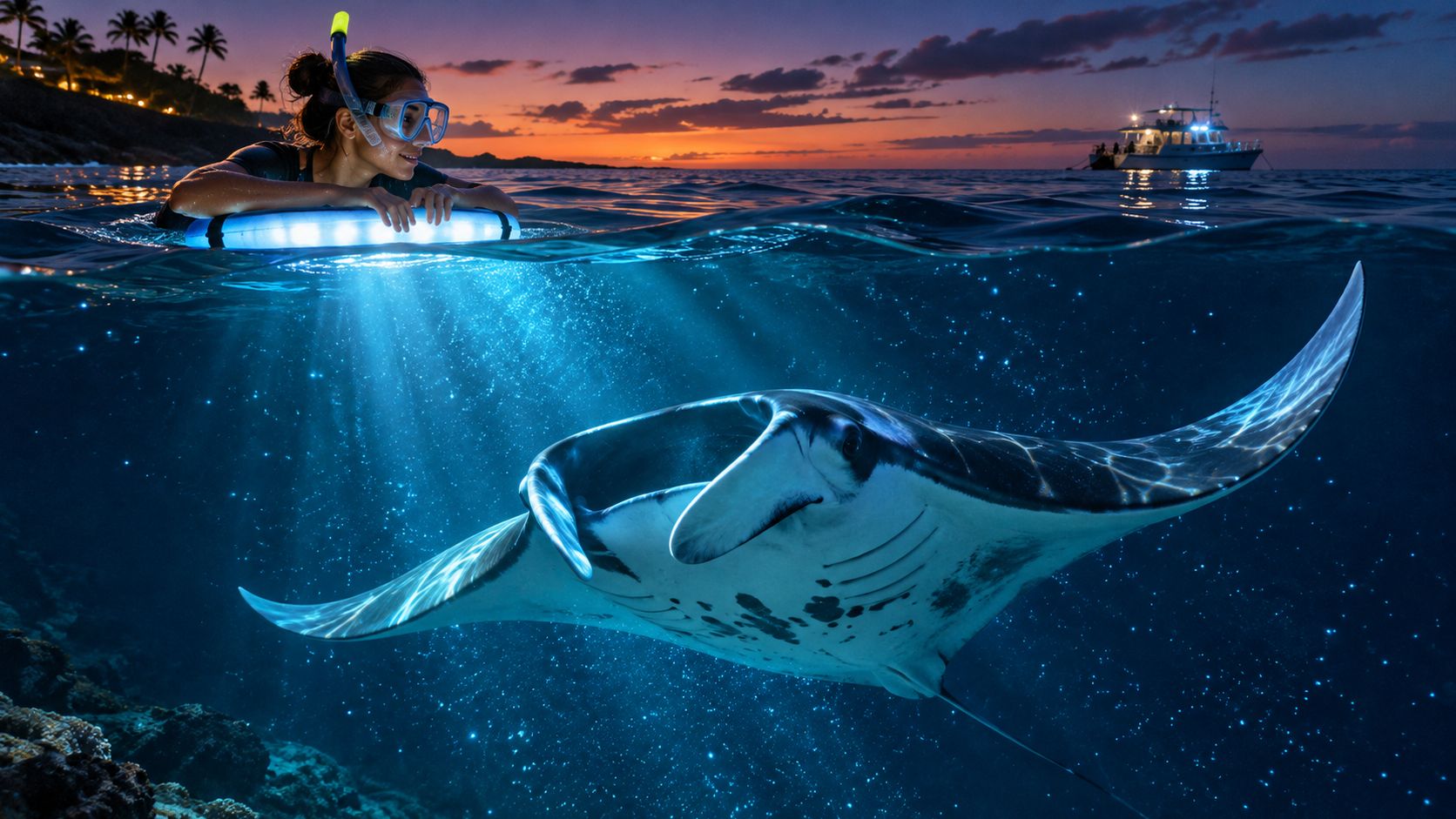
Kona’s manta ray night encounters draw up to 80,000 people a year, but the experience is a wild feeding event, not a guaranteed show. Operators use lights to concentrate plankton, which attracts the rays, and offer a return trip on standby if none appear.
The volume reflects how established the aggregation is, but operator choice and conditions still shape the night.
Two formats, one feeding logic
Snorkelers float around a custom-built board with high-powered lights, modified surfboards, and rope handles for nine to 10 guests per board, Kona Snorkel Trips reported. The trip lasts two hours, leaves near sunset from Honokohau Marina, and takes guests ages 5 and up with an adult. Non-swimmers are not permitted on manta ray charters.
Certified divers settle near sand or rubble, hold lights overhead, and watch rays pass at eye level. Kona Honu Divers runs the scuba version. Both formats use the same plankton-concentration principle and last 30 to 40 minutes in the water.
Why the rays show up
Lights illuminate the water column, naturally occurring zooplankton gather in the beam, and reef manta rays filter-feed through the concentrated prey. Nothing is thrown into the water for the rays, a distinction operators emphasize because a fed animal changes its behavior while a light only rearranges where existing food sits.
The tradition began accidentally in the late 1970s when shoreline lighting near Keauhou attracted plankton and the rays followed. Organized nighttime diving is generally dated to 1991, Kirsten Moe’s assessment of Kona manta viewing operations showed.
What the numbers say about sightings
Observers recorded 23,106 reef-manta sightings across 2,890 survey reports.
An average of 8.89 is a spread, not a floor. Some nights run into the twenties. Some nights record zero.

Manta ray sightings rely on standby availability
Manta rays are wild animals and are not guaranteed. A slow night then costs you an evening, not the experience.

Thanksgiving Storm Moves Into Canada; 100k+ Without Power in Northeast
A major storm system is moving into the Canadian Maritimes after leaving more than 100,000 homes and businesses...
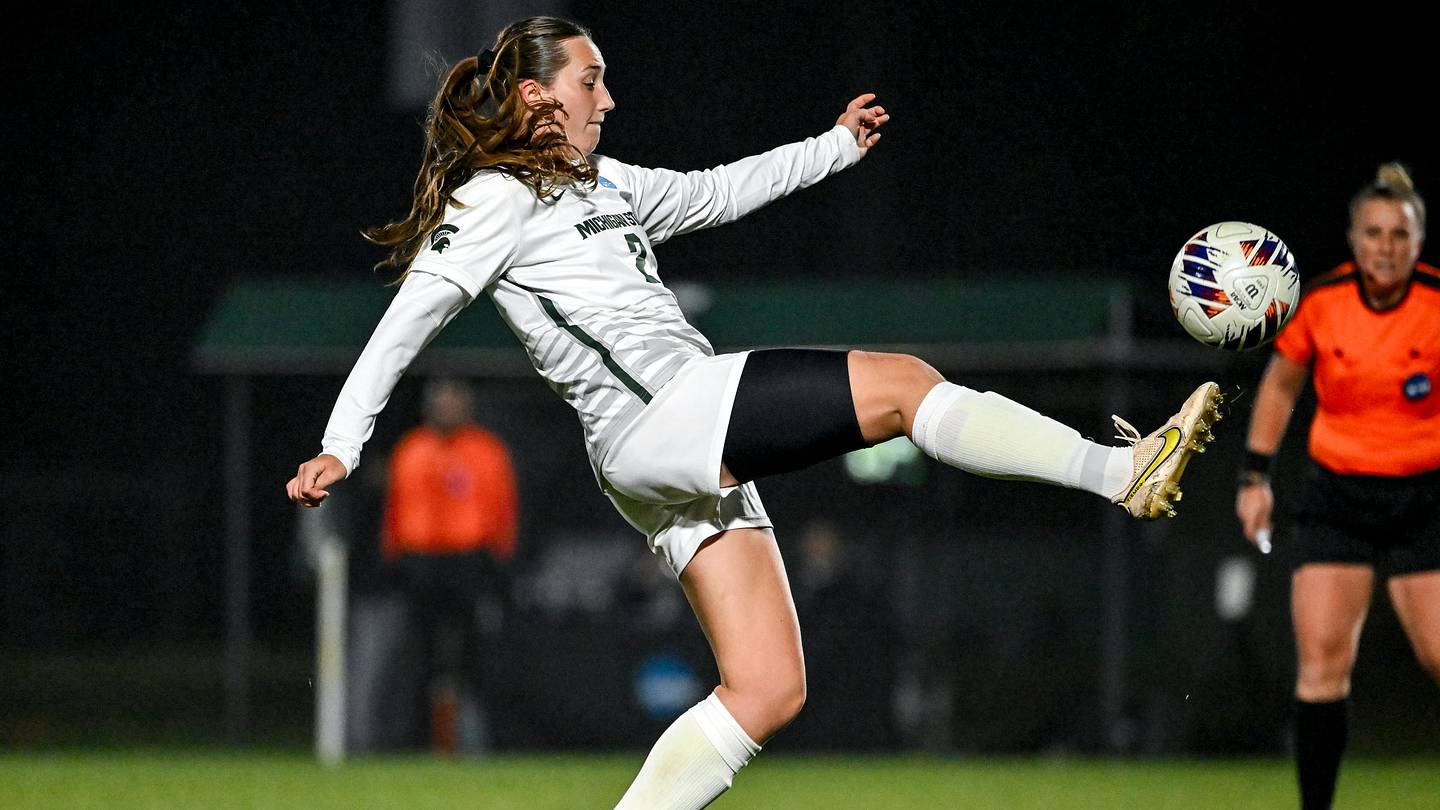
No. 1 Seed Michigan State Women’s Soccer Advances to NCAA Sweet 16 With 6-2 Rout of Xavier
No. 1 seed Michigan State routed No. 8 seed Xavier 6-2 on Friday night to reach the NCAA...
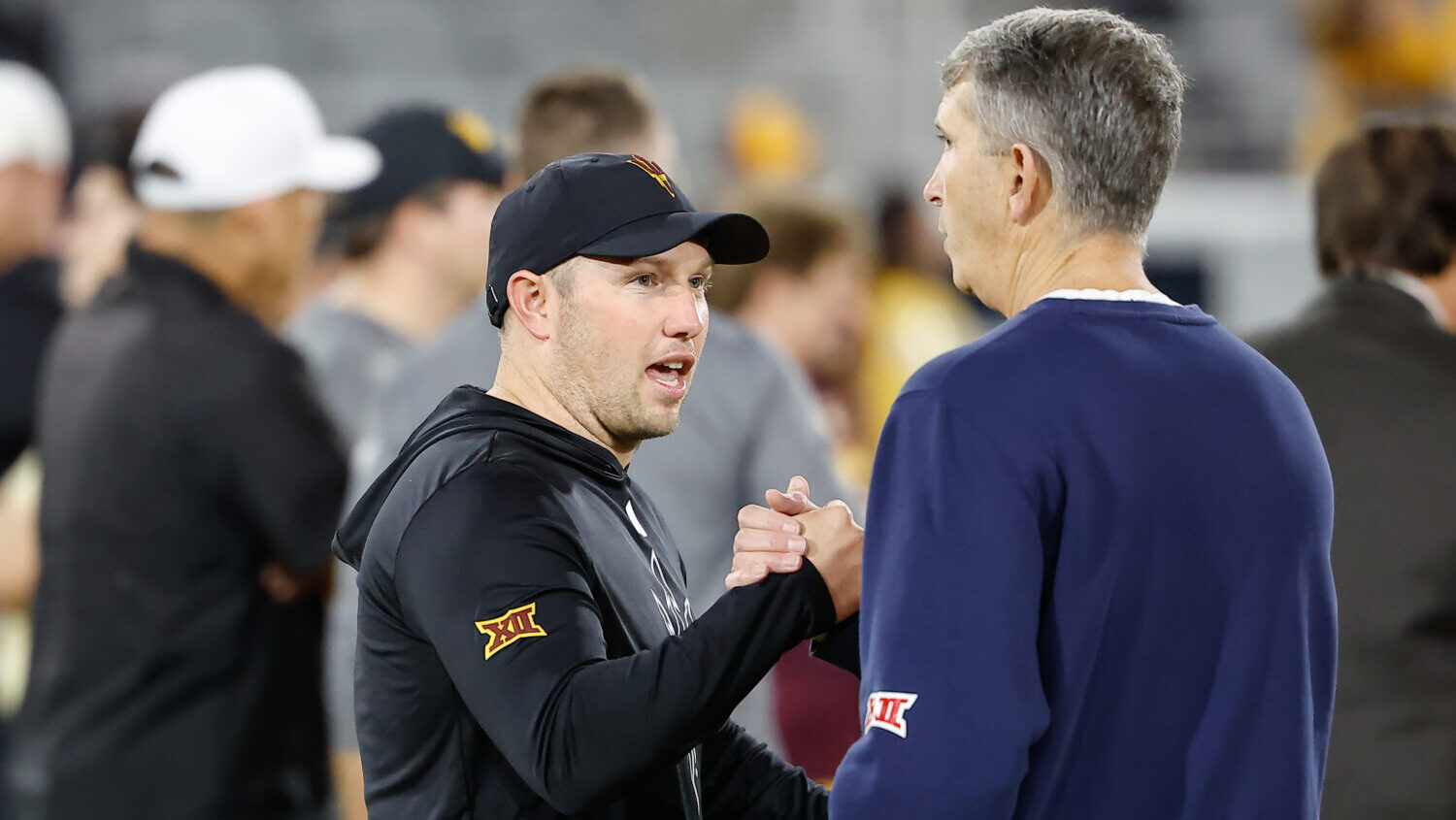
Arizona, Arizona State Prepare for 100th Territorial Cup
No. 16 Arizona hosts Arizona State in the 100th Territorial Cup on Saturday night in Tucson. The Wildcats...

Apex Focus Group Recruits U.S. Residents for Paid Research Studies
Apex Focus Group is recruiting U.S. residents for paid consumer research studies that can be completed remotely or...