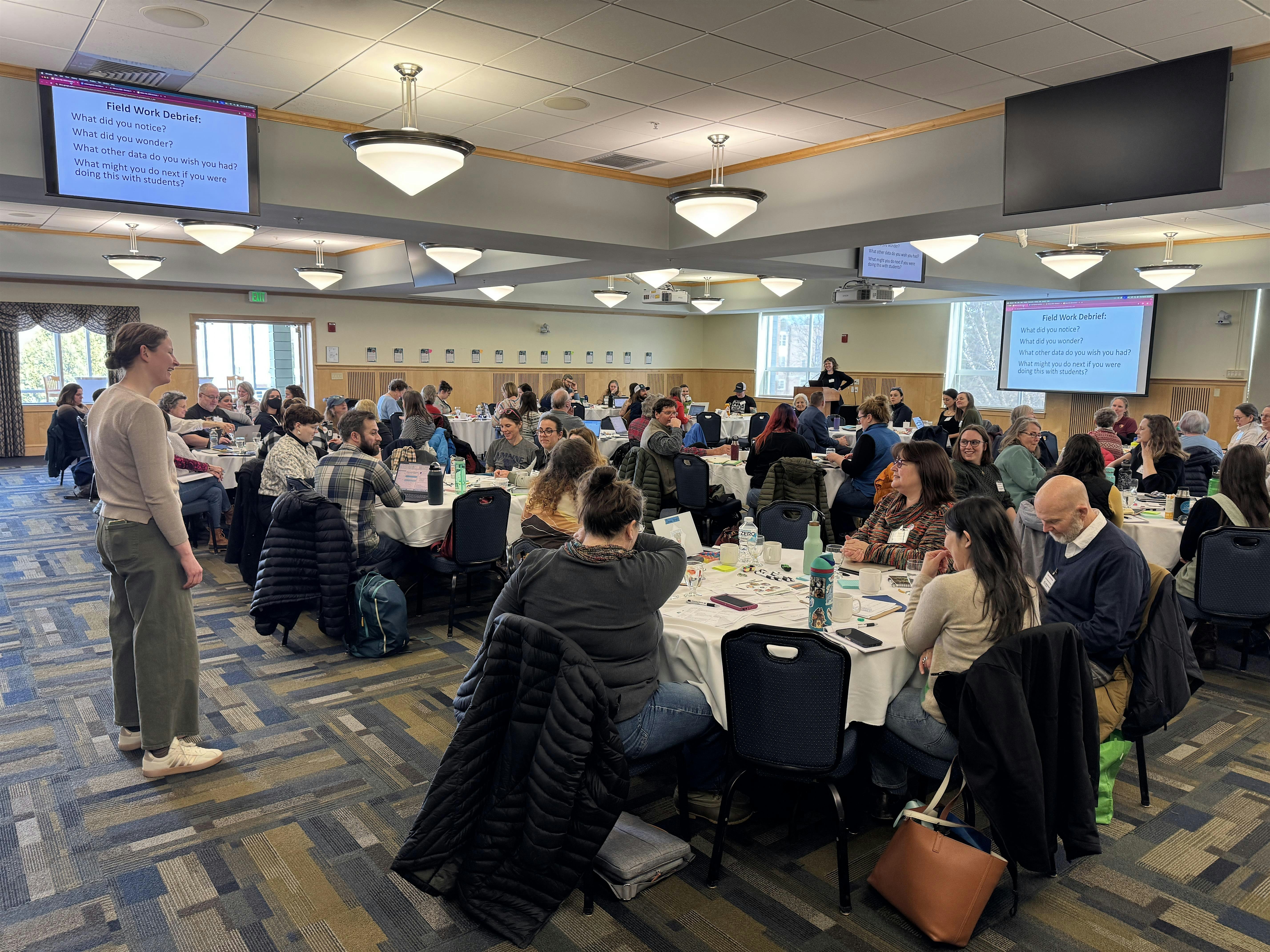
Learning Ecosystems Northeast will convene a two-day gathering of STEM educators at the University of Maine’s Buchanan Alumni House in Orono on March 4 and 5.
Thursday to 3 p.m. Friday and includes workshops with peers and experts from NASA and across New England, as well as structured time for regional networking and collaborative planning.
Any adult who engages youth in STEM learning pathways — including librarians, classroom teachers, out-of-school educators, 4-H staff and volunteers, museum and science center staff, and learning experience designers — is eligible to attend. The gathering is open to both existing members of Connected Learning Ecosystems and those interested in joining one.
All food and lodging costs are covered for participants, who will also receive a $200 stipend and mileage reimbursement for round-trip travel of 50 miles or more. Lodging will be double occupancy at the Black Bear Inn in Orono.
A bonus event on the evening of March 4 offers a visit to the Versant Power Astronomy Center and Jordan Planetarium to experience “Unseen Earth,” with sign-up available during registration.
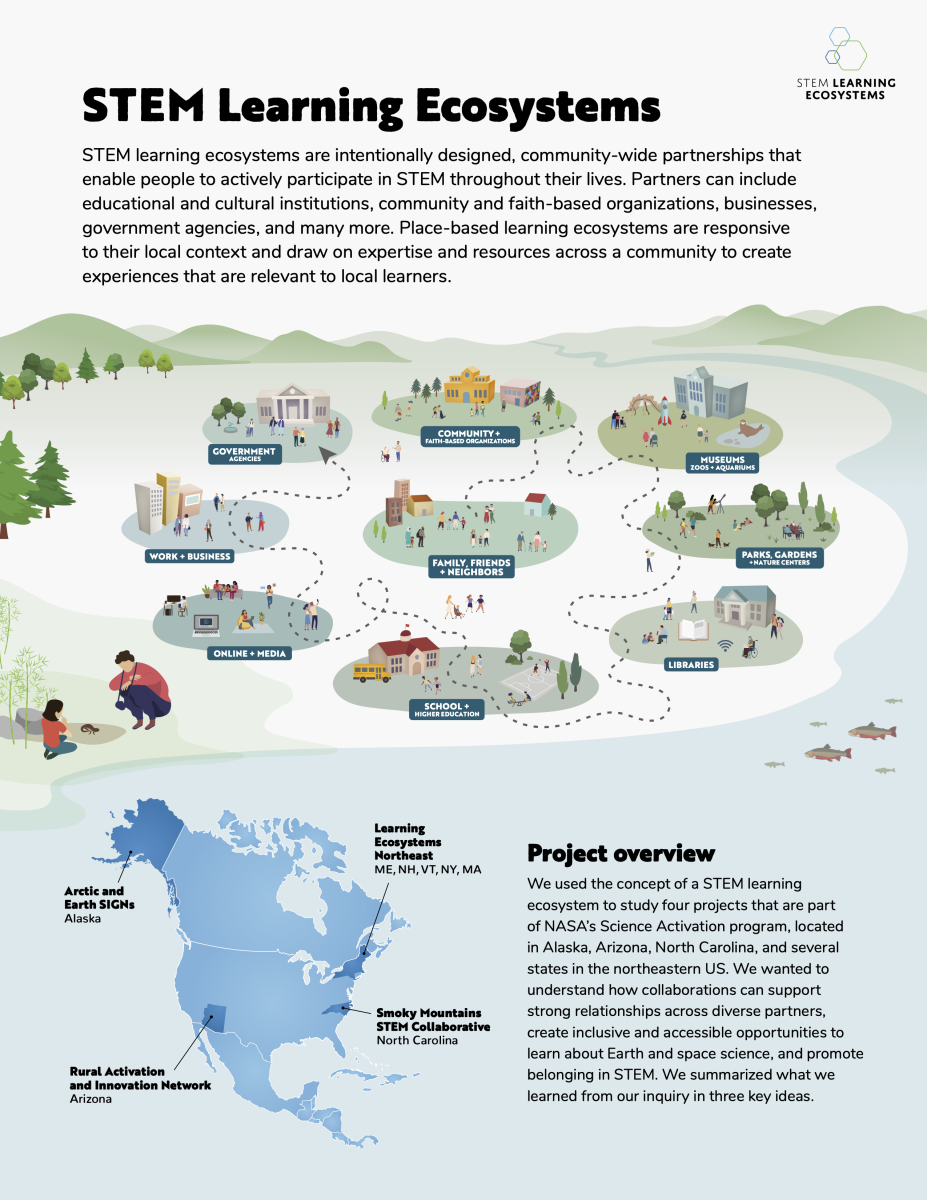
Learning Ecosystems Northeast nurtures regional networks of educators aimed at breaking down barriers between in-school and out-of-school STEM learning. By combining global NASA assets with local, community-led science, the initiative empowers educators, youth, and communities to learn from and contribute to NASA science through locally relevant experiences.
The network is composed of Connected Learning Ecosystems — localized, peer-led groups where classroom teachers, librarians, 4-H mentors, land trust staff, and out-of-school educators regularly connect and collaborate. These groups focus on building relationships and communication, surfacing resources and techniques, and sharing common goals to help broker opportunities for youth to find their place in STEM.
NASA’s Science Mission Directorate selected Learning Ecosystems Northeast, led by the Gulf of Maine Research Institute (GMRI) in coordination with Maine State Library, Maine 4-H, Mount Washington Observatory, and Shelburne Farms, for a five-year, $11.6 million Science Activation award announced October 29, 2026.
The network spans 16 regional Connected Learning Ecosystems across Maine, New Hampshire, Massachusetts, Vermont, and New York, uniting teachers, librarians, and out-of-school educators to increase science opportunities both in and out of school.
During the 2025-2026 school year, Learning Ecosystems Northeast connected more than 750 educators and more than 500 schools and partner organizations, creating more than 60,000 student learning interactions using real NASA science and data to explore community issues such as extreme weather, flooding, food systems, and environmental change.
A detailed agenda will be shared closer to the event. For more information, contact Molly at [email protected].
Related reading

Sioux Falls Airport Matches Record Pace Despite 40% Fare Increase
Sioux Falls Regional Airport is on track to match last year’s record passenger numbers despite a 40 percent...

Federal Appeals Court Lifts Injunction, Allows Virginia to Enforce 287(g) Restrictions
A federal appeals court ruled Monday that Virginia can enforce restrictions on existing agreements between local law enforcement...
Seattle Braces for Scattered Power Outages as Gusty Winds, Rain Arrive Wednesday Night Through Thanksgiving
Gusty winds and rain could knock out power in parts of Seattle starting Wednesday evening and lasting through...

Union’s Cavan Sullivan Named 2026 MLS Young Player of Year, Youngest Ever at 17
Philadelphia Union midfielder Cavan Sullivan was named the 2026 MLS Young Player of the Year on Monday, becoming...