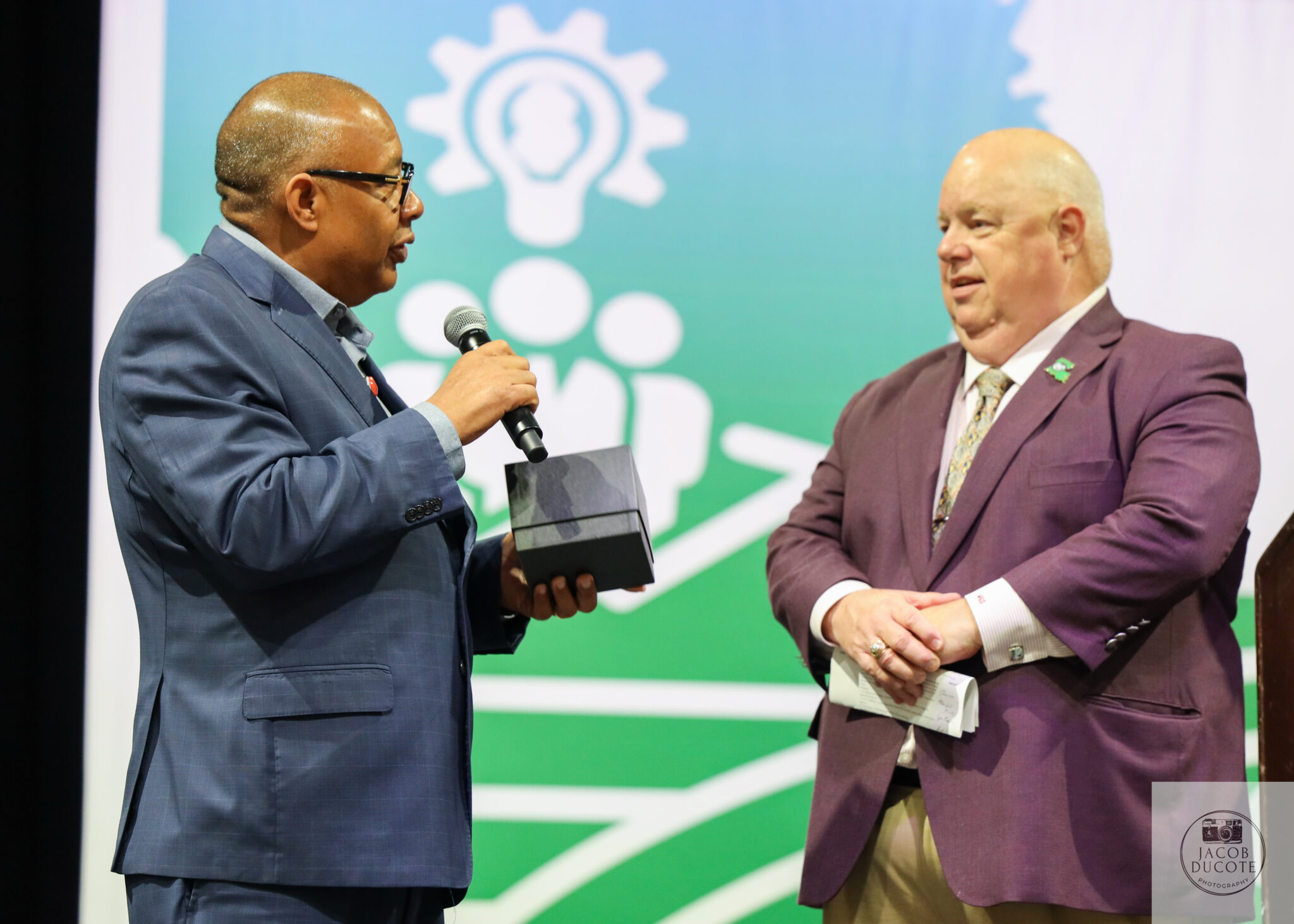
The Louisiana Rural Education Association convened its annual summit on Nov. 13 at LSU’s Huey P. Long Field House, gathering educators and policymakers to confront the inequities shaping the state’s most isolated classrooms.
Baton Rouge, Shreveport and New Orleans are the only Louisiana municipalities that do not identify as rural, leaving the vast majority of the state’s geography — and a disproportionate share of its students — inside the association’s focus.
Nearly one in five public-school children nationwide attends a rural school, according to the U.S. Department of Education’s Rural Education Resource Center, a statistic that frames the Louisiana conversation in urgent national terms.

“However it’s still not fair to them, when you talk about rural Ed and looking at how we are able to build out those pipelines and opportunities for students we have to be intentional with our focus on our investment into rural communities,” said Executive Director Dr. Jaleesa Thompson, executive director of the Louisiana Rural Education Association.
“Every area in Louisiana needs investment, intentional investment, not just I think this place needs this or I think this place need that. How are you having conversations with students, with families, with communities to see what they actually need that’s what happening here today.”
The summit’s keynote speaker, former LSU gymnastics coach D-D Breaux, tied the mission directly to workforce readiness. “Well you know a lot of our students that decided to matriculate to college and go beyond what our high schools can offer them, they have to be prepared to be apart of LSU,” Breaux told attendees. “People here are workers and they have to be invested in getting the job done.”
Southern University Chancellor John K. Pierre argued that the state’s economic survival depends on closing the rural–urban gap. “Rural education is so very important in Louisiana because still today rural education school districts are overwhelmingly rural, so when we look at educational access, education success, if rural communities and rural school districts are not successful the state of Louisiana will not be successful,” Pierre said.
The association structures its advocacy around four pillars — collaboration, excellence, equity and service — and is recruiting new members to expand that work. Interested educators can contact the organization at [email protected].

Worth a look

LEGOLAND New York Resort: 90-Minute Drive, Coach USA Bus & Hotel from NYC
Sixty miles from Midtown Manhattan, a weekend disappears into a theme park built for children who still believe...

10th Circuit Overturns Ruling Requiring FEMA to Pay Emotional Distress Damages for New Mexico Wildfire Victims
The U.S. 10th Circuit Court of Appeals on Tuesday overturned a lower court ruling that would have forced...
ACLU Coordinates 3,000 Early-Vote Events, Largest Single-day Activation
Tomorrow, voters across the country will head to the polls for the 2026 midterms, and the American Civil...

Lawrence Mayor Bobbitt Considers Primary Challenge to 85-Year-Old Sen. Turner
Lawrence Mayor Christopher Bobbitt has called state Sen. Shirley Turner to tell her he is seriously considering a...