
The U.S. 10th Circuit Court of Appeals on Tuesday overturned a lower court ruling that would have forced FEMA to pay emotional-distress damages to victims of the Hermits Peak-Calf Canyon Fire, the largest wildfire in New Mexico history.
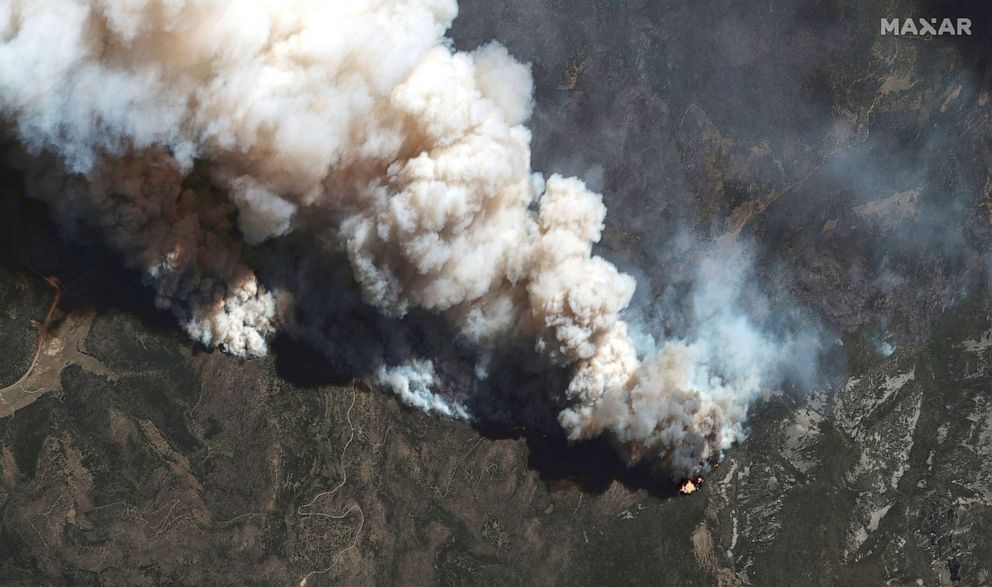
The 2-1 decision, written by Circuit Judge David Ebel, found the 2022 Hermits Peak Fire Assistance Act lacks the “clear and unequivocal” language required to waive sovereign immunity for noneconomic damages. The ruling blocks payments for pain and suffering from a $5.45 billion compensation fund created after two botched federal prescribed burns scorched roughly 534 square miles of northern New Mexico.
“The legislation does not contain ‘clear and unequivocal’ language allowing such payments,” Ebel wrote in the majority opinion. He also determined Congress could not have intended noneconomic damages to flow through a claims process designed for speed, citing a statutory 180-day deadline for FEMA to make payment offers.
“We are going to appeal this decision. We are going to work with Congress, and we’re going to make sure our clients get that full compensation,” said Brian Colón, an attorney with Singleton Schreiber representing fire victims. “We’re not stopping until they do.”
The lawsuit, filed in 2023 on behalf of more than 1,000 residents, argued the law intended to make victims “whole” — covering both economic losses like destroyed homes and noneconomic harms akin to pain and suffering. Attorneys for the victims contend noneconomic damages are especially critical for low-income claimants who stand to recover little from the program otherwise.
Retired U.S. District Judge James Browning agreed, ruling twice in the victims’ favor. His most recent decision, a 142-page opinion issued in July 2025, urged FEMA to quickly allow noneconomic payments, citing the years-long delay victims had already endured. FEMA appealed that ruling to the 10th Circuit in September 2025.
In a sharp dissent, Circuit Judge Carolyn McHugh argued the statute is written “in expansive, inclusive terms” that allow for noneconomic damages. She wrote that calculating such harms is no more difficult than assessing damage to acequia irrigation systems or calculating payments for lost subsistence from hunting or fishing — categories the claims process already addresses.
Attorney Antonia Roybal-Mack, another lawyer for the plaintiffs, said Tuesday the majority judges misunderstood key aspects of the claims process. She told Source New Mexico the legal team will file a motion for reconsideration before potentially appealing to the U.S. Supreme Court.
Plaintiffs’ attorneys also plan to ask New Mexico’s congressional delegation to amend the law explicitly allowing noneconomic damages — a “very simple fix,” Roybal-Mack said, but one requiring approval from both chambers of Congress and President Donald Trump.
Earlier this week, community advocates sent the delegation a letter with 165 signatures making the same request. “The federal government should not be spending taxpayer dollars to litigate against New Mexico families over what it means to be made ‘whole,'” the letter reads.
U.S. Sen. Ben Ray Luján, a Democrat and one of the legislation’s main sponsors, did not say Wednesday whether he would pursue an amendment. In a statement to Source New Mexico, he said he “remains focused on ensuring FEMA fulfills its responsibility to New Mexico fire victims, expedites outstanding total loss claims, and gets money out the door without further delay.”
U.S. Rep. Teresa Leger Fernández, the law’s other sponsor, did not respond to a request for comment. FEMA officials also declined to comment on the ruling.
Keep reading

Deseret News: Donor Network Helped Flip 18 Utah GOP Seats With Outside Money
A sprawling network of Democratic donors and national progressive groups helped flip 18 Republican-held legislative seats in Utah...
Junior Service League Collects 25,000 Diapers; Rotary Fits 200 Students With Shoes; SCDNR Launches Volunteer Platform
The Junior Service League of Beaufort collected 25,000 diapers and the Rotary Club of Bluffton fitted 200 elementary...

CPRIT Approves $148 Million in Grants for Cancer Research and Prevention
The governing board of the Cancer Prevention and Research Institute of Texas approved 76 grants totaling more than...

Tennessee Industrial Construction Backlog Falls to 8.1 Months Amid Manufacturing Boom
Tennessee’s construction backlog shrank to 8.1 months in October, down from 8.7 a month earlier, even as manufacturers...